
🇩🇪 Germany · Baden (Black Forest, Markgräflerland)
Badische SchneckensuppeGerman snail soup
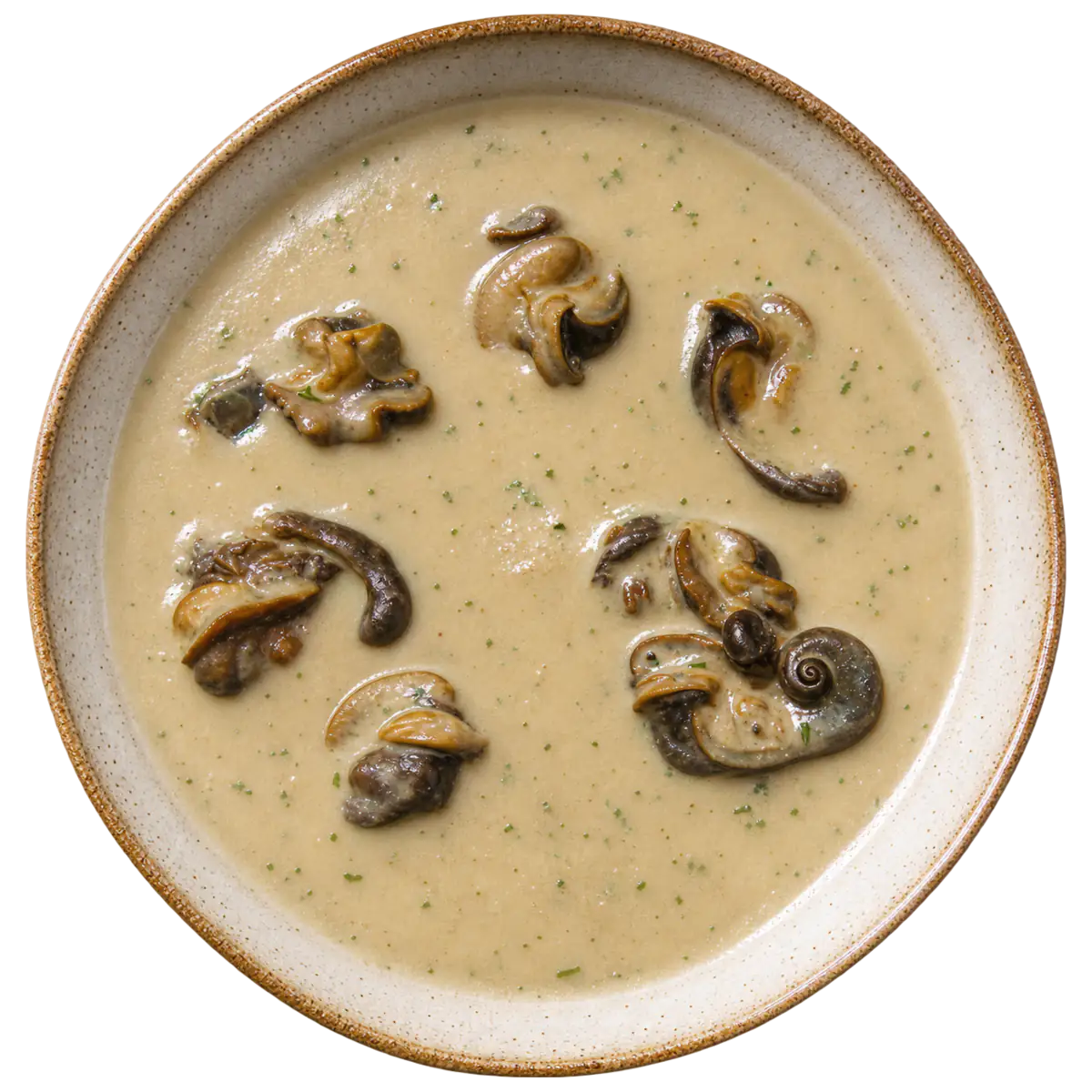
A cream soup of snails with stock and white wine, often bound with egg yolk and cream; a traditional dish of Baden in south-western Germany.
Origin and history
Badische Schneckensuppe, a creamy snail soup, is a speciality of Baden in south-western Germany, from the Black Forest to the Markgräflerland. Snails were long a Lenten food, being counted as neither meat nor fish; a Bamberg cookbook of 1854 already gives a snail soup for fast days. It began as cheap food for those who could not afford meat, and today, with wild snails protected, it is made with farmed ones as a festive starter.
Make it at home
- Makes
- 4 servings
- Total time
- 45 min
- Hands-on
- 30 min
Ingredients
- 32 cooked snails (Weinbergschnecken or Achatschnecken), canned, drained; liquid kept
- 40 g3 tbsp butter
- 2 shallots, finely chopped
- 1 small carrot, in very small dice
- 50 g2 oz leek, white part, in very small dice
- 50 g2 oz celeriac, in very small dice
- 4 white mushrooms, or a few porcini, finely chopped; optional
- 1 to 2 cloves garlic, crushed
- 30 g1/4 cup flour
- 750 ml3 cups beef or chicken broth
- 200 ml3/4 cup + 1 tbsp dry Baden white wine (Gutedel, Ruländer or Riesling)
- 200 ml3/4 cup + 1 tbsp heavy cream
- 2 egg yolks
- salt, white pepper, a grating of nutmeg
- 1 tsp lemon juice
- 2 tbsp parsley, finely chopped
- 1 tsp unsweetened anise spirit (Pontarlier or Pernod), optional
- to serve: white bread or baguette
Method
-
1. Drain the snails over a bowl and keep the liquid. Chop half of them finely; halve the rest.
-
2. Melt the butter in a soup pot over medium-low heat and soften the shallots for 2 to 3 minutes, until glassy.
-
3. Add the carrot, leek, celeriac, mushrooms and garlic and cook for 3 to 4 minutes, stirring, until soft but not browned.
-
4. Add the chopped snails, dust everything with the flour and stir for 1 minute.
-
5. Whisk in the broth, the snail liquid and the wine a little at a time so no lumps form, bring to a simmer and cook gently for 10 to 15 minutes, until lightly thickened.
-
6. Add the halved snails and the cream and heat for 2 to 3 minutes. Season with salt, pepper, nutmeg and the lemon juice, then take the pot off the heat.
-
7. Beat the egg yolks in a bowl, whisk in a ladle of the hot soup, then stir this back into the pot.
-
8. Warm the soup very gently, stirring, until it thickens slightly; do not let it boil, or the yolks will curdle.
-
9. Stir in the parsley and the anise spirit if using and serve at once with bread.
Notes
- Wild Roman snails (Weinbergschnecken) are protected in Germany and must not be gathered; use farmed snails, sold cooked in tins or jars. Some Baden snail farms sell them fresh.
- Fresh live snails need several days of purging, blanching, removal from the shell, cleaning with salt and vinegar and a long simmer in a wine stock before use; that stock can replace part of the broth.
- Variations: a lighter version is bound with sour cream and egg yolk instead of sweet cream; some cooks add a few threads of saffron, or finish with chives; an older thrifty version is a potato soup with garlic and herbs in which a dozen snails are warmed at the end.
- Use a wine from Baden: Gutedel from the Markgräflerland, Ruländer (Pinot gris) from the Kaiserstuhl, or Riesling from the Ortenau; serve the same wine with the soup.
- It is served as a starter, on festive menus and at Christmas in some Markgräfler homes, and as a meatless dish in Lent.
Adapted from Badische Schneckensuppe (Schneckensüpple), Schwarzwald-Netz, Festtagsmenü: Badische Schneckensuppe, Die Markgräflerin, and Cremige Schneckensuppe auf badische Art, EAT SMARTER.
At the festivals
Served at 1 festival in Germany.
Earlier editions
- November 23, 2024