
🇪🇸 Spain · Ponte do Porto, Camarinas, A Coruna (Costa da Morte, Galicia)
Caldo de riolaGalician pork stew
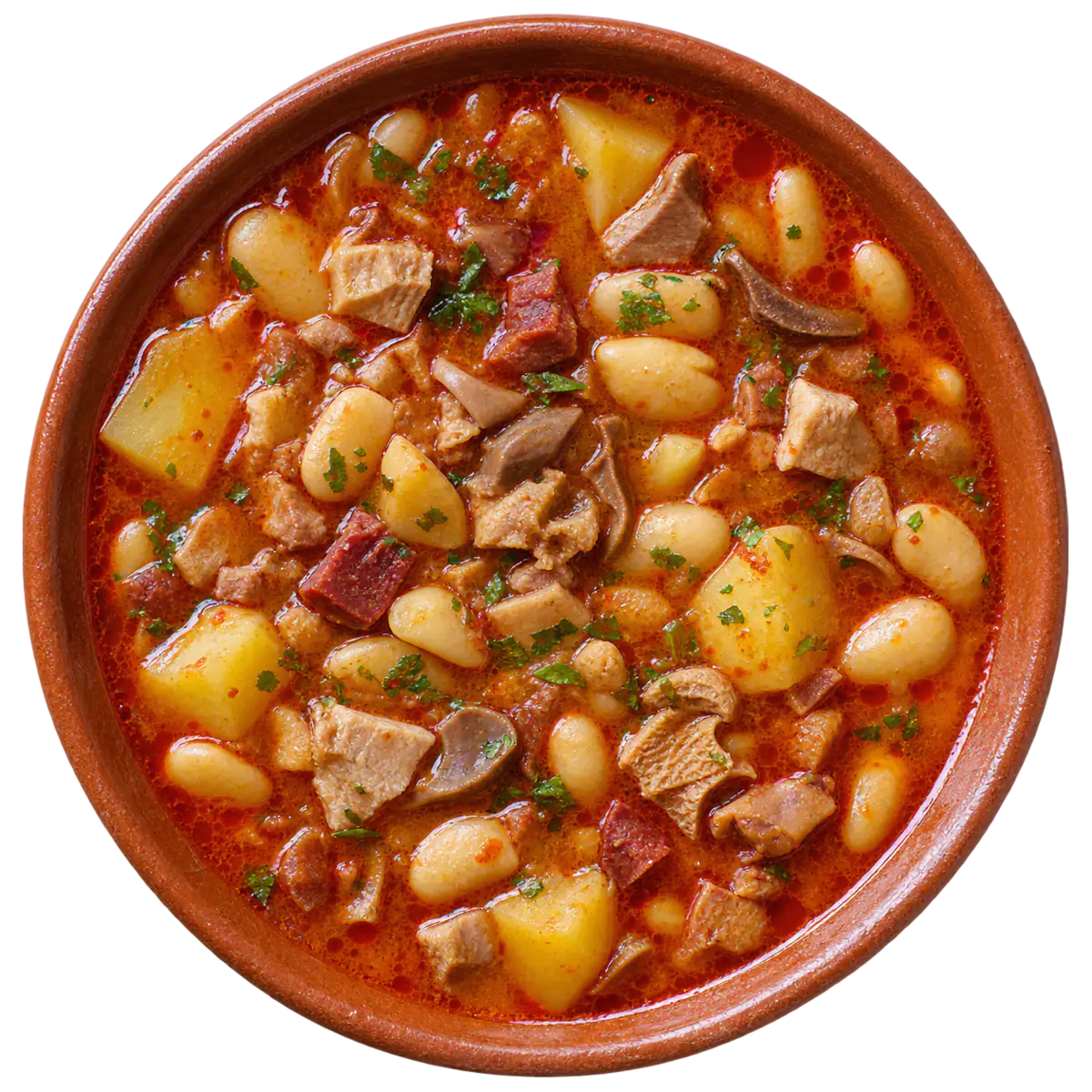
A festive Galician pig-slaughter stew of finely chopped pork (raxo, lacón, kidney, heart) with dried white beans and potatoes, finished with a paprika, saffron and cumin sofrito that gives a reddish, spicy broth.
Origin and history
Caldo de riola is a festive pig-slaughter dish made in homes around Ponte do Porto, in Camariñas on Galicia's Costa da Morte, and little known elsewhere. In 1990 a local committee built what it billed as the world's largest caldo pot, over 4,000 litres, for a festival in its honour. After lapsing, the fiesta was revived in 2017 by the Caldo de Riola association and the town council, serving about 2,000 portions each summer in the Praza do Outeiro.
Make it at home
- Makes
- 6 servings
- Total time
- 2 h 15 min
- Hands-on
- 45 min
Ingredients
- 100 g3.5 oz (1/2 cup) dried white beans (fabas), soaked overnight in cold water
- 250 g9 oz lacón (Galician cured pork shoulder), desalted overnight in cold water if salty, then chopped finely
- 250 g9 oz raxo (pork loin) and pernil (fresh pork leg), chopped finely with a knife
- 1 + 1 pork kidney (ril) and pork heart (corazón), about 250 g (9 oz) together; trimmed, rinsed and chopped finely
- 1 piece (optional) pork loin bone (oso do lombelo) or a few chopped pork ribs (costela), for flavour
- 2.5 L2.5 qt (10 1/2 cups) water
- 1 + 1 whole onion and whole head of garlic, onion peeled; garlic head rinsed, left whole
- 750 g1.65 lb potatoes (Kennebec or other floury potatoes), peeled and cut in small chunks
- 3 tbsp olive oil
- 1 onion, finely chopped, for the refrito
- 1 1/2 tbsp sweet pimentón (Spanish paprika)
- 1/2 tsp hot pimentón
- 1 good pinch saffron threads, crumbled into 2 tbsp warm broth
- 1/2 tsp ground cumin (comiños)
- salt, to taste, at the end
Method
-
1. Put the chopped meats, the kidney and heart, the bone or ribs, the whole onion and the head of garlic in a large pot with the water and bring slowly to the boil, skimming the foam, as for a cocido.
-
2. Add the drained beans, lower the heat and simmer gently for about 1 hour, until the beans are half cooked.
-
3. Remove the whole onion, the garlic head and the bone, and add the potatoes.
-
4. Simmer for 20–25 minutes more, until the potatoes are tender and the beans are soft.
-
5. Meanwhile, spoon 2 tablespoons of fat from the surface of the pot into a small frying pan with the olive oil and fry the chopped onion over low heat for about 10 minutes, until soft and golden.
-
6. Take the pan off the heat and stir in the sweet and hot pimentón, then pour this refrito straight into the pot.
-
7. Add the saffron with its liquid and the cumin, stir, and leave the caldo on low heat for 10–15 minutes so the flavours come together and the broth turns red.
-
8. Taste and add salt only now, because the lacón is salty.
-
9. Serve hot in deep bowls, ideally earthenware cuncas, with bread.
Notes
- Total time: 2 h 15 min, plus overnight soaking.
- What defines caldo de riola is the very finely chopped pork, lean cuts and offal from the pig slaughter cooked together, and the red, slightly spicy broth from the paprika refrito, seasoned with saffron and cumin. Locals compare its colour to callos (tripe stew).
- Every house uses the cuts it has after the matanza: raxo, lacón, pernil, kidney, heart and sometimes liver, with ribs or 'alegrías' as optional extras.
- The proportions here follow the festival pot, which in 2018 took about 400 kg of meat, 375 kg of potatoes and 50 kg of beans: nearly as much meat as potato, and beans as a minor ingredient.
- Fabas in Galicia are dried beans; some Spanish-language reports translate them as habas (broad beans) and others as alubias (white beans). White beans are the usual choice; dried broad beans work too but need longer cooking.
- Outside Galicia, replace lacón with a lightly salted ham hock or smoked pork shoulder, and use any mix of pork loin, leg and heart if kidney is hard to find; the broth is less savoury without the offal.
- Like most Galician caldos it is better the next day. It keeps 3 days in the refrigerator.
Adapted from Adiante Galicia: Receita do Caldo de Riola.
At the festivals
Served at 1 festival in Spain.
Earlier editions
-
August 01, 2026
🇪🇸 Camariñas, Spain
Festa do Caldo de Riola