
🇧🇷 Brazil · Alagoas (Mundaú lagoon, Maceió); also Bahia
Caldo de sururuBrazilian mussel soup
A Northeast Brazilian broth of sururu (lagoon mussels) cooked in coconut milk with onion, garlic, peppers, tomato and coriander, served in bowls or small cups; in Bahia it is richer, with dendê, dried shrimp and aipim.
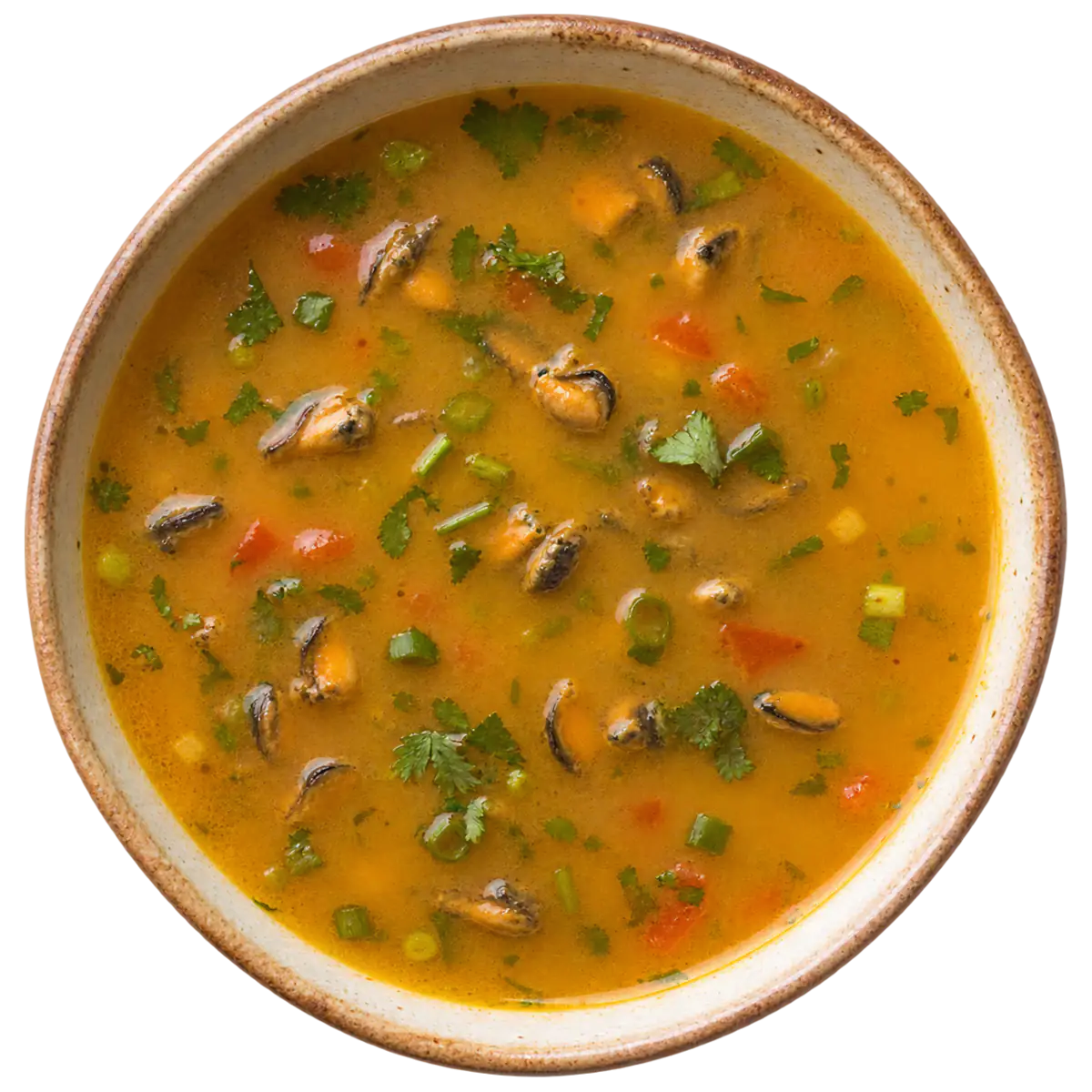
Origin and history
Sururu (Mytella mussels) takes its name from the Tupi seru'ru, and its shells fill the sambaquis, the shell mounds left by the Brazilian coast's earliest peoples. In Alagoas it is gathered by hand in the Mundaú–Manguaba lagoons around Maceió, where it has fed families on the lagoon shore, in neighbourhoods such as Vergel do Lago, for generations; it is listed as intangible heritage of Alagoas (2014). Cooked in coconut milk, it is eaten as caldo, caldinho and sururu de capote.
Make it at home
- Makes
- 6 servings (about 12 small cups as caldinho)
- Total time
- 45 min
- Hands-on
- 30 min
Ingredients
- 600 g1.3 lb shelled sururu (sururu catado), or small shelled mussels; see notes
- 2 tbsp vegetable oil
- 1 large (about 200 g)1 large (about 7 oz) onion, finely chopped
- 5 garlic cloves, grated or crushed
- 2 bell peppers (pimentões), one green and one red, seeded and finely diced
- 2 (about 250 g)2 (about 9 oz) ripe tomatoes, seeded and chopped
- 3–4 pimenta-de-cheiro (small aromatic, mildly hot peppers), seeded and chopped; or a sliver of habanero
- 1 tsp colorau (ground annatto), for colour
- 1 l4¼ cups coconut milk (leite de coco), fresh if possible; or 2 cans (400 ml each) topped up with water
- 1 bunch (about 30 g)1 bunch (about ½ cup chopped) cheiro-verde: fresh coriander (coentro) and spring onion (cebolinha), chopped
- salt, to taste
- 2 limes, cut in wedges, to serve
- malagueta pepper sauce, optional, to serve
Method
-
1. Put the sururu in a bowl of cold water, swish it around and squeeze it gently by the handful, then drain; repeat three times, until the water runs clear, picking out any bits of shell or lagoon grit.
-
2. Heat the oil in a heavy pot over medium heat and fry the onion and garlic for 5–6 minutes, until soft and turning golden.
-
3. Add the bell peppers, pimenta-de-cheiro, tomatoes and colorau and cook for 5 minutes, stirring, until the tomato has collapsed into the onion.
-
4. Add the drained sururu and stir for 3–4 minutes; the mussels will release their own juice into the pot.
-
5. Pour in the coconut milk, bring it just to the boil, then lower the heat and simmer uncovered for 10–15 minutes, stirring now and then, until the broth tastes of the sea and has thickened slightly. Do not let it boil hard, or the coconut milk may split and the sururu turn rubbery.
-
6. Season with salt, take the pot off the heat and stir in most of the coriander and spring onion.
-
7. Ladle into bowls or small cups, scatter over the rest of the herbs and serve very hot, with lime wedges and pepper sauce on the side.
Notes
- This is the Alagoas way: sururu cooked in coconut milk with onion, garlic, sweet peppers, tomato and coriander. In Alagoas the same base gives three dishes: caldo or caldinho (a broth served in bowls or cups), the thicker, almost creamy sururu ao coco eaten with rice and farofa, and sururu de capote, where the mussels are cooked in their shells in a thinner broth and served in a cuia (gourd bowl) with rice, farofa and lime.
- In Bahia, around Salvador and the Bay of All Saints, caldo de sururu is richer: the mussels are cooked with dried shrimp, part of them is blended with the cooking liquid, and the pot gets dendê (palm oil), coconut milk, a splash of cachaça and a purée of aipim (cassava), which some cooks replace with potato.
- For a smooth bar-style caldinho, blend half of the finished soup and stir it back into the pot.
- Sururu (Mytella mussels) is sold shelled and cleaned in north-east Brazil. Elsewhere, use the smallest mussels you can find, steamed open and shelled (keep and strain their liquor and add it with the coconut milk), or frozen mussel meat, chopped if large. The flavour is close, though sururu is more delicate and slightly muddier, as it grows in brackish lagoons.
- Sururu filters lagoon water, so buy it only from a trusted seller, and keep it cold until you cook it.
- In Alagoas and Bahia the caldinho is a bar and beach food, eaten in small cups with a cold beer; the Bahian portion is about 200 ml, garnished with coriander and a pepper. It is also popularly credited with aphrodisiac powers, which nutritionists dismiss.
- It keeps for a day in the fridge. Reheat gently without boiling.
Adapted from Sabores Ancestrais: Receitas tradicionais do quilombo de Sibaúma/RN (Museu Câmara Cascudo, UFRN), Tudo Gostoso: Culinária alagoana, and A Tarde, Histórias e Sabores: Sururu, o molusco com nome indígena que tem o sabor da Bahia.
At the festivals
Served at 1 festival in Brazil.
Earlier editions
- May 13, 2026 – August 30, 2026
- May 29, 2024 – September 01, 2024