
🇪🇸 Spain · Maragatería, León (Astorga, Castrillo de los Polvazares)
Cocido maragatoLeón chickpea stew
The cocido of the Maragatería in León, famous for reversing the usual order: the meats come first, then the chickpeas with cabbage and potato, and the soup last.
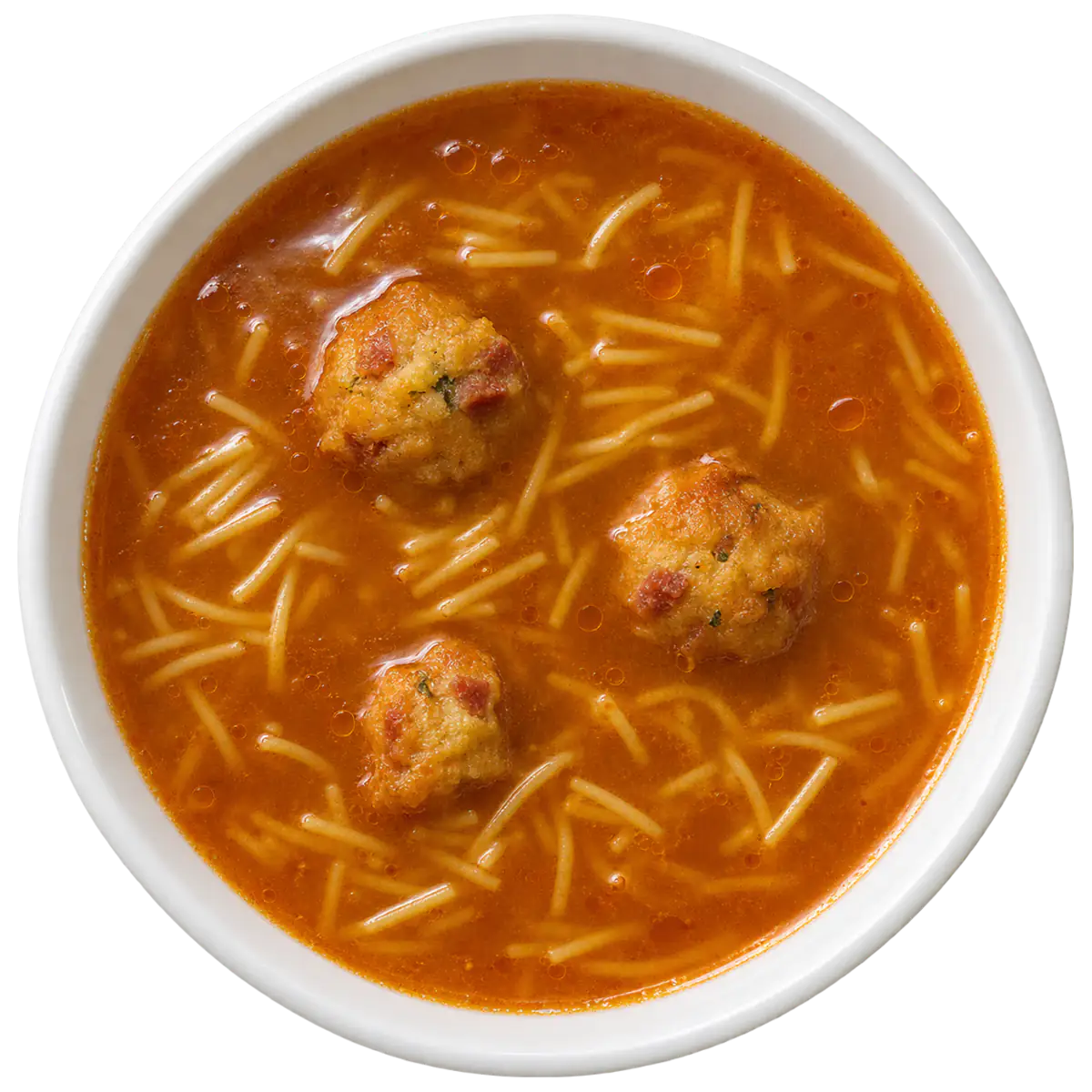
Origin and history
The cocido maragato belongs to the Maragatería, the district of León around Astorga, whose muleteers carried goods across Spain. According to tradition, the reversed order of service, meats first and soup last, comes from their habit of starting with the heavy food for the road. The Castilla y León tourist board presents it as a typical dish of the region.
Make it at home
- Makes
- 6 servings (the three courses, in reverse)
- Total time
- 3 h
- Hands-on
- 1 h 10 min
Ingredients
- 350 g1 3/4 cups dried chickpeas (garbanzos), soaked overnight; a mesh bag keeps them together
- 300 g10 oz beef shank (morcillo), in one piece
- 250 g9 oz pork ribs, salted or marinated (costilla adobada)
- 1 lacón (cured pork shoulder), desalted in cold water overnight; cured ham or ham hock if not available
- 100 g3 1/2 oz cecina (cured beef), optional, desalted
- 1 pig's ear (oreja)
- 1 pig's trotter (manita), split
- 100 g3 1/2 oz tocino (salt pork belly)
- 1 beef marrow bone
- 2 chicken or hen thighs
- 2 fresh chorizo (chorizo fresco)
- 1/2 cabbage (berza, traditionally Asa de Cántaro), cut in pieces
- 500 g1 lb potatoes, peeled
- 1 onion and 3 garlic cloves, for the broth and filling
- 120 g4 oz medium noodles (fideos)
- 2 eggs, for the filling (relleno)
- 100 g2 cups day-old breadcrumb (miga de pan), for the filling
- 40 g1 1/2 oz ham and chorizo, finely chopped, for the filling
- 1 tbsp chopped parsley, for the filling
- flour, olive oil, sweet paprika, salt, to fry the filling and dress
Method
-
1. Put the beef, ribs, lacón, cecina, ear, trotter, tocino, marrow bone and half the onion in a large pot, cover with cold water and bring to a boil. Skim the foam for 10 minutes.
-
2. Add the chickpeas in their mesh bag and cook gently, partly covered, for 1 hour.
-
3. Add the chicken and chorizo and cook for 30 minutes more, until the chickpeas and the beef are tender.
-
4. Meanwhile, make the filling: mix the breadcrumb with the eggs, the chopped garlic, parsley, ham and chorizo until it holds together; form walnut-sized balls, roll in flour and fry in hot olive oil for 1 minute until golden, then drain.
-
5. Boil the cabbage and potatoes in a separate pot with a ladle of broth and enough water for 25 minutes, until the potatoes are tender; drain.
-
6. Lift out the meats and keep them warm on a platter. Keep the chickpeas warm with the cabbage and potatoes; dress with oil and a pinch of paprika.
-
7. Strain the broth into a clean pot, salt it, add the filling balls and bring to a boil; add the noodles and cook until tender, 6 to 8 minutes.
-
8. Serve the first course: the meats, the ear, the tocino, the chorizo and the filling together on a platter.
-
9. Serve the second course: the chickpeas with the cabbage and potatoes.
-
10. Serve the last course: the noodle soup, which many diners like to mix with the remaining chickpeas.
Notes
- The distinctive feature is the order: meats first, then chickpeas and cabbage, soup last. Other cocidos start with the soup. According to local tradition, the order comes from the muleteers (arrieros) of the Maragatería, who needed heavy food first for the road.
- The meats are more numerous than in the cocido madrileño: lacón, cecina, ear and trotter, ribs, and a stuffed filling (relleno) of egg, bread, garlic, ham and chorizo.
- The filling balls are fried briefly and then cooked in the broth to be served in the soup or at the first course, depending on the cook.
- It is a speciality of Astorga and Castrillo de los Polvazares, in León; it is also called cocido leonés.
- Substitutions: any good cured pork shoulder or ham hock for the lacón; any dried Spanish cabbage or Savoy for the berza.
Adapted from Cocido maragato, Turismo Castilla y León, Cocido maragato, Directo al Paladar, and Cocido maragato, Spain.info (Spanish tourist board).
At the festivals
No festival we list has printed it on a menu yet.