
🇨🇳 China · Mengzi, Yunnan
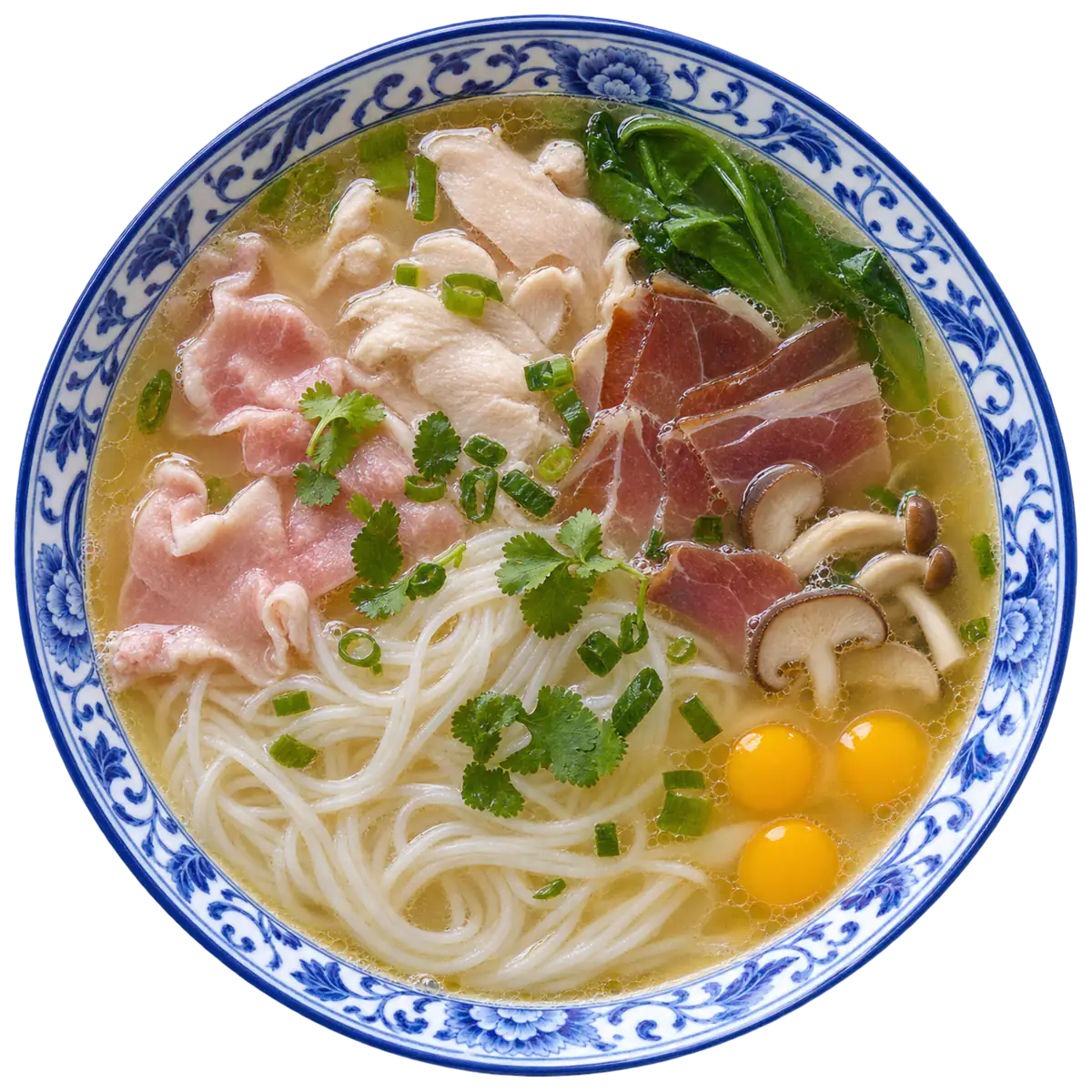
Guoqiao mixianCrossing-the-bridge noodles
A bowl of very hot, oil-covered broth of old hen and pork bones brought to the table with separate plates of raw meat, vegetables and rice noodles, which diners add to the broth themselves so it cooks them at the table.
Origin and history
Guoqiao mixian comes from Mengzi in southern Yunnan, whose rice-noodle craft is on China's national intangible heritage list. According to tradition, a scholar studying for the imperial examinations lived on an island, and his wife carried his meals across a bridge; she found that a layer of fat kept the broth hot enough to cook raw ingredients and kept the noodles separate until the end. This is a legend; a Mengzi article describes the broth as old hen and pork bone, and its clear broth and silky noodles earned the nickname gold soup, silver thread.
Make it at home
- Makes
- 4 servings
- Total time
- 3 h 45 min
- Hands-on
- 45 min
Ingredients
- 900 g2 lb old hen or stewing chicken, cut in pieces; chicken wings work if you cannot find a hen
- 500 g1 lb 2 oz pork tube bones (tong zi gu) or pork neck bones
- 2.5 L10 cups water, plus extra for blanching
- 1 scallion, cut in four
- 2.5 cm1 in ginger, crushed
- 2 tsp white peppercorns
- 2 tbsp Shaoxing wine
- 60 g2 oz Yunnan (Xuanwei) ham or another dry-cured ham, thinly sliced
- 800 g1 3/4 lb fresh rice noodles (mixian), or 400 g / 14 oz dried, soaked until soft
- 400 g14 oz very thinly sliced raw pork loin, chicken breast or fish fillet, any mix; sliced paper thin
- 230 g8 oz tender leafy greens, baby bok choy, spinach, watercress or pea shoots, in small pieces
- 120 g4 oz mushrooms, beech, enoki or shiitake
- 2 tbsp chopped Sichuan zha cai or other pickle
- 4 quail eggs or eggs, optional, raw, each in a small dish
- salt, white pepper, chili sauce, chopped coriander and scallion, to taste
Method
-
1. Cover the hen and pork bones with cold water, bring to a boil for 5 minutes, then drain and rinse them to remove scum.
-
2. Return the bones to a clean pot with the 2.5 L of water. Bring to a simmer and skim. Add the scallion, ginger, peppercorns and wine.
-
3. Simmer very gently, partly covered, for 3 hours, skimming now and then, until the stock is clear and tastes full of chicken. Strain, and skim off the fat into a small cup.
-
4. Prepare the plates: cook the noodles in boiling water until just done and drain; arrange the sliced meat or fish, the greens, mushrooms, pickle, and eggs on separate plates. If the pieces are not paper thin, they will not cook in the bowl.
-
5. Bring about 2 L of the stock to a boil with the ham for 5 minutes. Season lightly with salt and white pepper.
-
6. Pour the stock into large, deep bowls and spoon over a layer of the reserved chicken fat. The fat seals the surface, so the stock stays scalding with no steam rising.
-
7. Carry the bowls and plates to the table. Slide the raw meat and fish into the broth first and let them turn opaque, then the eggs, mushrooms and greens, and last the noodles.
-
8. Season with chili sauce, coriander and scallion and eat straight away.
Notes
- The point of the dish is the hot, oil-covered broth, which cooks the raw ingredients at the table, so serve it in a pre-warmed deep bowl. A Mengzi article describes the broth as old hen and pork bones simmered for six hours or more; the 3-hour simmer here is a home compromise.
- Many side plates are traditional: more than ten small dishes in a shop, with thin pork loin, chrysanthemum, mushrooms, ham, shrimp, tofu skin and quail eggs among them. Pick what you can find; the raw ingredients must be sliced very thin.
- The noodles are smooth, springy rice noodles (mixian, the craft of Mengzi); fresh round rice noodles from an Asian grocer are the closest substitute.
- Some modern recipes leave out the layer of fat. If you do, keep the broth at a rolling boil right until it reaches the bowl.
- The stock can be made two days ahead and refrigerated; the fat sets on top and is easy to lift off.
Adapted from Soy, Rice, Fire, Yunnan Crossing-the-Bridge Noodles (stock and quantities), GoKunming, Across the Bridge Noodles recipe, and People's App column on Mengzi guoqiao mixian (broth of old hen and pork bones).
At the festivals
No festival we list has printed it on a menu yet.