
🇳🇵 Nepal · Kathmandu Valley, Newar cuisine
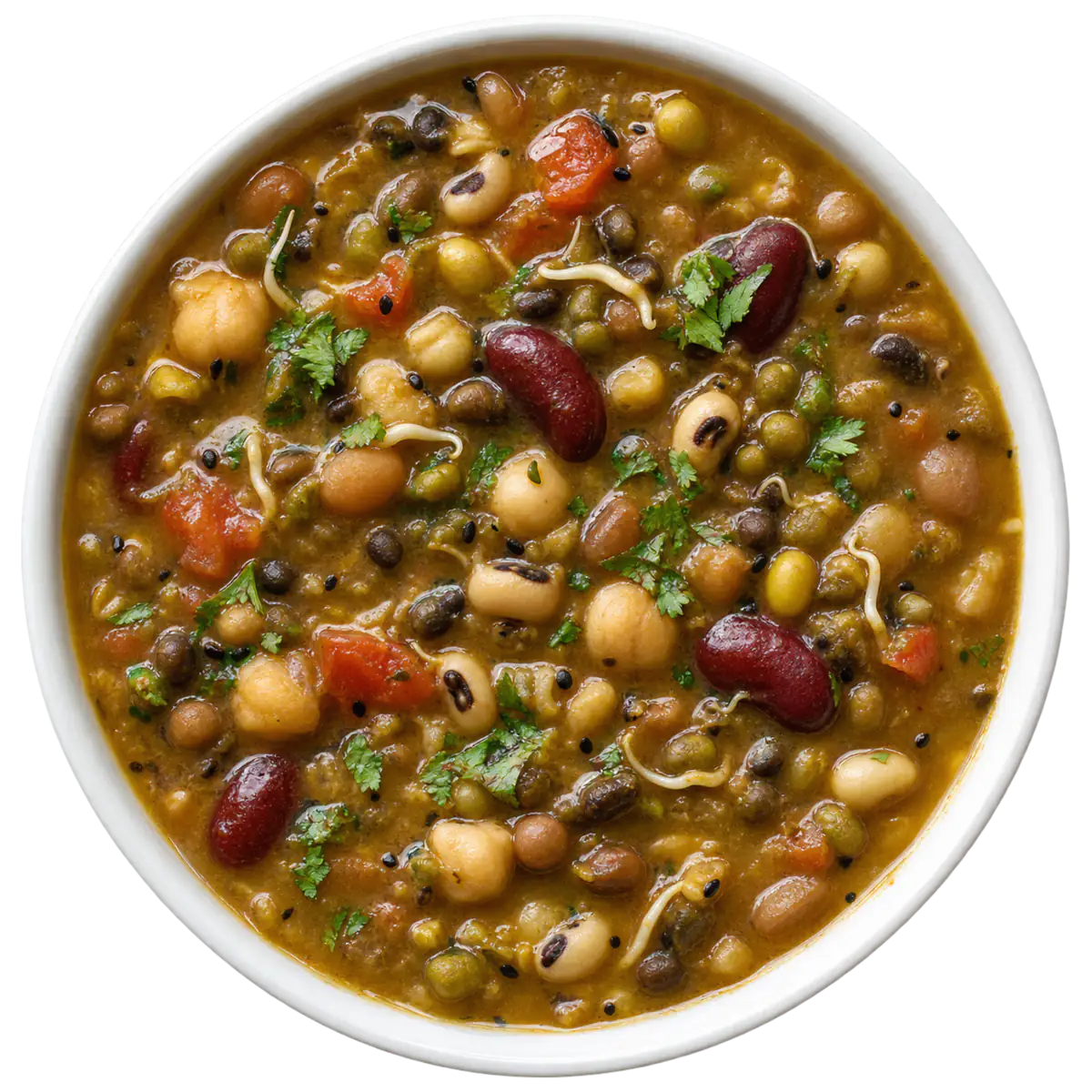
KwatiNepali mixed bean soup
A Newar soup of mixed sprouted beans (traditionally nine kinds) simmered with ginger, garlic, tomato and spices, eaten on the full moon of Gunhi Punhi (Janai Purnima) in August.
Origin and history
Kwati is a Newar soup of sprouted mixed beans from the Kathmandu Valley, eaten on Gunhi Punhi, the full moon at the end of the monsoon. One explanation is that monsoon rain leaking through thatched roofs made stored beans sprout, so that cooks learned to use the sprouted beans. Little about its origin was written down; the accounts of its meaning differ and tie it to the lean season before the autumn harvest.
Make it at home
- Makes
- 6 servings
- Total time
- 1 h
- Hands-on
- 40 min
Ingredients
- 450 g2 1/2 cups mixed dried beans and pulses, ideally nine kinds: black gram, green gram (mung), chickpea, field bean, soybean, field pea, garden pea, cowpea, navy or kidney bean; a smaller mix is fine
- 2 tbsp mustard oil, or ghee
- 1 tsp ajwain (carom seeds), the signature seasoning
- 1 tsp cumin seeds
- 2 dried red chillies
- 1 large onion, chopped
- 5 cloves garlic, chopped
- 3 cm1 1/4 inch fresh ginger, grated
- 2 tomatoes, chopped
- 1/2 tsp turmeric
- 1 tsp ground coriander
- 1 tsp ground cumin
- 2 litres8 cups water
- salt and fresh coriander, to taste, to garnish
Method
-
1. Soak the mixed beans in plenty of cold water overnight (about 8 hours), then drain.
-
2. Spread them in a colander or tie them in a damp cloth, cover, and keep them moist, rinsing with fresh water twice a day, for 2 to 3 days until each bean shows a short white sprout (about 5 mm / 1/4 inch).
-
3. Heat the mustard oil in a large pot until it smokes lightly, then lower the heat and add the ajwain, cumin and dried chillies for a few seconds.
-
4. Add the onion, garlic and ginger and cook for 5 minutes until soft and golden; add the tomatoes and cook 5 minutes more until they break down.
-
5. Stir in the turmeric, coriander and ground cumin, then add the sprouted beans and stir for 3 to 4 minutes to coat.
-
6. Add the water and salt, bring to a boil, skim, then cover and simmer for 40 to 50 minutes, until the beans, even the chickpeas and soybeans, are tender and the broth is slightly thick.
-
7. Taste for salt, garnish with coriander and serve hot in bowls, with beaten rice (baji or chiura), rice or flatbread.
Notes
- Total time: 3 days (about 1 h of cooking).
- Kwati means hot soup in Nepal Bhasa (kwa, hot; ti, liquid). It is the dish of Gunhi Punhi, the full moon of Gunla (late August to September), which the Hindus of Nepal observe as Janai Purnima; Newars call it Kwati Punhi.
- The count of nine beans is a popular rule, but elders and cooks quoted by the Kathmandu Post say it is not a requirement: families used whatever beans they had. The nine is linked to the ninth month of the Nepal Sambat calendar or to the Navagraha, depending on who explains it.
- Sprouting is the technique that defines it; the sprouts also make the beans faster to cook and, according to cooks, easier to digest. Do not skip the long simmer.
- Variations seen in Newar homes: wheat-flour dumplings or cut flatbread squares cooked into the soup, a buffalo or mutton hoof for richness, and a final pour of hot oil with ajwain.
- Cook with a pressure cooker (about 20 minutes) if you are short of time; the beans will be softer.
Adapted from Who said kwati needed nine beans?, The Kathmandu Post, Tale of Kwati Purnima, Ask Me About Nepal, and Nepali Kwati Soup, Curry Recipes.
At the festivals
No festival we list has printed it on a menu yet.