
🇺🇿 Uzbekistan · also cooked by Bukharian Jews as moshoba
MashkhurdaUzbek mung bean soup
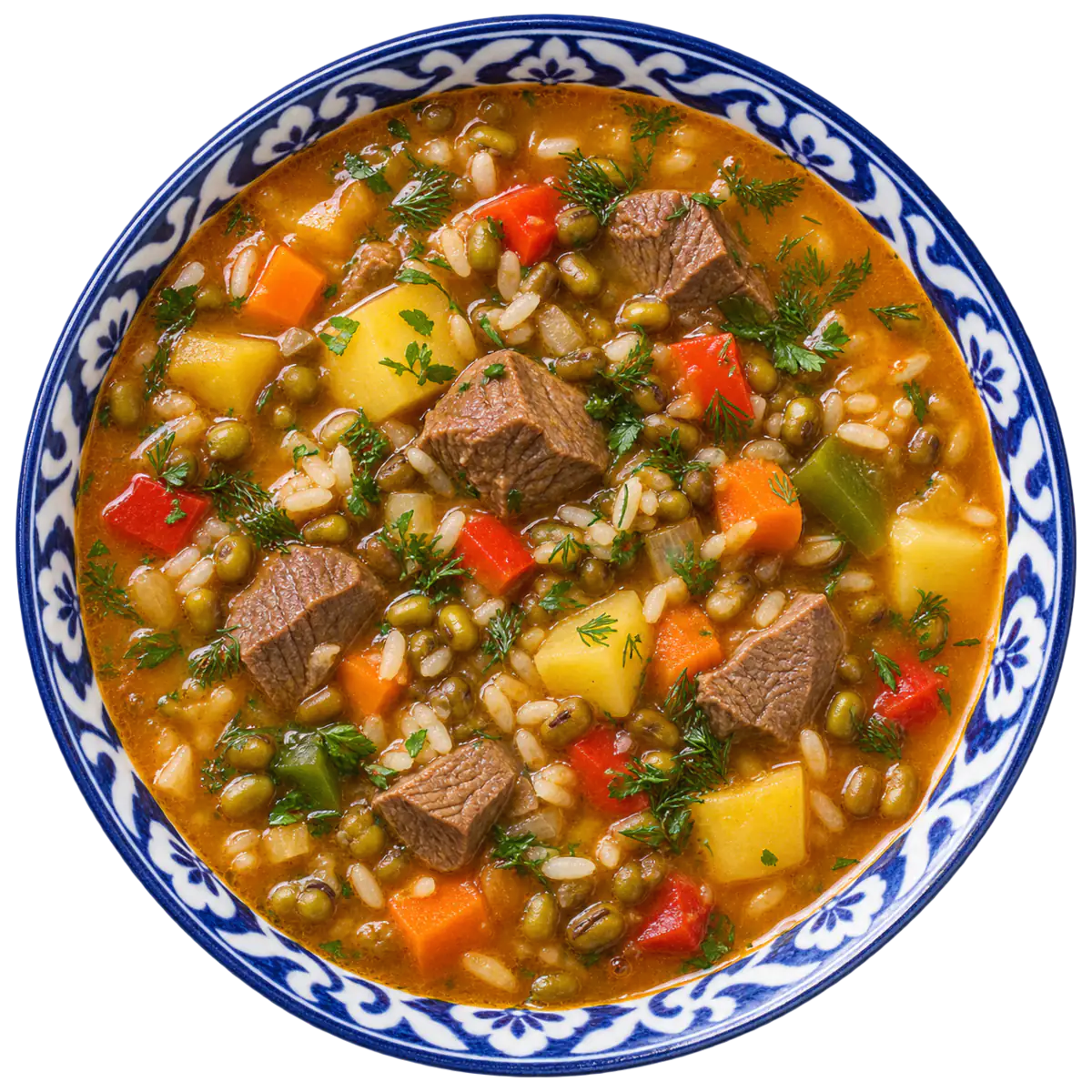
A thick Uzbek soup of mung beans and rice cooked with beef (boneless or on the bone) and vegetables (onion, carrot, often pepper and tomato), brothy in some regions and almost stew-like in others.
Origin and history
Mashkhurda is a thick Uzbek soup of mung beans, rice, meat and vegetables, named for the mung bean. Nur.kz says the Uzbek version has long been popular and that similar soups exist across Asian cuisines. A Bukharian community paper calls its cousin moshoba a heritage dish of Bukharian kitchens, tied to winter cooking, and describes mashkhurda as an Uzbek peasant dish that usually includes peppers and tomatoes.
Make it at home
- Makes
- 5 servings
- Total time
- 1 h 45 min
- Hands-on
- 35 min
Ingredients
- 300 g10.5 oz beef, boneless (brisket, or lamb ribs or beef shank), cut in cubes about the size of half a walnut
- 100 g1/2 cup whole green mung beans (mosh), rinsed
- 60 g1/3 cup round-grain rice, rinsed
- 100 g3.5 oz potato, 1 cm (1/2 in) dice
- 100 g3.5 oz carrot, 1 cm (1/2 in) dice
- 100 g3.5 oz onion, coarsely chopped
- 1 sweet bell pepper, seeded, cut a little larger than the carrot
- 6 cloves garlic, coarsely chopped
- 2 tbsp tomato paste
- 30 ml2 tbsp vegetable oil
- 1.5 L6 1/3 cups water
- 1.5 tsp ground paprika
- 1 tsp ground cumin
- 1/2 tsp coriander seed, lightly crushed
- 1/2 tsp black pepper
- 1 tsp salt
- 20 g each1 small bunch each dill and parsley, finely chopped
Method
-
1. Heat the oil in a heavy pot or kazan over high heat, add the meat and leave it 3 to 4 minutes before turning, then stir until the moisture is gone and a light crust forms.
-
2. Add the onion and salt and fry until translucent or lightly golden.
-
3. Add the carrot, then the garlic a minute later, and when the carrot softens add the bell pepper and fry about a minute more.
-
4. Add paprika, cumin, black pepper and coriander and fry briefly, then stir in the tomato paste on lower heat until the fat turns orange.
-
5. Pour in 500 ml (2 cups) of water, bring to a boil, cover and simmer 15 minutes.
-
6. Add the mung beans and the remaining 1 L of water, bring to a boil, lower the heat and cook about 30 minutes, until the beans are soft and their skins split.
-
7. Add the rice, stirring so it does not stick, and the diced potato, and cook about 20 minutes until both are tender.
-
8. Stir in the herbs just before turning off the heat, rest 5 minutes, and serve with sour cream and flatbread.
Notes
- The soup is called mashkhurda after the mung bean (mosh); Uzbek food guides describe it as anything from fairly brothy to very thick, close to a main course, with beef the usual meat and lamb less often.
- The meat and vegetables are fried in fat before any water goes in; the Nur.kz article credits this for the dish's flavour.
- The Nur.kz recipe gives these amounts for 10 small portions; here the same amounts are served as 5 generous bowls. Another Russian recipe (Lifehacker) uses the same weight of meat and mung beans for 4 servings with 1.8 L of water, tomatoes, bay leaf and a little chili. For a thinner soup add 300 to 500 ml more water.
- Lifehacker soaks the mung beans in cold water for 10 to 12 hours, changing the water; Nur.kz only rinses them. Soaked beans cook faster, so check them earlier. Nur.kz suggests round-grain rice because it is starchier and cooks down well.
- Bone-in meat (ribs, shank) is equally good and gives a richer broth; the Nur.kz recipe uses boneless beef.
- A Bukharian relative, moshoba, leaves out the peppers and tomatoes and uses turnips, onions and carrots with meat and bones, mung beans and rice. Orexca lists mastava, the Uzbek meat, rice and vegetable soup, separately, with no pulses mentioned.
Adapted from Nur.kz, Natsionalnye retsepty: Mashkhurda sytny, Bukharian Times, Moshoba (Bukharian mung bean soup), and Lifehacker (Russian): Mashhurda.
At the festivals
No festival we list has printed it on a menu yet.