
🇹🇼 Taiwan · west-coast oyster areas
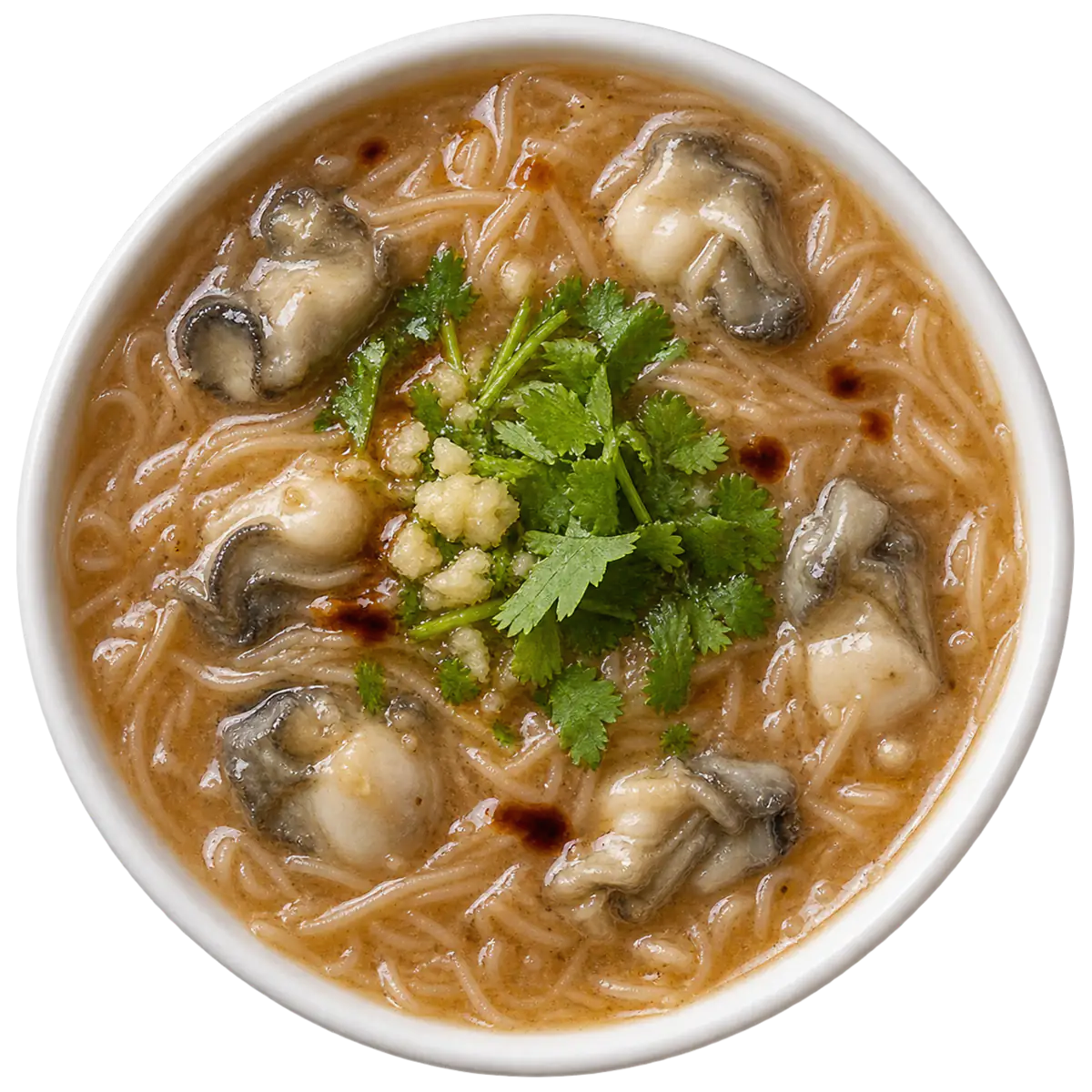
Ô-á mī-suàⁿTaiwanese oyster vermicelli
A thick, starch-thickened soup of very thin roasted wheat vermicelli (misua) and fresh oysters in a broth often flavored with dried bonito, seasoned with garlic and coriander.
Origin and history
Taiwan's Taipei Times says oyster misua is believed to have been invented by coastal residents: farmers ate misua as a snack after work, and locals added oysters, which are easy to get in Taiwan's warm waters. No date is given. Changhua, Chiayi and Tainan are named as the main oyster-producing areas, and vendors typically cook a large pot ahead for customers to order, often with pig large intestine as the alternative topping.
Make it at home
- Makes
- 4 to 6 servings
- Total time
- 50 min
- Hands-on
- 35 min
Ingredients
- 225 g1/2 lb roasted red misua (hong mian xian), soaked in cold water until soft, drained, cut in 12 cm / 5 in lengths (Kuo Mama's recipe uses 225 g for oysters and intestine)
- 20 small small fresh shucked oysters, rinsed and drained, large ones cut in pieces
- 1 tbsp sweet potato starch, for coating the oysters (cornstarch also works)
- 2 L8 cups chicken broth or water, the Angel Wong recipe uses chicken broth
- 1 cup (about 10 g)1 cup dried bonito flakes (katsuobushi), half for steeping the broth, half cooked with the misua
- a small handful dried shrimp, optional, rinsed (the sources give no amount)
- 2 tbsp fried shallots
- 1 tbsp soy sauce
- 1 tsp sugar
- 1/4 tsp ground white pepper
- 4 tbsp cornstarch or sweet potato starch, stirred into 120 ml / 1/2 cup cold water
- minced fresh garlic or garlic water, to taste, at the table
- coriander, black vinegar, chili oil, to finish
Method
-
1. Soak the misua in cold water until soft, drain and cut in 12 cm (5 in) lengths.
-
2. Toss the oysters in the sweet potato starch to coat lightly, then blanch them in boiling water for 1 to 2 minutes. Move to a bowl of cool water so they stay plump and do not stick together. Drain.
-
3. Bring the water or broth and half the bonito flakes (and the dried shrimp, if using) to a boil and simmer 5 minutes. Strain, discarding the solids.
-
4. Return the broth to the pot with the remaining bonito flakes, the misua, fried shallots, soy sauce, sugar and white pepper. Simmer over medium-low heat for about 20 minutes, until the misua is completely soft.
-
5. Stir the starch and water again, pour it in a thin stream and keep stirring for several minutes until the soup is thick and glossy, so the starch does not clump.
-
6. Fold the oysters in last, just before serving, so they do not swell and turn watery. Serve in small bowls with garlic, coriander, black vinegar and a little chili oil.
Notes
- Cook the oysters at the very end: a Taiwanese shop owner says that once oysters sit with the noodles for 10 to 20 minutes they swell and turn watery. The shop scatters them in a spoonful at a time so they do not sink.
- When thickening, the same shop stirs continuously for at least 5 to 6 minutes so the starch does not clump. The soup is smooth and slightly sweet. Red misua is white misua baked for a long time, so it withstands long cooking without turning mushy; white misua will dissolve.
- Pig large intestine is a popular alternative, cooked until tender and cut small; diners who avoid oysters or offal can order plain misua. Kuo Mama's recipe uses 225 g (1/2 lb) of cooked intestine with 20 small oysters and the same amount of misua.
- Broths differ by shop: one Keelung shop builds its broth on bonito flakes and dried shrimp, and Keelung stalls often add intestine. Quantities here follow Angel Wong's broth (1 cup of bonito flakes to 8 cups of broth).
Adapted from Angel Wong's Kitchen, Taiwanese Oyster Noodles (broth, bonito, starch quantities), Kuo Mama, Oyster and Pork Intestine Vermicelli (misua, oyster and intestine quantities), and TVBS feature on the method of a Taiwanese vermicelli shop (oysters, thickening).
At the festivals
No festival we list has printed it on a menu yet.