
🇳🇬 Nigeria · South-east Nigeria (Igbo)
Oha soupNigerian leafy green soup
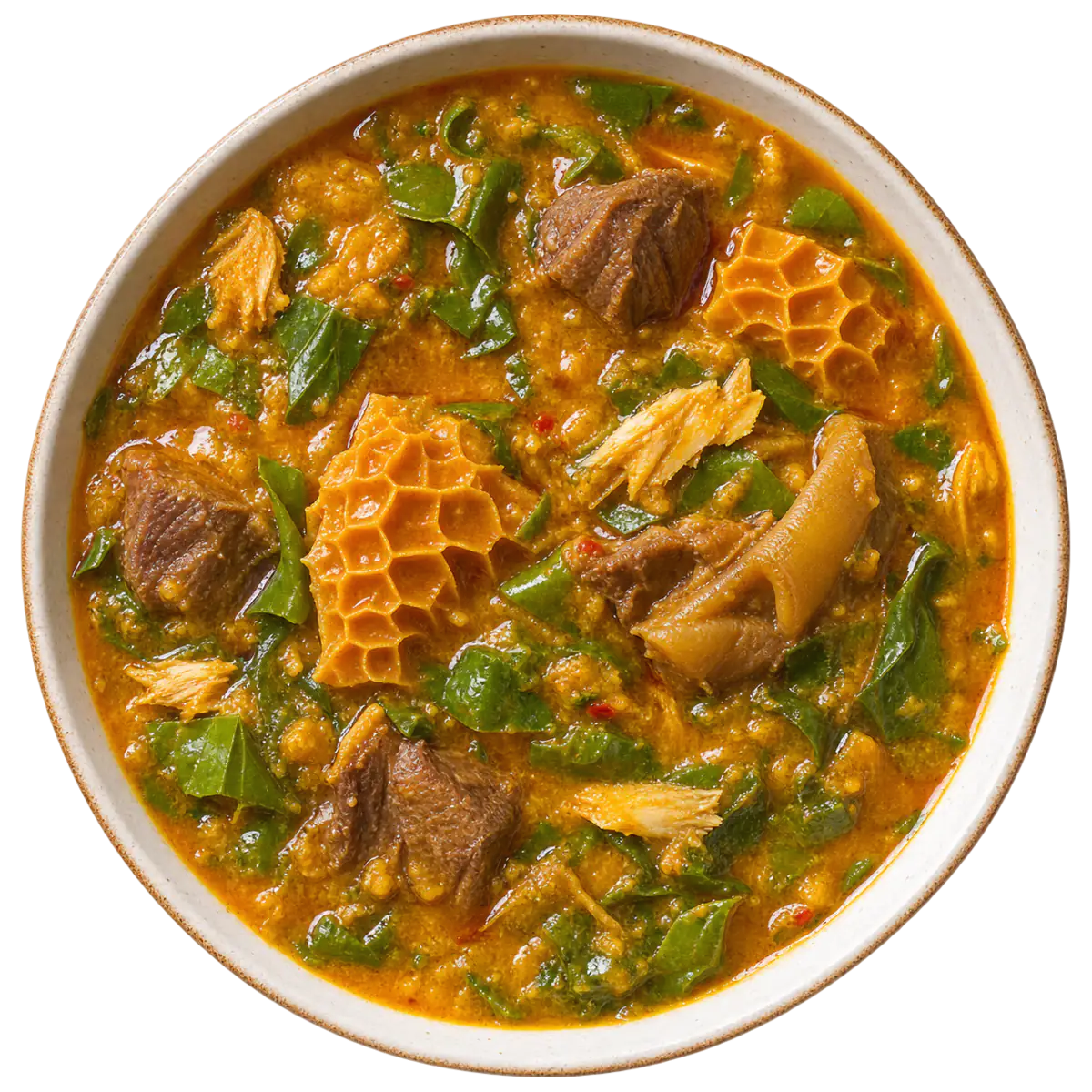
An Igbo soup of oha (Pterocarpus mildbraedii) leaves in a base thickened with cocoyam, achi or ofor, cooked with palm oil, assorted meat, stockfish and crayfish, and eaten with a swallow.
Origin and history
Oha soup, ofe oha or ora soup, is an Igbo dish of south-eastern Nigeria, cooked for special occasions such as weddings, festivals and gatherings. It is made with the leaves of the oha tree, Pterocarpus mildbraedii, which are sold fresh in Igbo markets and are seasonal. Its method is shared with ofe onugbu.
Make it at home
- Makes
- 6 servings
- Total time
- 1 h 30 min
- Hands-on
- 45 min
Ingredients
- 1 kg2.2 lb assorted meat: beef, goat and tripe, cut in pieces
- 1 piece stockfish, soaked, cleaned, flaked
- 1 smoked dried fish, cleaned, deboned
- 8 small cocoyam (ede), boiled, peeled, pounded smooth
- 2 cups loosely packed fresh oha leaves (Pterocarpus mildbraedii), torn by hand, not cut
- 2 tbsp red palm oil
- 2 tbsp ground crayfish
- 1 tsp ogiri (ogiri ugba)
- 1 handful uziza leaves, optional
- hot pepper, seasoning cubes, salt, to taste
Method
-
1. Boil the cocoyam until soft, peel it and pound or blend to a smooth paste.
-
2. Season the assorted meat with salt, a cube and onion if you like; boil in just enough water for 40 minutes until tender.
-
3. Add the stockfish and dried fish, with extra water if needed, and simmer 15 minutes.
-
4. Stir in the palm oil until it dissolves, then the crayfish, ogiri, pepper and seasoning.
-
5. Spoon in the cocoyam paste in lumps, cover and let it melt. Stir and add the uziza if using; cook 5 to 7 minutes until the soup is thick and silky, not watery.
-
6. Add the oha leaves, stir gently and simmer for 5 minutes, no longer. Adjust salt and pepper and serve.
Notes
- Oha (ora) soup is an Igbo soup of the south-east, a feast dish at weddings, festivals and family gatherings. The base is the same as for ofe onugbu: cocoyam, palm oil, ogiri, stockfish; the leaf is what makes it oha. Oha is a delicate, slightly sweet leaf, not bitter.
- The usual swallow is pounded yam, fufu or akpu, or garri/eba.
- Cooks tear the leaves by hand; cutting is said to make the soup bitter. Add them last, and do not let them stew.
- Oha leaves are hard to find abroad; frozen leaves from African markets are the best swap. Otherwise use tender young spinach with a few leaves of fresh basil or ugu-like greens, or baby kale: the soup is greener and milder, and loses oha's distinctive aroma. Add them the same way, at the end.
- Cocoyam can be replaced by taro or by instant potato or yam flour stirred in; achi or ofor are the traditional alternatives. Uziza leaf can be replaced by a little black pepper and fresh basil. Without ogiri, use a small amount of ground iru or locust beans.
Adapted from BusinessDay Nigeria, Discover the rich tradition and flavour of oha soup and The Guardian (Nigeria), How to make oha soup.
At the festivals
No festival we list has printed it on a menu yet.