
🇧🇷 Brazil · Southeast and South (Minas Gerais, São Paulo, Paraná)
QuireraBrazilian cracked corn stew
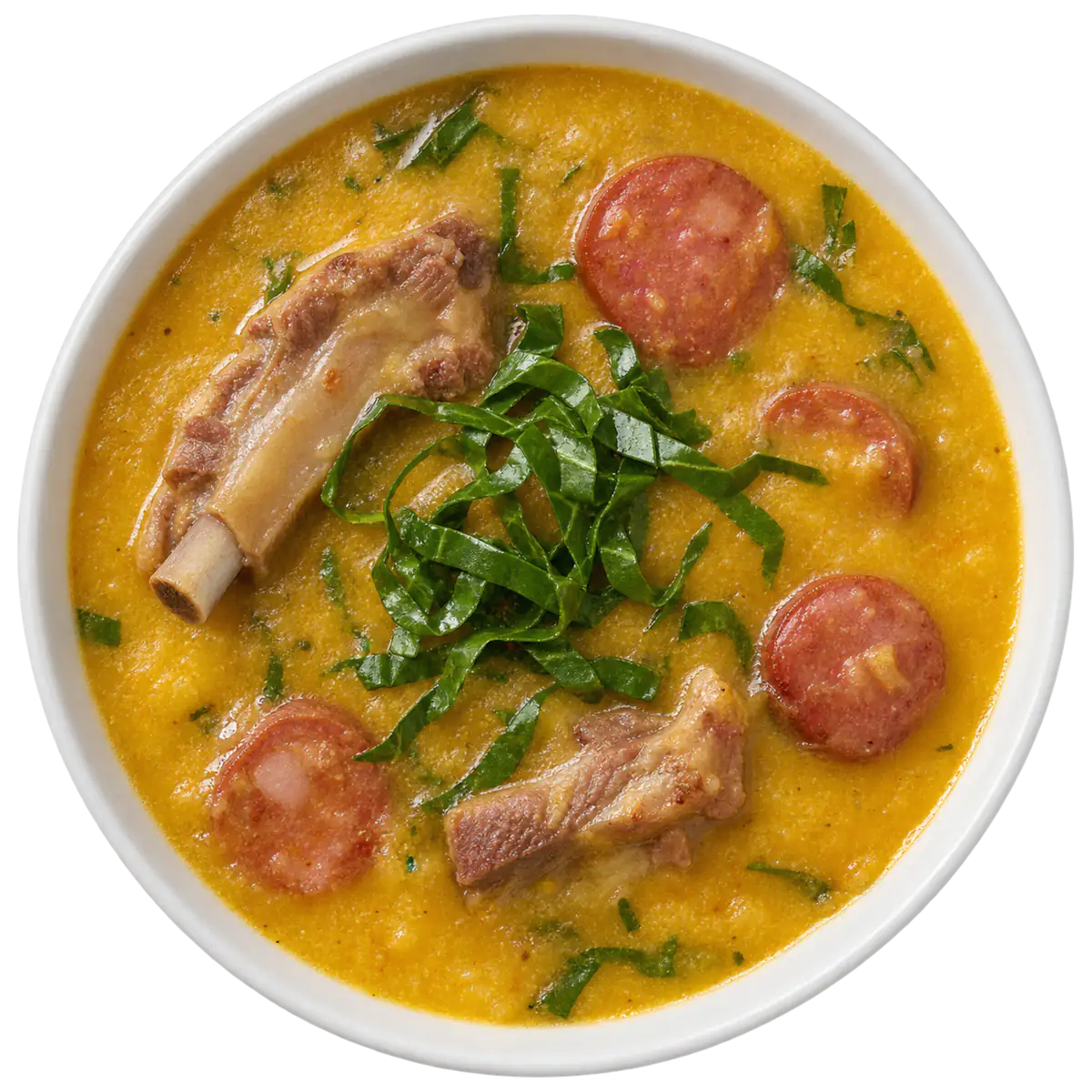
A thick Brazilian dish of cracked dried corn (quirera/canjiquinha) simmered with pork ribs, sausage and bacon, often with couve; closer to a stew-porridge than a soup.
Origin and history
Quirera is dried corn broken into small grains, a staple of rural Brazil's South and South-East. Simmered with pork it becomes a typical dish of the Paraná countryside, where the version made with suã is held to be, according to tradition, a legacy of the tropeiros, the drovers who moved mules and cattle across southern Brazil. In Minas Gerais the same preparation is called canjiquinha and is usually cooked with ribs, bacon and calabresa sausage.
Make it at home
- Makes
- 6 servings
- Total time
- 2 h 15 min
- Hands-on
- 40 min
Ingredients
- 250 g1 1/4 cups quirera (cracked dried corn), called canjiquinha in Minas Gerais, fine or medium grind
- 800 g1.75 lb pork ribs (costelinha de porco), or suã (the pork backbone cut used in Paraná), cut between the bones into single ribs
- 150 g5 oz smoked bacon (bacon or toucinho defumado), diced
- 200 g7 oz linguiça calabresa (smoked pork sausage), skinned and sliced
- 1 tbsp lard or vegetable oil
- 1 onion, chopped
- 4 garlic cloves, crushed
- 2 ripe tomatoes, chopped
- 1.5 l6 1/3 cups hot water, plus more as needed
- 4 large leaves of couve (Brazilian collard greens) or collard greens, stems removed, cut into very thin strips
- salt and black pepper, to taste
- 2 tbsp cheiro-verde (chopped parsley and spring onion)
- pimenta (chilli) sauce, to serve, optional
Method
-
1. Tip the quirera into a bowl of water, let any husks float up and pour them off, then rinse in a sieve until the water runs almost clear.
-
2. Cover the quirera with fresh water and leave it to soak for 1 hour; drain.
-
3. Season the ribs with salt and pepper.
-
4. Heat the lard in a large heavy pot over medium heat and fry the bacon until it has given up its fat and the edges brown, about 5 minutes.
-
5. Add the sausage and fry for 3 minutes more, then lift the bacon and sausage out with a slotted spoon and set them aside.
-
6. Brown the ribs in the same fat, in batches if needed, turning them until golden on all sides, about 10 minutes.
-
7. Return the bacon and sausage to the pot, add the onion and cook for 5 minutes until soft, then stir in the garlic for 1 minute.
-
8. Add the tomatoes and cook for about 5 minutes, until they collapse into a thick sauce.
-
9. Pour in 1 l (4 1/4 cups) of the hot water, cover and simmer gently for about 40 minutes, until the rib meat starts to come away from the bone.
-
10. Stir in the drained quirera and the remaining 500 ml (2 cups) of hot water and bring back to a simmer.
-
11. Cook over low heat, partly covered, for 30 to 40 minutes, stirring often and scraping the bottom, and adding a little hot water whenever it turns stiff; it is done when the grains are swollen and soft with no hard centre and the pot has the texture of a loose porridge.
-
12. Stir in the couve and cook for 2 to 3 minutes, just until the strips turn bright green and wilt.
-
13. Taste and adjust the salt and pepper, scatter over the cheiro-verde and serve very hot, with chilli sauce at the table.
Notes
- Total time: 2 h 15 min, including 1 h soaking.
- Names: in Paraná, São Paulo and the South the cracked corn and the dish are called quirera; in Minas Gerais the same dish is canjiquinha com costelinha. In Paraná the version made with suã, a bony pork cut from the backbone, is known as quirera com suã. The North-East has a close relative made with broken corn called xerém.
- Thickness: the dish firms up quickly as it cools, so serve it straight from the pot. For a soupier caldo de canjiquinha, add more hot water at the end; for a stiffer stew to eat with a fork, add less.
- Meats: bacon and calabresa are the usual company of the ribs in Minas Gerais; country versions use only fresh pork, and some cooks use smoked ribs. A version with shredded chicken cooked in its own broth is made by those who do not eat pork.
- Substitution: outside Brazil, use coarse stone-ground corn grits (not instant or quick-cooking). They behave much like quirera but may need a little less time; keep tasting the grains.
- Serving: it is a one-pot meal on its own, often eaten with sautéed couve on the side, bread, and a pepper sauce.
- Make-ahead: it keeps for 2 days in the fridge; loosen it with hot water as you reheat, stirring constantly.
Adapted from Receiteria, Quirera com costelinha, TudoGostoso, Quirera com costelinha de porco, and Tenda Atacado, Canjiquinha com costela.
At the festivals
Served at 3 festivals in Brazil.
Earlier editions
- June 27, 2026
- June 20, 2026
-
August 24, 2019
🇧🇷 Telêmaco Borba, Brazil
15º Buffet de Sopas