
🇮🇩 Indonesia · East Java, Indonesia (Surabaya, Pasuruan)
RawonIndonesian black beef soup
A dark, nearly black East Javanese beef soup coloured and flavoured by the fermented keluak nut, with a spice paste of shallot, garlic, turmeric and candlenut, served over rice with bean sprouts, salted egg and sambal.
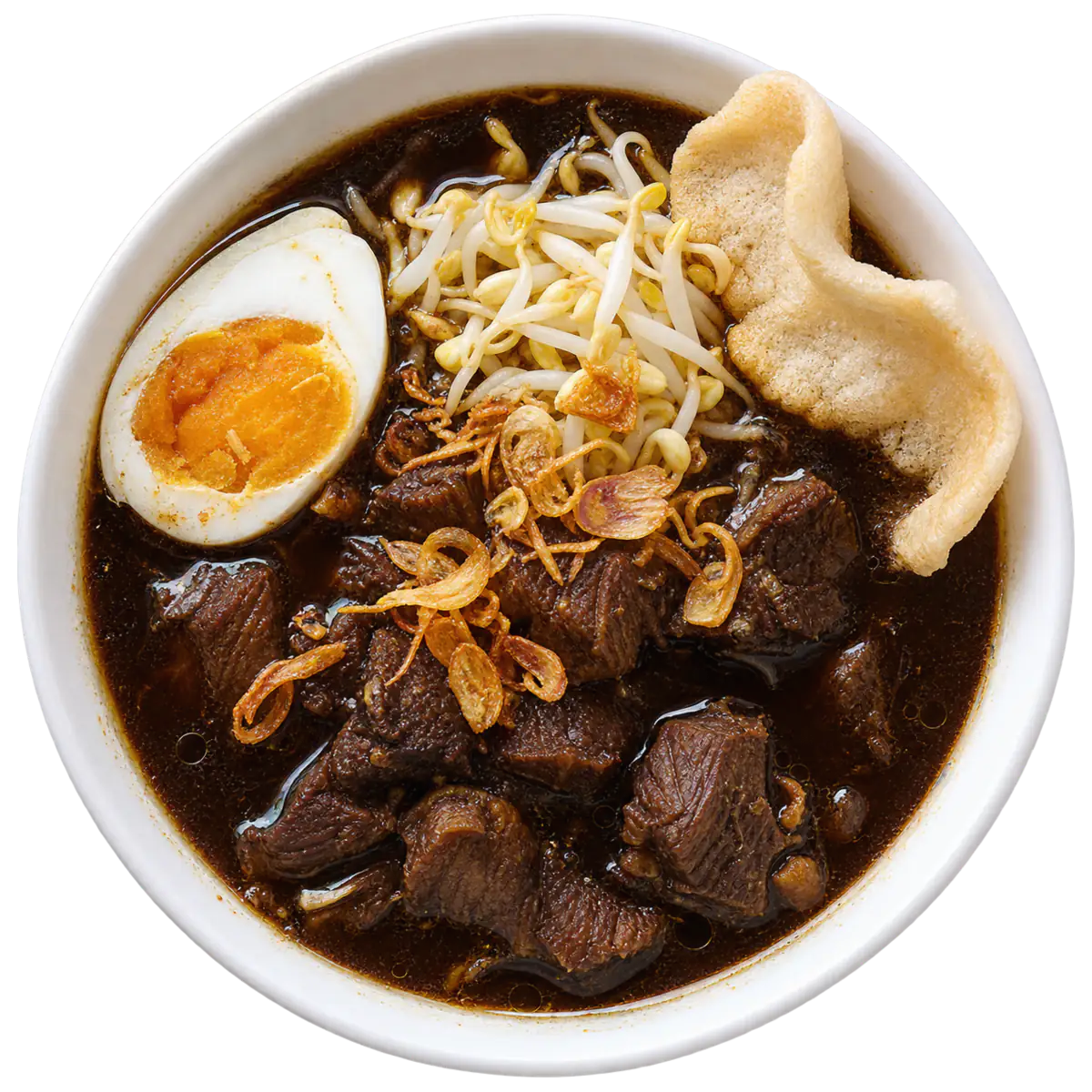
Origin and history
Rawon is East Javanese, tied above all to Surabaya and Pasuruan. Indonesia's tourism site notes that the name may come from Javanese rawa, a watery area that looks dark, and that the 901 CE Taji inscription has a term, rarawwan, often read as an early mention. A 1926 recipe collection shows it was a favourite of the Mangkunegaran court family at Surakarta.
Make it at home
- Makes
- 6 servings
- Total time
- 2 h 30 min
- Hands-on
- 45 min
Ingredients
- 800 g1.75 lb beef shank or brisket, cut in 3 cm / 1 in cubes, with some sinew
- 2 litres8 cups water
- 5 keluak (kluwek) nuts, about 60 g / 2 oz of prepared pulp; see notes
- 8 shallots
- 4 cloves garlic
- 4 candlenuts (kemiri), or macadamia nuts
- 3 cm1 in fresh turmeric, or 1/2 tsp ground
- 1 tsp coriander seeds, toasted
- 2 stalks lemongrass, bruised
- 3 cm1 in galangal, bruised
- 5 kaffir lime leaves
- 2 tbsp neutral oil
- 1 tsp tamarind paste, dissolved in a little water
- 1 tbsp salt, to taste
- 1 tsp sugar
- steamed rice, to serve
- 200 g7 oz short bean sprouts (taoge), blanched
- 3 salted duck eggs, halved, or boiled eggs
- shrimp crackers (krupuk), fried shallots, sambal, lime, to serve
Method
-
1. Cover the beef with water, boil 5 minutes, then drain and rinse. Return it to the pot with 2 litres (8 cups) of fresh water and simmer for 1 hour 15 minutes.
-
2. Soak the prepared keluak in hot water for 15 minutes, then scoop out the black flesh and discard shells and any bitter-smelling bits.
-
3. Blend the keluak flesh with the shallots, garlic, candlenuts, turmeric and coriander to a thick, dark paste, adding a splash of water.
-
4. Fry the paste in the oil over medium heat for 6 to 8 minutes, stirring, until aromatic and darker.
-
5. Stir the paste into the beef and broth. Add the lemongrass, galangal and lime leaves.
-
6. Simmer 45 minutes more, until the beef is very tender and the broth is nearly black.
-
7. Season with salt, the tamarind water and sugar. Taste: it should be earthy and savoury with a faint tartness.
-
8. Serve in bowls over or beside rice, with bean sprouts, salted egg, krupuk, fried shallots, sambal and lime.
Notes
- Keluak (kluwek, pangi) is the defining ingredient: it gives the dark colour and an earthy, slightly bitter taste. The raw seed contains hydrocyanic acid and is made safe by boiling, soaking and a long burial-fermentation, so buy it ready-prepared from an Indonesian or Southeast Asian shop and make sure it is fully ripe and black inside. Without it you cannot make true rawon; a brown soup with other spices is something else.
- Regional styles: Rawon Surabaya has a broth that varies from stall to stall, and one Indonesian article calls it lighter and slightly sweet. Rawon Nguling, from Nguling in Pasuruan, is thicker, richer and more heavily spiced, with the kluwek toasted and ground by hand. Rawon Setan is a Surabaya stall named for its late-night opening hours, not for chilli. Balinese rawon leaves out keluak and comes out brown.
- Traditional cuts include brisket or sandung lamur, the cut with connective tissue, and Surabaya cooks may use offal; shank or brisket both work here.
- Make ahead: it tastes better the next day. Reheat gently.
Adapted from Indonesia.travel, Rawon, Dwell by Michelle, Nasi Rawon, Detik Jatim, Sejarah rawon khas Surabaya, and Good News from Indonesia, Rawon Nguling.
At the festivals
No festival we list has printed it on a menu yet.