
🇲🇬 Madagascar · national dish
RomazavaMalagasy beef and greens soup
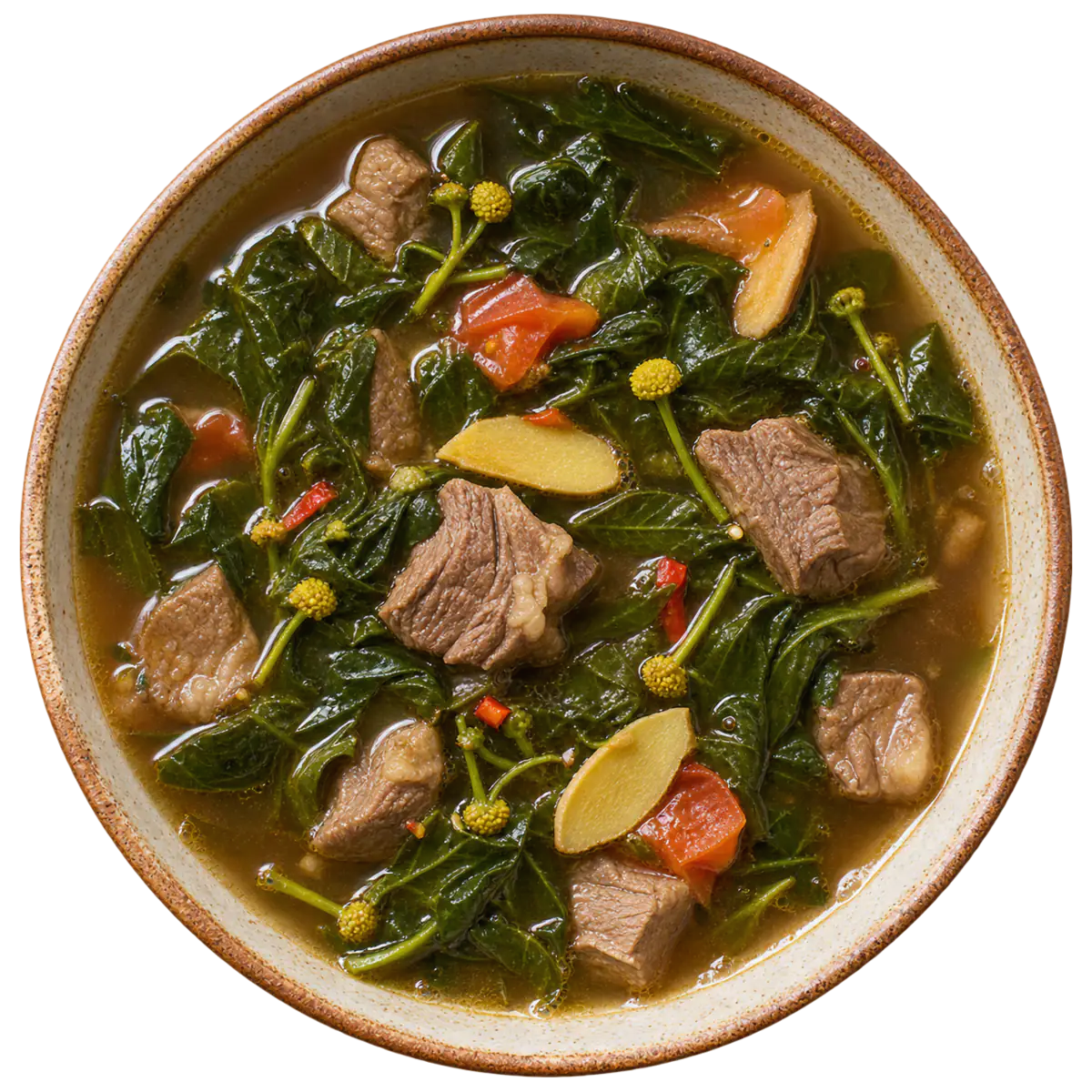
Madagascar's national dish: a brothy preparation of zebu beef (or chicken or fish) with tomato, onion, ginger and garlic, and a mass of brèdes (greens), traditionally brède mafana (Acmella oleracea) with its tingling leaves, always served with rice.
Origin and history
Romazava is regarded as Madagascar's national dish. Its name comes from 'ro', broth, and 'mazava', clear. It is traditionally made with zebu beef and a mix of brèdes (leafy greens), including the tingly brède mafana, and is always eaten with rice, which is the staple of Malagasy meals.
Make it at home
- Makes
- 5 servings
- Total time
- 1 h 40 min
- Hands-on
- 30 min
Ingredients
- 800 g1.75 lb beef, half lean, half fattier cuts (chuck, shin); zebu in Madagascar; cubed
- 2 tbsp neutral oil
- 1 onion, sliced
- 3 cloves garlic, minced
- 4 cm1.5 in fresh ginger, sliced thin
- 3 (about 400 g)3 (14 oz) ripe tomatoes, chopped
- 1.2 litres5 cups water, plus more if needed
- 200 g7 oz brède mafana (Acmella oleracea, paracress) leaves and flower buds, see notes for substitutes
- 200 g7 oz brède morelle (anamamy, black nightshade) or similar mild greens
- 1 large bunch (150 g)1 large bunch (5 oz) watercress
- salt and black pepper, to taste; chilli on the side
- 300 g1.5 cups white rice, cooked, to serve
Method
-
1. Heat the oil in a large pot over high heat and brown the beef cubes in two batches, until coloured on all sides, about 8 minutes per batch.
-
2. Return the meat, lower the heat to medium, and add the onion, garlic, ginger and tomatoes. Season with salt and pepper and stir for 5 minutes.
-
3. Pour in the water to cover the meat, bring to a boil for 7 to 10 minutes, skimming off the foam, then reduce to a low simmer.
-
4. Cover and cook for 45 to 60 minutes, until the beef is tender when pressed.
-
5. Wash the greens, strip any tough stems, and chop them roughly. Stir them into the pot a handful at a time, letting each shrink before adding the next.
-
6. Cook for 20 to 25 minutes more over low heat, until the greens are soft and dark. The result is a brothy, green, savoury soup with plenty of leaves in it, not a thick stew.
-
7. Adjust the salt, add water if too thick, and serve hot with rice and chilli on the side.
Notes
- The usual accompaniment is plain white rice, which Malagasy cooks serve with every meal. The romazava is ladled into a bowl or onto the rice; the broth soaks into it. Chilli (sakay) is passed on the side.
- Brède mafana (Acmella oleracea, also called paracress, toothache plant or Szechuan buttons) gives romazava its signature tingling, mildly numbing sensation on the tongue; its Malagasy name anamalaho refers to it. It is sold at Asian and Caribbean grocers, sometimes as 'buzz buttons'. If you cannot find it, use watercress and mustard greens or chard, and for the tingle add 1 to 2 buzz buttons or a pinch of Sichuan pepper; the soup will be good, but not the same.
- Brède morelle (anamamy) is black nightshade; spinach, chard or mild bok choy are suitable replacements.
- 'Ro mazava' means clear broth in Malagasy. Beef or zebu is the classic, but chicken and fish versions exist, and many families add pork or sausage.
- Cooks often cook a large pot and let it sit; the flavour improves overnight. It keeps 3 days in the refrigerator.
- Not the same as hen'omby ritra (a Malagasy stewed beef), and in English the dish is often called a stew; in Madagascar it is eaten as a brothy dish with rice.
Adapted from Romazava, Afrik.com, Madagascar, des brèdes et du caviar, Le Mag Voyageurs du Monde, and Madagascar, Cuisine et boissons, Le Routard.
At the festivals
No festival we list has printed it on a menu yet.