
🇰🇭 Cambodia
Samlar korkoCambodian stirring soup
A thick Cambodian soup stirred in one pot: green kroeung paste, prahok (fermented fish paste), toasted ground rice, pork, chicken or catfish and seasonal vegetables and fruit (green papaya, pumpkin, eggplant, long beans, green jackfruit).
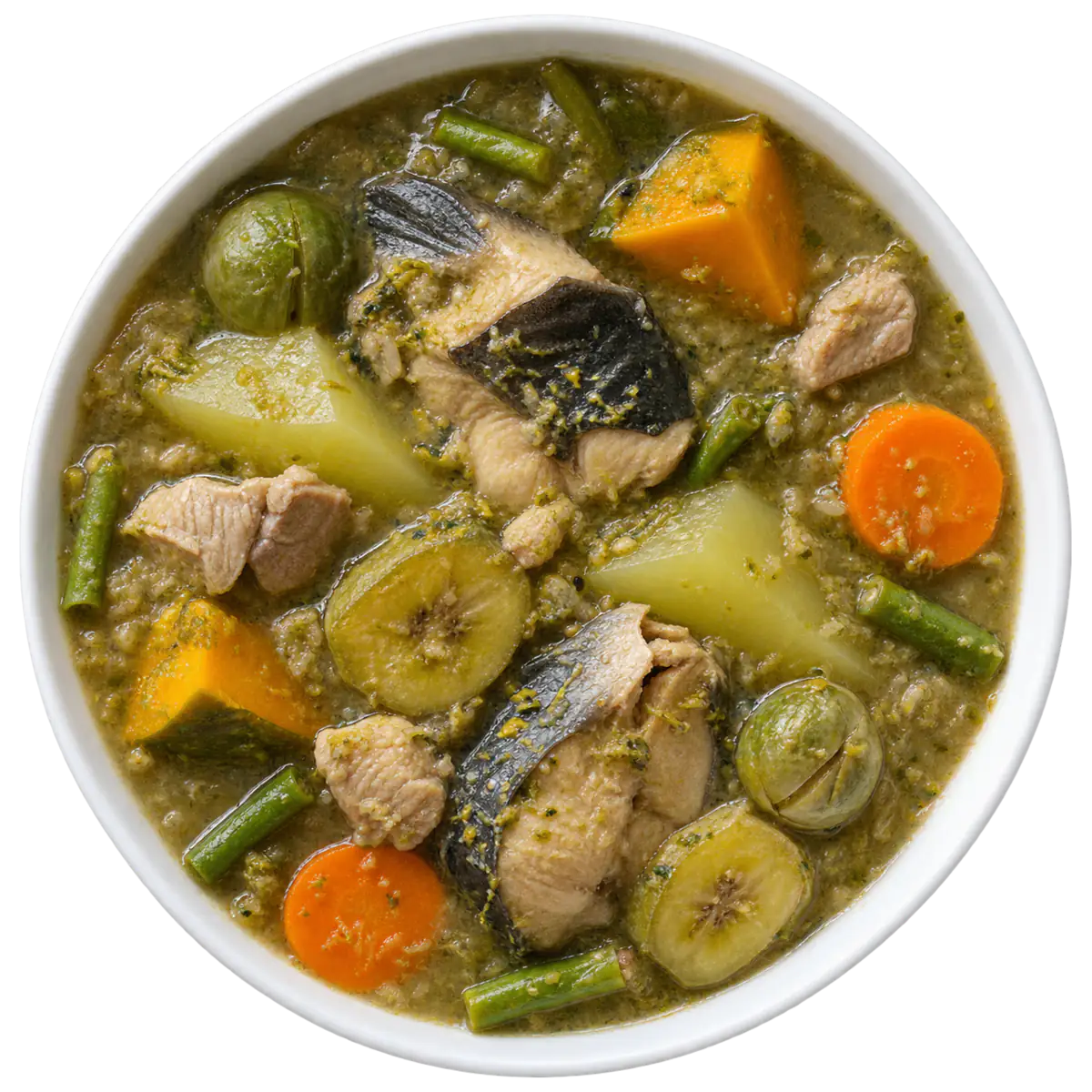
Origin and history
Cambodian sources describe samlar korko as a very old dish, said to date to the Khmer (Angkorian) empire, though they cite no evidence for this. It was prepared for weddings, religious ceremonies and harvest festivals and later became an everyday meal. Many Cambodians, especially older people, consider it their national dish.
Make it at home
- Makes
- 6 servings
- Total time
- 2 h
- Hands-on
- 1 h 10 min
Ingredients
- 3 tbsp lemongrass leaves (green parts), very thinly sliced, for the green kroeung
- 4 kaffir lime leaves, for the green kroeung; or the zest of 1/4 lime
- 1 tbsp fresh turmeric root, peeled, chopped; for the green kroeung
- 4 cloves garlic, for the green kroeung
- 4 shallots, chopped; for the green kroeung. Pound all kroeung ingredients with a pinch of salt into a paste (about 4 tbsp)
- 2 tbsp long-grain rice, dry-roasted until golden, then ground coarsely
- 1 tsp prahok (Khmer fermented fish paste), or 2 tbsp fish sauce
- 300 g10.5 oz pork neck or boneless chicken thighs, cut in bite-sized pieces
- 150 g5.3 oz catfish steaks, optional; any firm fish
- 250 g9 oz pumpkin or kabocha squash, peeled, bite-sized
- 250 g9 oz green (unripe) papaya, peeled, bite-sized
- 1 green banana, peeled, sliced 5 mm (1/4 in) thick
- 1 long Asian eggplant, bite-sized
- 4 small round eggplants, quartered
- 1 carrot, sliced 5 mm (1/4 in) thick
- 12 long beans or green beans, cut in 4 cm (1.5 in) lengths
- 3 tbsp neutral oil
- 2 tsp palm sugar or brown sugar, to taste
- 1 tsp salt, to taste
- 2 L8 1/2 cups water, added as needed
Method
-
1. Pound the kroeung ingredients in a mortar into a fine, fragrant paste.
-
2. Stir the prahok into about 50 ml (3 tbsp) of water until it nearly dissolves, and pick out any bones or stringy bits.
-
3. Dry-roast the rice in a wok over medium heat, stirring, until golden. Cool it, then grind it coarsely.
-
4. Cut all the vegetables and the green papaya and banana as listed.
-
5. Heat 2 tbsp oil in a large pot over medium heat and fry half the kroeung for about 1 minute, until fragrant.
-
6. Add the pork or chicken, the dissolved prahok (or fish sauce), the salt and the sugar, and cook until the meat is no longer pink.
-
7. Add 500 ml (2 cups) of water, the pumpkin, carrot, papaya and banana, and half the roasted rice. Bring to a boil, then lower to a gentle simmer.
-
8. Add another 500 ml of water, the fish, the beans, the eggplants and the rest of the kroeung, and stir.
-
9. Simmer gently, stirring now and then, then stir in the remaining roasted rice and add water up to the 2 L total as the soup thickens.
-
10. Keep simmering until the vegetables are soft and the soup is dense, almost stew-like. Taste for salt and sugar, add water if too thick, and serve hot with steamed jasmine rice.
Notes
- The name is usually explained as samlar (soup or stew) plus korko (stirring), after the way the pot is stirred as it thickens.
- The soup is flexible: pork or chicken is traditional, and for most older cooks a samlar korko without catfish is not the real thing, though young chefs often use a single protein. Middle- and upper-class home versions are thick and stew-like, made with long-simmered stock; village versions are lighter, made with water and thinned further to stretch leftovers.
- Prahok is the traditional seasoning (one source lists it as optional); fish sauce is the usual substitute and gives a less deep flavour. Other typical vegetables are pea eggplants, winged beans, green jackfruit and bamboo shoots.
- A lighter small-fish version of the same soup (samlor kako) exists, made with whole small fish and bitter melon leaves or spinach added at the very end.
- Make-ahead: the flavours settle after a night in the fridge; reheat with a splash of water.
Adapted from Grantourismo, Samlor Korko (Cambodian stirring pot soup), Feed the Future / Pulses.org, Samlor Kako (green kroeung proportions), and Cambodianess, Samlor Korko: A Traditional Cambodian Soup.
At the festivals
No festival we list has printed it on a menu yet.