
🇮🇩 Indonesia · Java (Javanese cuisine)
Sayur lodehIndonesian coconut vegetable soup
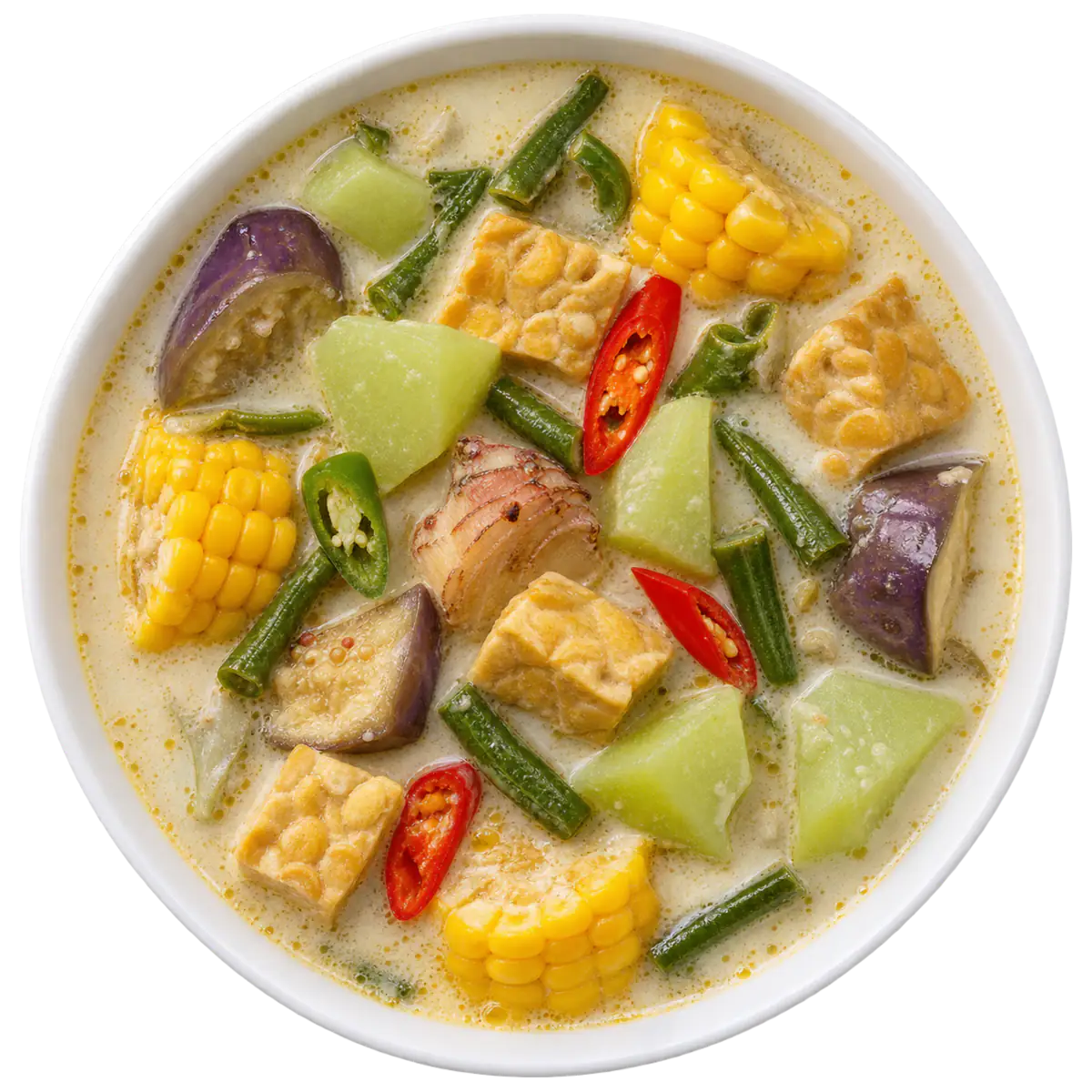
A Javanese vegetable soup in a light coconut-milk broth with shallot, garlic, coriander, galangal and salam leaf, made with chayote, young jackfruit, long beans, eggplant, tempeh or tofu, with a mild creamy taste and a strong hint of galangal.
Origin and history
Sayur lodeh is a Javanese coconut-milk vegetable dish, an everyday home soup and also a communal dish of the slametan ritual meal. Its origin is disputed: some link it to 10th-century Central Java, a culinary historian places lodeh-making by the 16th century (after long beans reached Java), others see a 19th-century revival, and a 1931 Yogyakarta plague story is told about it. The sources do not settle the question.
Make it at home
- Makes
- 4 servings
- Total time
- 45 min
- Hands-on
- 25 min
Ingredients
- 8 shallots (bawang merah), peeled
- 4 cloves garlic (bawang putih), peeled
- 1 1/2 tsp coriander seeds (ketumbar)
- 4 candlenuts (kemiri), or raw macadamias
- 3 cm1 inch galangal (lengkuas), bruised, left whole
- 3 salam leaves (Indonesian bay leaves)
- 300 g10 oz chayote (labu siam), peeled, cut in bite-size pieces
- 150 g5 oz long beans (kacang panjang), cut in 4 cm (1 1/2 in) lengths
- 1 small eggplant (terong), cut in bite-size pieces
- 100 g3 1/2 oz tempeh, cut in cubes
- 1 ear sweet corn, cut in 4 pieces (optional)
- 1 large each red and green chilli, sliced diagonally (optional)
- 150 ml2/3 cup coconut milk (santan)
- 900 ml3 3/4 cups water
- 1 tsp sugar
- salt, to taste
Method
-
1. Blend the shallots, garlic, coriander seeds and candlenuts to a fine paste, adding a spoonful of the water if the blades stall.
-
2. Put the paste in a pot with the galangal, salam leaves, water and coconut milk, and stir.
-
3. Bring to a boil over medium-high heat, stirring now and then so the coconut milk does not split.
-
4. Add the corn and tempeh, season with the salt and sugar, and simmer for about 10 minutes, until the broth smells of galangal and the tempeh is plump.
-
5. Add the chayote, eggplant and long beans and cook 5 more minutes, until a piece of chayote is tender but still holds its shape.
-
6. Stir in the chillies, taste and correct the salt, then switch off the heat.
-
7. Leave the pot covered for 10 minutes so the flavours settle, then ladle into bowls and serve with steamed rice.
Notes
- Quantities follow a Javanese home cook's recipe for three servings, scaled up by a third; a second Indonesian recipe uses far more coconut milk (600 ml), so the amount varies widely from cook to cook. The result here is a light, mild broth, with galangal as the dominant note.
- Vegetables change with the season and the cook. The sources name melinjo nuts and leaves, young jackfruit (nangka muda), banana blossom, bamboo shoots and cassava leaves, as well as chayote, long beans and eggplant. Use whatever of these you can find; green beans and zucchini are workable stand-ins.
- Many Javanese cooks add a pinch of shrimp paste (terasi) or soaked dried shrimp to the paste, and tofu or tempeh fried first. Add turmeric to the paste for the yellow version (lodeh kuning). Leave them out for a vegan pot.
- The cook whose recipe we followed keeps the vegetables crisp; cook longer for a softer texture. The soup is said to taste better after resting, and it keeps a day in the fridge. Reheat gently.
- Lodeh is cooked communally for the selamatan (slametan), a Javanese ceremonial meal, and the ingredient names carry symbolic meaning there, for example long beans (lanjar) read as blessing.
Adapted from Sayur Lodeh (Nunuk Sri Rahayu), Cook Me Indonesian and Resep sayur lodeh, HelloSehat.
At the festivals
No festival we list has printed it on a menu yet.