
🇩🇪 Germany and 🇵🇱 Poland · Northern Germany, Pomerania, East Prussia
SchwarzsauerGerman blood soup
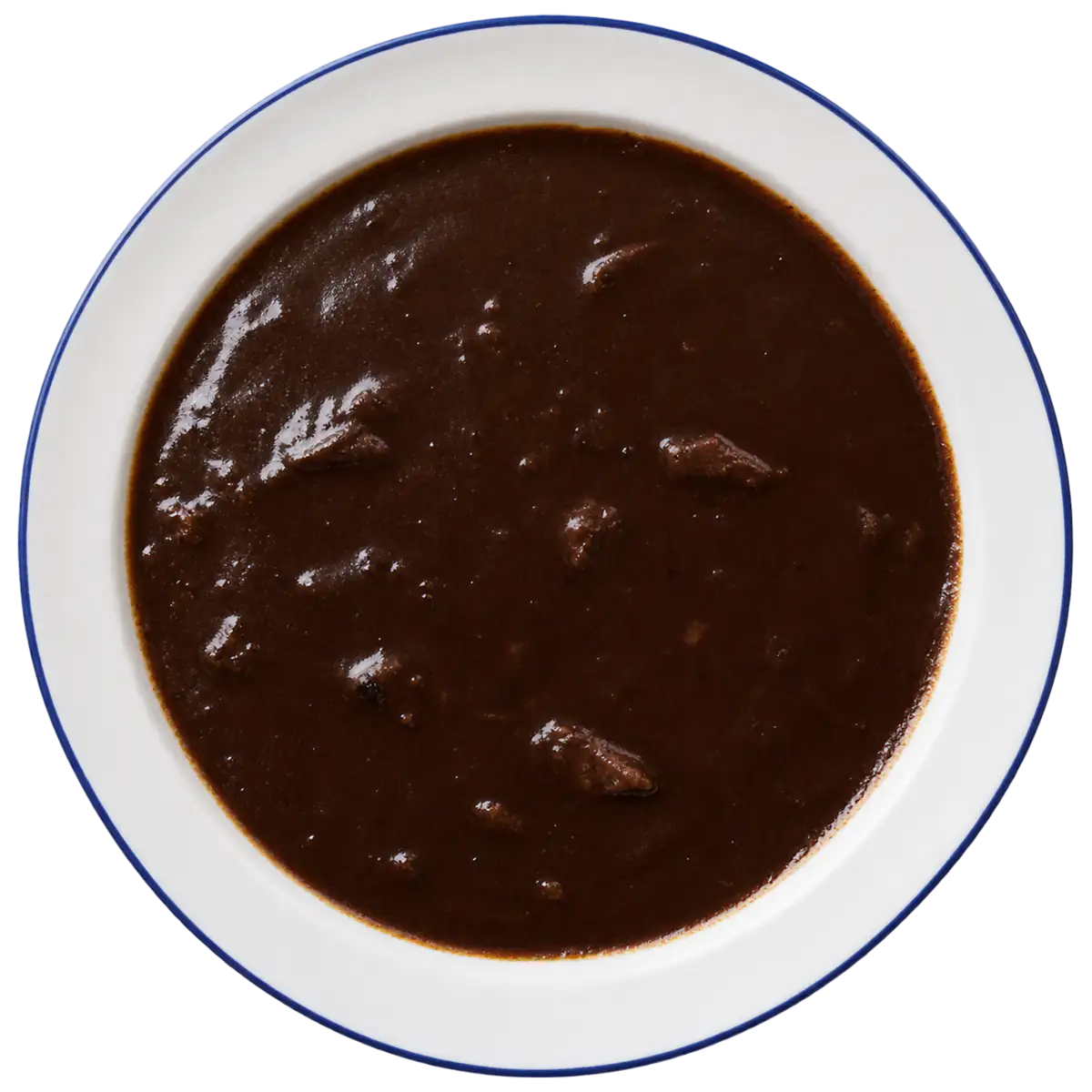
A North German sweet-sour blood soup: blood (pig, or goose or duck in the eastern form) cooked in vinegar water with spices, which turns it black; in East Prussia and Pomerania made with goose giblets and dried fruit; traditionally a slaughter-day dish.
Origin and history
Schwarzsauer, Low German Swattsuur, is an old dish of northern Germany. In Schleswig-Holstein it was cooked on slaughter day so that the fresh blood and the odd cuts not used for sausage were not wasted. It was cheap food for poorer households and hungry times and is rarely made today. The name means black-sour: vinegar turns the blood black. Sophie Wilhelmine Scheibler's 1866 cookbook gives a goose version with pears or dried fruit, a form long known in East Prussia and Pomerania.
Make it at home
- Makes
- 4 servings
- Total time
- 1 h 45 min
- Hands-on
- 40 min
Ingredients
- 1 kg2.2 lb pork belly or other streaky pork, in goulash-size cubes
- 1.5 l6 1/4 cups water
- 100 mlscant 1/2 cup white vinegar (5%), plus more to taste
- 2 tsp salt
- 2 onions, peeled, quartered
- 3 to 4 bay leaves
- 1/2 tsp black peppercorns
- 4 cloves
- 1 l4 1/4 cups fresh pig's blood, stirred so it does not clot, from a butcher; thawed if frozen
- 1 to 2 tbsp sugar, to taste
- 1 to 2 tbsp flour, optional, for a smoother binding
- 500 ml2 cups milk, for the semolina dumplings
- 150 gscant 1 cup soft wheat semolina (Grieß), for the dumplings
- 1 egg, for the dumplings
- 2 to 3 tbsp flour, for the dumplings
- boiled potatoes, to serve (or instead of the dumplings)
Method
-
1. Put the water, vinegar, salt and onions in a pot, bring to a boil and simmer for 10 minutes to make a strong sour stock. Add the bay leaves, peppercorns and cloves.
-
2. Add the pork, bring back to a simmer, skim, and cook gently for 1 to 1 1/4 hours, until tender.
-
3. Meanwhile make the dumplings: bring the milk to a boil with a pinch of salt, pour in the semolina while stirring, and cook to a thick porridge that leaves the side of the pan. Let it cool completely, then beat in the egg and enough flour to make a soft, shapeable mass.
-
4. Bring a wide pan of salted water to a bare simmer, cut out dumplings with a wet tablespoon and let them poach for about 10 minutes, until they float. Keep them warm in a little of the water.
-
5. Pour the blood through a sieve. If using flour, whisk it smooth with a little of the blood first. Whisk a ladle of the hot stock into the blood.
-
6. Lower the heat under the pork and pour in the blood in a thin stream, stirring all the time.
-
7. Bring it slowly back to a simmer, stirring from the bottom without stopping, since blood catches easily; let it bubble gently for 5 minutes, until the soup is thick, glossy and almost black.
-
8. Season to a pronounced sweet-and-sour taste with the sugar, more vinegar and salt. Fish out the bay leaves and cloves if you can.
-
9. Serve hot in deep plates with the semolina dumplings or boiled potatoes.
Notes
- Blood must be very fresh or frozen straight after slaughter, and stirred or treated so it stays liquid. Ask a butcher a few days ahead; in Germany it is sold for black pudding.
- Goose Schwarzsauer was the classic of East and West Prussia, Pomerania and Danzig and of 19th-century German cookbooks: goose giblets (neck, wings, gizzard, heart) are simmered, the goose's blood, caught in a little vinegar at slaughter, binds a sauce with a butter-and-flour roux, cloves and sugar, and stewed pears or dried fruit (apples, pears, prunes) go in at the end. It is served with dumplings. Duck works the same way. Polish czarnina is a close relative.
- Northern German versions vary the meat: pork belly, ribs, or the head and trimmings left from sausage-making on slaughter day.
- The vinegar does two jobs: it flavours the soup and, as the name says, turns the blood black.
- Leftovers set firm when cold; they can be reheated gently with a little water, or sliced and fried like black pudding.
Adapted from Die traditionelle norddeutsche Küche: Suppen, Landesportal Schleswig-Holstein and Sophie Wilhelmine Scheibler, Allgemeines deutsches Kochbuch für alle Stände (1866), no. 513: Schwarzsauer von Gänseklein.
At the festivals
Served at 1 festival in Brazil.
Earlier editions
-
June 26, 2026
🇧🇷 Jaraguá do Sul, Brazil
Noite das Sopas e Cremes do Rio da Luz
On the menu as Sopa de schwartzaur
By local community