
🇵🇭 Philippines · found across the islands; Tagalog regions are most often cited
SinigangFilipino sour soup
A Filipino sour soup of pork, beef, fish or shrimp with vegetables in a broth soured by tamarind (sampalok) or another souring fruit such as kamias, guava or green mango, seasoned with fish sauce.
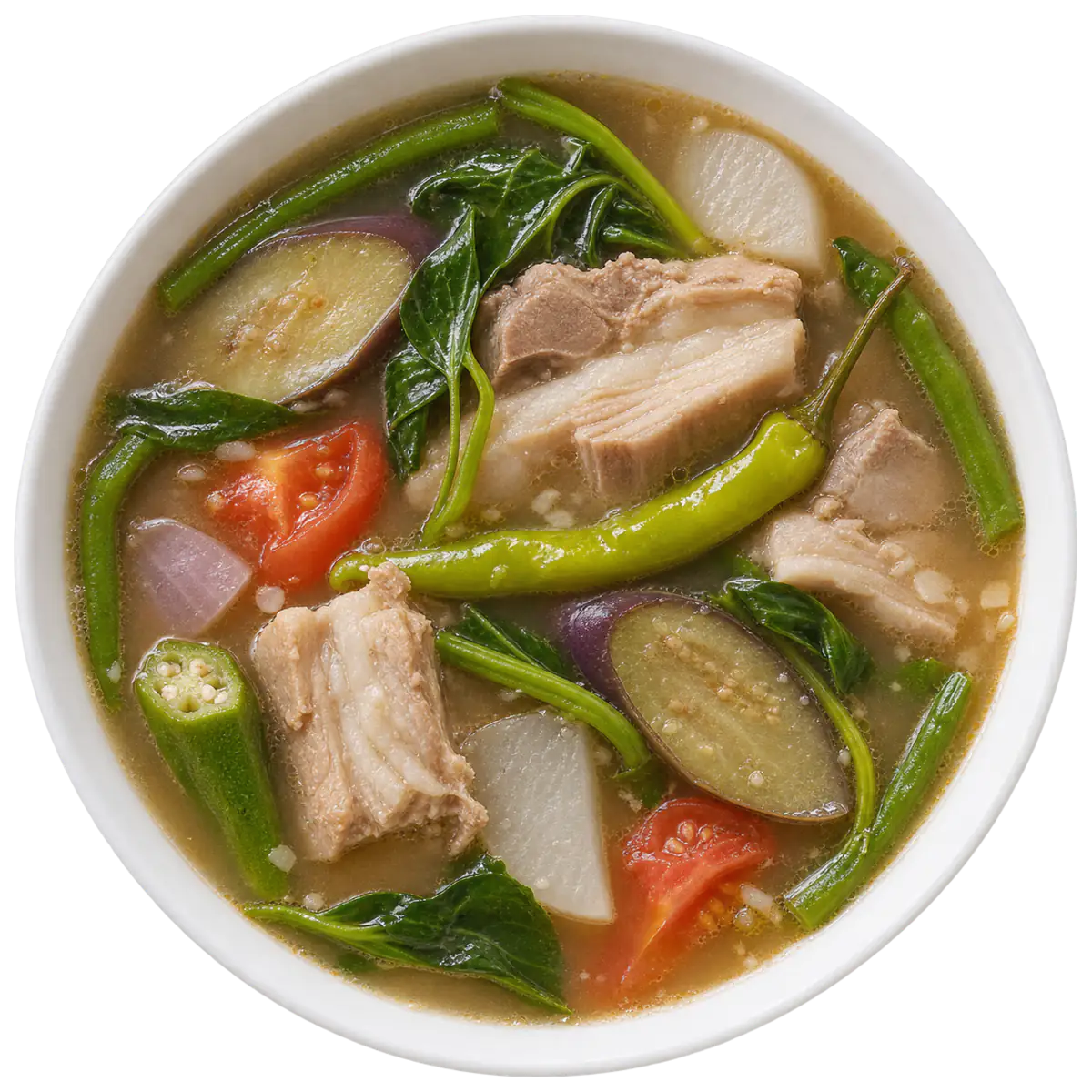
Origin and history
Sinigang is Filipino, and its name is the noun form of sigang, to stew. Sources say stewing with sour fruits and leaves predates the Spanish, while tamarind became the usual souring agent later; no source gives a date or a region of origin for the dish. It is the best-known sour soup of the Philippines and a contender for unofficial national dish, and Doreen Fernandez called it the dish that best represents Filipino taste.
Make it at home
- Makes
- 4 to 6 servings
- Total time
- 1 h 30 min
- Hands-on
- 35 min
Ingredients
- 900 g2 lb pork belly or pork ribs, cut in 5 cm (2 inch) pieces
- 450 g1 lb young tamarind (sampalok) pods, or 40 g (1.4 oz) sinigang-mix tamarind paste; see notes
- 2 L8 1/2 cups water
- 1 onion, in wedges
- 2 tomatoes, in wedges
- 1 daikon radish (labanos), peeled and sliced in half moons
- 2 Asian eggplants, sliced thick
- 8 string beans (sitaw), cut in 5 cm (2 inch) lengths
- 8 okra
- 2 long green chilies (siling pansigang)
- 1 bunch water spinach (kangkong), stems and leaves separated
- 3 to 4 tbsp fish sauce (patis), to taste
- black pepper, to taste
Method
-
1. If using fresh tamarind pods, boil them in the water for about 30 to 40 minutes until they split and soften. Mash them in the pot, then strain through a sieve, pressing out every bit of the juice. Discard the seeds and skins.
-
2. Bring the tamarind broth to a boil. Add the onion, half the tomatoes and the pork.
-
3. Skim the foam, add 1 tablespoon of fish sauce, then cover and simmer 45 to 60 minutes, until the pork is tender.
-
4. Add the radish and eggplant and cook 5 minutes.
-
5. Add the green chilies, string beans, okra and remaining tomatoes and cook 3 minutes.
-
6. Add the kangkong stems and cook 2 minutes. Season with fish sauce and pepper until pleasantly sour and savoury.
-
7. Add the kangkong leaves, cover, turn off the heat and let them wilt for 3 minutes. Serve hot with rice.
Notes
- Sinigang is defined by its sour broth, and tamarind is the preferred souring agent; other souring fruits are kamias (bilimbi), guava (sa bayabas), green mango and calamansi. Vinegar is not used. Packets of tamarind mix are widely used in homes and are fine, but fresh pods give a rounder flavour.
- The protein varies, and versions are named for the protein, the souring agent or both: sinigang na baboy (pork), baka (beef), hipon (shrimp), isda (fish). Fish sinigang cooks much faster than pork, and in Bicol labuyo chilies and sometimes coconut milk are added.
- None of the vegetables is mandatory. Taro (gabi) is often added to thicken the broth and radish adds body; leafy greens such as kangkong or sweet-potato tops go in at serving time. Using some riper tamarind adds a hint of sweetness.
- The long green chilies are for fragrance, not heat; pierce them if you like more spice.
- The food writer Doreen Fernandez called sinigang the dish that best represents Filipino taste, writing in her essay "Why Sinigang?" that it adapts to all tastes, classes and budgets.
- Make-ahead: the broth with pork keeps two days; add the vegetables fresh.
Adapted from Panlasang Pinoy, Pork sinigang na baboy, Best in Manila, Sinigang origins and variations, and Pressenza, Sinigang through time.
At the festivals
No festival we list has printed it on a menu yet.