
🇮🇩 Indonesia · Lamongan Regency, East Java
Soto LamonganLamongan chicken soto
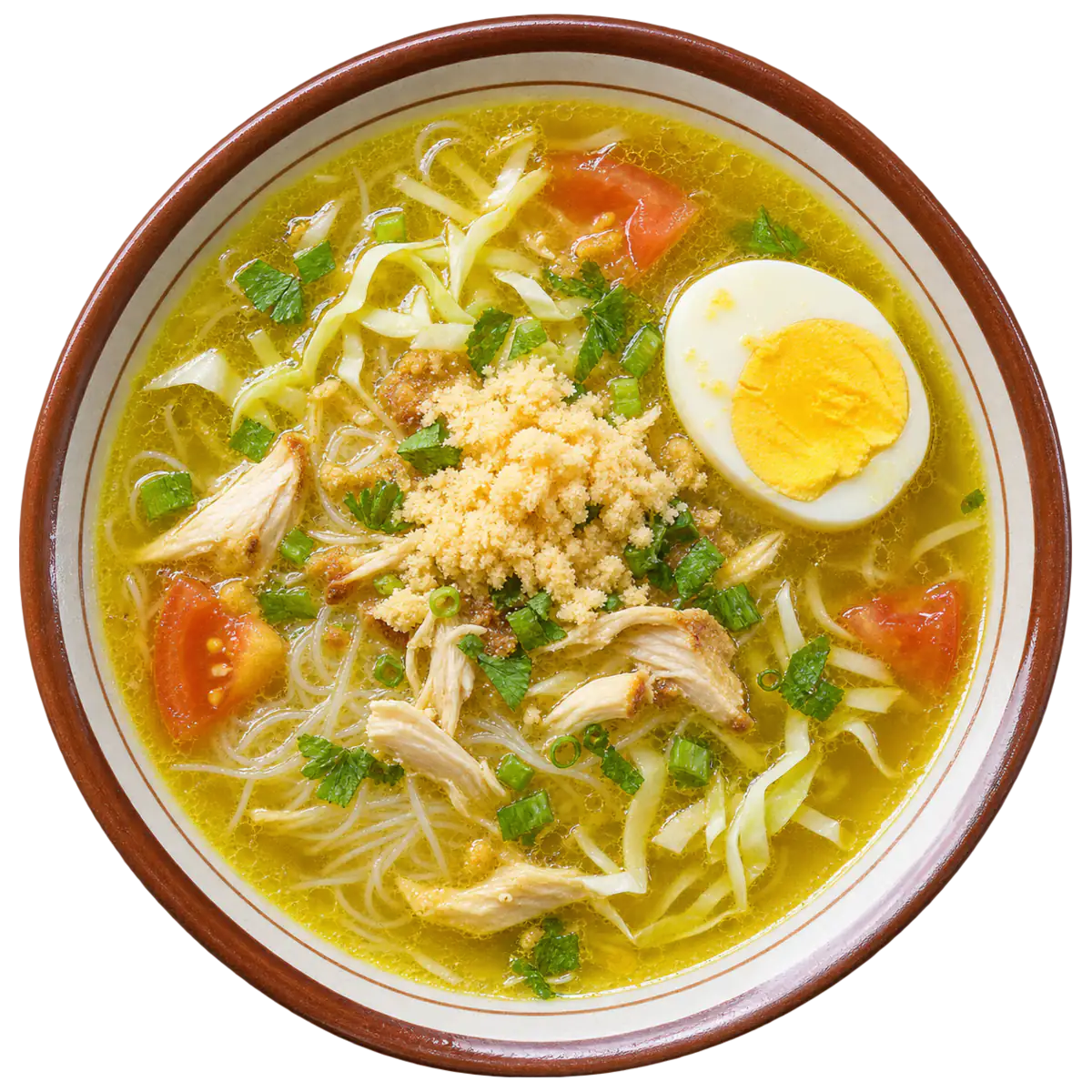
A turmeric-yellow chicken soto from Lamongan, East Java, with a paste of turmeric, shallot, garlic and candlenut and makrut lime leaf in the broth, finished with koya, a powder of ground prawn crackers and fried garlic, with shredded chicken, bihun, egg, sambal and lime.
Origin and history
Good News from Indonesia links soto in the archipelago to a Chinese dish called caudo, adapted to local spices, without naming a specific source. Soto Lamongan comes from East Java's northern coast, and its spread is tied to Lamongan people who migrated to big cities and opened soto stalls and warung. Koya, the ground prawn cracker and fried garlic powder, is called the dish's signature element and is said to be almost absent from soto of other regions.
Make it at home
- Makes
- 6 servings
- Total time
- 1 h 15 min
- Hands-on
- 40 min
Ingredients
- 500 g1.1 lb free-range chicken (ayam kampung), cut in 2 or 4 pieces, bone in
- 2 liters2 quarts water
- 2 stalks lemongrass, bruised
- 3 makrut lime leaves
- 3 Indonesian bay leaves (daun salam)
- 2 cm3/4 inch galangal, bruised
- 3 shallots, for the paste
- 5 cloves garlic, for the paste
- 3 candlenuts (kemiri), for the paste; toasted first
- 4 cm1 1/2 inches fresh turmeric, for the paste; grilled and peeled, or 1 tsp ground
- 1/2 tsp whole black peppercorns, for the paste; toasted first
- 3 tbsp neutral oil
- 2 tsp salt, to taste
- 1 tsp sugar
- 5 prawn crackers (kerupuk udang), raw, for the koya; fried until puffed
- 2 tbsp fried garlic, for the koya
- 100 g3 1/2 oz glass noodles (soun) or rice vermicelli (bihun), soaked in hot water and drained
- 3 boiled eggs, halved
- 3 leaves cabbage, finely shredded
- 1 tomato, cut in pieces
- 1 stalk celery, finely sliced, to serve
- 1 stalk spring onion, sliced
- boiled bird's eye chili sambal, limes and sweet soy sauce, to serve
Method
-
1. Bring the water to a boil, add the chicken, lemongrass and lime leaves, and simmer for 35 to 40 minutes, until the chicken is cooked and the broth tastes of chicken.
-
2. Blend the shallots, garlic, candlenuts, turmeric and pepper to a smooth paste.
-
3. Fry the paste in the oil over medium heat for 3 to 4 minutes, until it smells fragrant and darkens slightly. Add the bay leaves and galangal, stir for a minute and take off the heat.
-
4. Lift the chicken from the pot. Stir the fried paste into the broth, add the spring onion, salt and sugar, and simmer for 10 minutes. Taste.
-
5. Fry the chicken lightly in a little oil until the skin is golden, then shred the meat.
-
6. Make the koya: fry the prawn crackers until puffed, then grind them to a fine powder together with the fried garlic.
-
7. Fill each bowl with noodles, cabbage, tomato, shredded chicken and half an egg. Ladle over the boiling broth.
-
8. Sprinkle each bowl with a spoonful of koya and celery, and serve with sambal, lime and sweet soy sauce.
Notes
- The koya is what makes this soto Lamongan. Stirred into the bowl it thickens the broth slightly and adds a savoury, prawny depth. Use it with restraint: too much turns the soup into porridge.
- The broth is yellow from fresh turmeric and has no coconut milk, which sets it apart from soto Betawi.
- The parent soto page is a beef soto; this chicken soto differs in the koya, the free-range chicken broth and the shredded fried chicken.
- Free-range chicken gives a more flavourful broth; a regular chicken will work but add a little more time.
- Common side dishes at the stalls are chicken satay (sate uritan) in sweet soy sauce, perkedel and extra crackers.
- If you cannot find fresh turmeric use 1 tsp ground turmeric in the paste.
Adapted from Good News From Indonesia, Resep Soto Ayam Lamongan Asli Kuah Kuning and CNN Indonesia, 3 Resep Soto Ayam Kuning.
At the festivals
No festival we list has printed it on a menu yet.