
🇮🇷 Iran
AbgooshtPersian lamb and chickpea soup
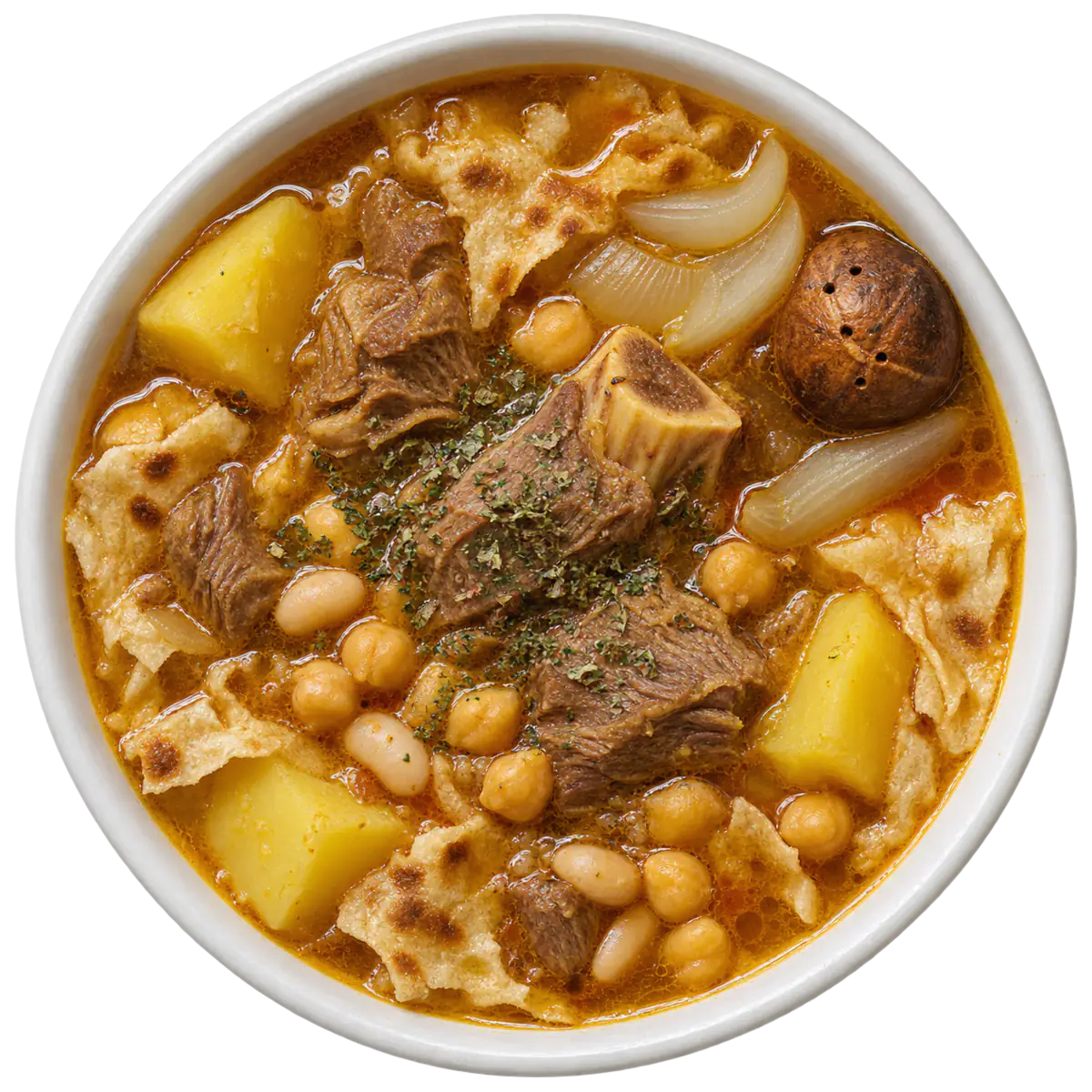
The Iranian meat broth ('ab-goosht'), also called dizi after its stone or clay pot: lamb with chickpeas, white beans, potatoes, tomato, turmeric and dried lime slow-cooked, served in two parts, with the strained broth over torn bread and the solids mashed into a paste eaten with pickles and herbs.
Origin and history
Abgoosht, 'meat broth', is a staple Iranian dish, made with cheap cuts of lamb and long simmered; it is cooked in a stone or clay pot called a dizi and served in two parts, the broth with bread and then the mashed solids. One source says it dates back hundreds of years, and that teahouses and caravanserais once cooked it in individual sealed clay pots set in the ashes of a wood stove.
Make it at home
- Makes
- 6 servings
- Total time
- 3 h 30 min
- Hands-on
- 30 min
Ingredients
- 800 g1.8 lb lamb shanks or bone-in shoulder, with some fat
- 180 g1 cup dried chickpeas, soaked overnight, drained
- 100 g1/2 cup dried white beans, soaked overnight, drained
- 2 onions, 1 cut in wedges, 1 sliced and fried for serving
- 4 garlic cloves, sliced
- 2 tsp ground turmeric
- 2 tbsp tomato paste
- 3 dried Persian limes (limoo amani), pierced with a knife
- 3 medium potatoes, peeled, halved
- 3 ripe tomatoes, peeled and chopped
- 2 l2 quarts water
- salt and black pepper, to taste
- flatbread (sangak, lavash or any thin flatbread), torn, to serve
- pickles, fresh herbs, radishes and raw onion, to serve
Method
-
1. Put the lamb in a heavy pot with the onion wedges, garlic, turmeric and the water. Bring to a boil and skim off the foam.
-
2. Add the chickpeas, the tomato paste and the pierced dried limes. Cover and simmer gently for about 2 hours.
-
3. Add the beans, potatoes and tomatoes, season with salt and pepper and cook for 45 minutes more, until the lamb falls off the bone and the chickpeas and potatoes are soft.
-
4. Taste the broth and adjust the salt; it should be savoury with a gentle sourness from the limes.
-
5. Strain the liquid into a bowl, keeping the solids in the sieve or pot.
-
6. Pull the meat off the bones, discard the bones and the dried limes, and mash the meat with the potatoes, chickpeas and beans into a coarse paste using a pestle or a potato masher.
-
7. To serve, tear flatbread into bowls and pour the hot broth over it so it soaks, then eat this first.
-
8. Serve the mashed meat paste on a plate with fried onion, pickles, herbs and flatbread, to be eaten in bites with the bread.
Notes
- The name means 'meat broth' (ab-goosht). It is also called dizi, after the stone or clay crock it is cooked and served in; the meal is in two parts, the strained broth eaten with torn bread first, then the mashed solids with onion, pickles and herbs.
- Dizi versions cook everything in a sealed crock in a very low oven for many hours (one source gives 12 hours at 95 C / 200 F); the stovetop version here is faster. If you use a dizi, put everything in raw, cover with water and cook very low for as long as you can.
- The solids are mashed into a paste, called gusht-e koubideh in one of the sources; the proportions here sit between the two recipes read (about 2 litres of water to 3 lamb shanks, chickpeas, beans, potatoes and tomatoes).
- Dried Persian limes can be replaced with the juice of 1 fresh lime added at the end, but you lose their earthy, slightly bitter taste.
- Time does not include soaking the chickpeas and beans overnight.
- Some cooks add a few threads of saffron dissolved in hot water or a small peeled apple; pickled garlic and fresh herbs are common on the side.
Adapted from Farhang Foundation, Dizi (Ab-gusht) and SBS Food, Lamb and chickpea stew (dizi).
At the festivals
No festival we list has printed it on a menu yet.