
🇸🇬 Singapore and 🇲🇾 Malaysia · (Clarke Quay and River Valley), also Johor
Teochew bak kut tehSingapore peppery pork rib soup
The Teochew style of bak kut teh, best known in Singapore: pork ribs boiled with whole garlic and plenty of white pepper into a clear, light, peppery broth, with few or no herbs and little dark soy.
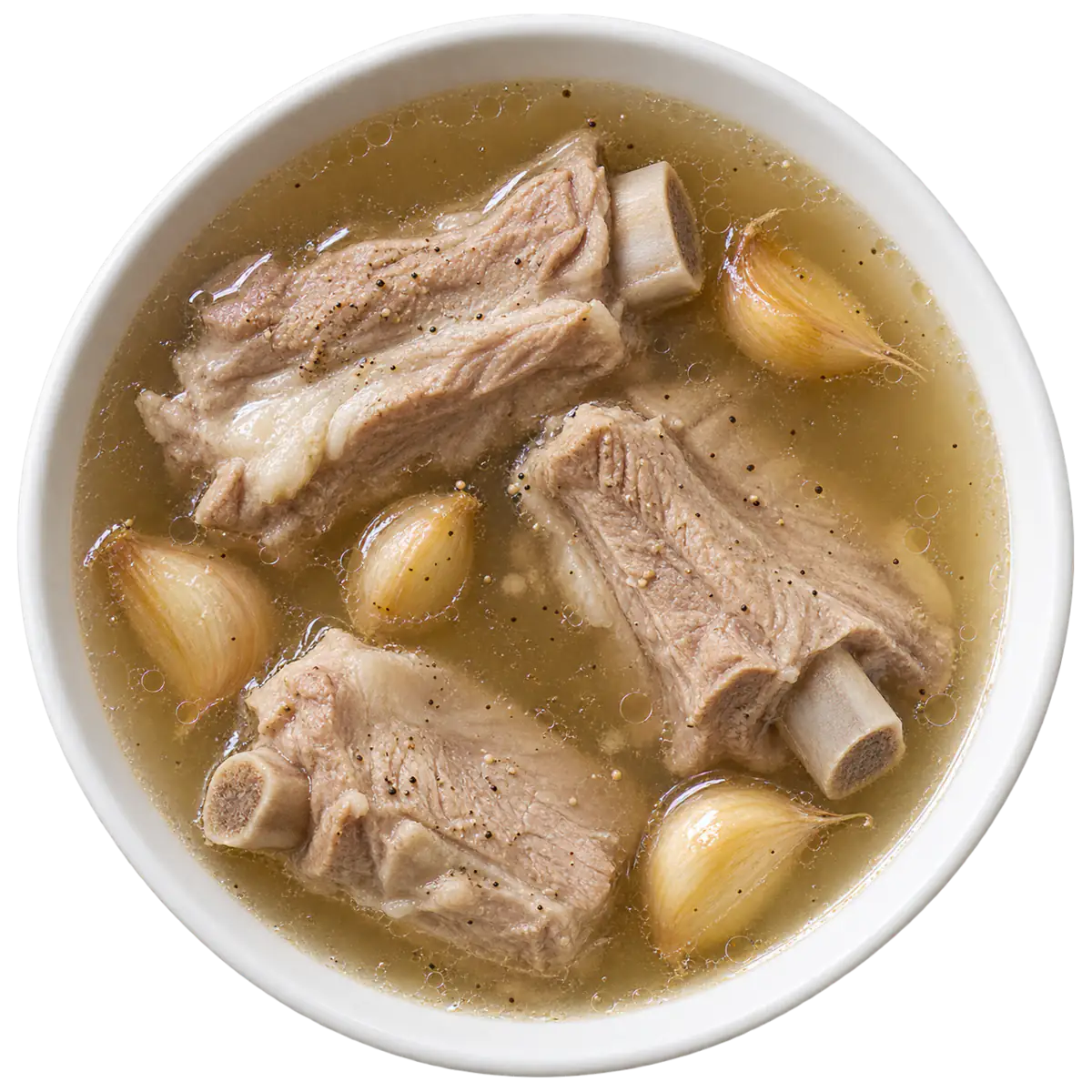
Origin and history
Bak kut teh came with Chinese immigrants to Malaysia and Singapore, and each dialect group made its own: the Hokkiens a dark, herbal broth, the Teochews a clear one seasoned with garlic, pepper and a little soy. The Teochew style became Singapore's, sold along the Singapore River around Clarke Quay; one well-known stall dates its start there to 1955. Claims about who first cooked it, and when, remain unproven.
Make it at home
- Makes
- 4-6 servings
- Total time
- 1 h 45 min
- Hands-on
- 20 min
Ingredients
- 1.2 kg2.6 lb pork ribs (prime ribs or spare ribs), cut between the bones into single ribs
- 2.5 l10 1/2 cups water, plus more for blanching
- 3 whole garlic bulbs, loose outer skin rubbed off, left whole and unpeeled
- 6 garlic cloves, peeled and lightly crushed, for the pepper bag
- 3 tbsp (about 25 g)3 tbsp white peppercorns, coarsely cracked in a mortar
- 1 tbsp light soy sauce
- 1 1/2 tsp salt, or to taste
- a pinch of sugar, optional
- to serve: steamed rice, youtiao (fried dough sticks, you char kway), sliced red chilli or chilli padi in dark soy sauce, hot Chinese tea
Method
-
1. Put the ribs in a pot, cover with cold water, bring to the boil and boil for 5 minutes.
-
2. Drain, rinse each rib under running water to wash off the scum and bits of marrow, and rinse the pot clean; this is what keeps the broth clear.
-
3. Tie the cracked peppercorns and the crushed garlic cloves in a double layer of muslin.
-
4. Bring the 2.5 l (10 1/2 cups) of fresh water to the boil in the clean pot, then add the ribs, the whole garlic bulbs and the pepper bag.
-
5. When it returns to the boil, lower the heat so the surface barely trembles, partly cover and simmer for 1 1/4 to 1 1/2 hours, skimming now and then, until the meat is tender but still holds to the bone. A hard boil clouds the broth.
-
6. Season with the light soy sauce, salt and the sugar if using; the broth should be pale gold and clear, with a pepper heat you feel at the back of the throat. If it is not peppery enough, crush a little more pepper straight into the pot and simmer 10 minutes more.
-
7. Remove the pepper bag. Serve the ribs and the soft garlic in bowls with plenty of broth, with rice, youtiao to dip in the soup, the chilli soy and a pot of strong Chinese tea.
Notes
- How it differs from the parent: the bak kut teh page gives the Hokkien style of Klang, dark with a bag of Chinese herbs (dang gui, dang shen and others) and dark soy. The Teochew style keeps only pork, garlic and white pepper: the broth stays clear and light, and the taste is peppery and garlicky rather than herbal.
- Pepper: white pepper is the backbone; some cooks add a few black peppercorns. Many home cooks in Singapore use a ready Teochew bak kut teh spice sachet, which is mostly white pepper, black pepper and garlic. Some add a stick of cassia, a star anise or a slice of liquorice root, but only a little, so the soup does not turn herbal.
- Cuts: shops serve prime ribs (the meatier loin ribs) and spare ribs; pork belly, tail and offal soups are sold alongside. A few rehydrated shiitake or button mushrooms are an occasional addition.
- Tea is drunk alongside, not put in the pot; the name means 'meat bone tea' in Hokkien, and the tea is said to cut the richness of the pork.
- Make-ahead: the soup keeps 2 days in the fridge. Reheat gently and adjust the pepper, which mellows overnight.
Adapted from Rotinrice (Linda Ooi), Singapore Teochew bak kut teh and The Singapore Women's Weekly, Teochew bak kut teh.
At the festivals
No festival we list has printed it on a menu yet.