
🇲🇾 Malaysia and 🇸🇬 Singapore · Klang (Malaysia) and Singapore; origin disputed
Bak kut tehMalaysian pork rib soup
Pork ribs simmered with a pack of Chinese herbs and spices, garlic and soy into a dark, herbal broth: the Hokkien style of Klang. The name is Hokkien for 'meat bone tea'; there is no tea in the pot. Singapore's clear, peppery Teochew style is a variant.
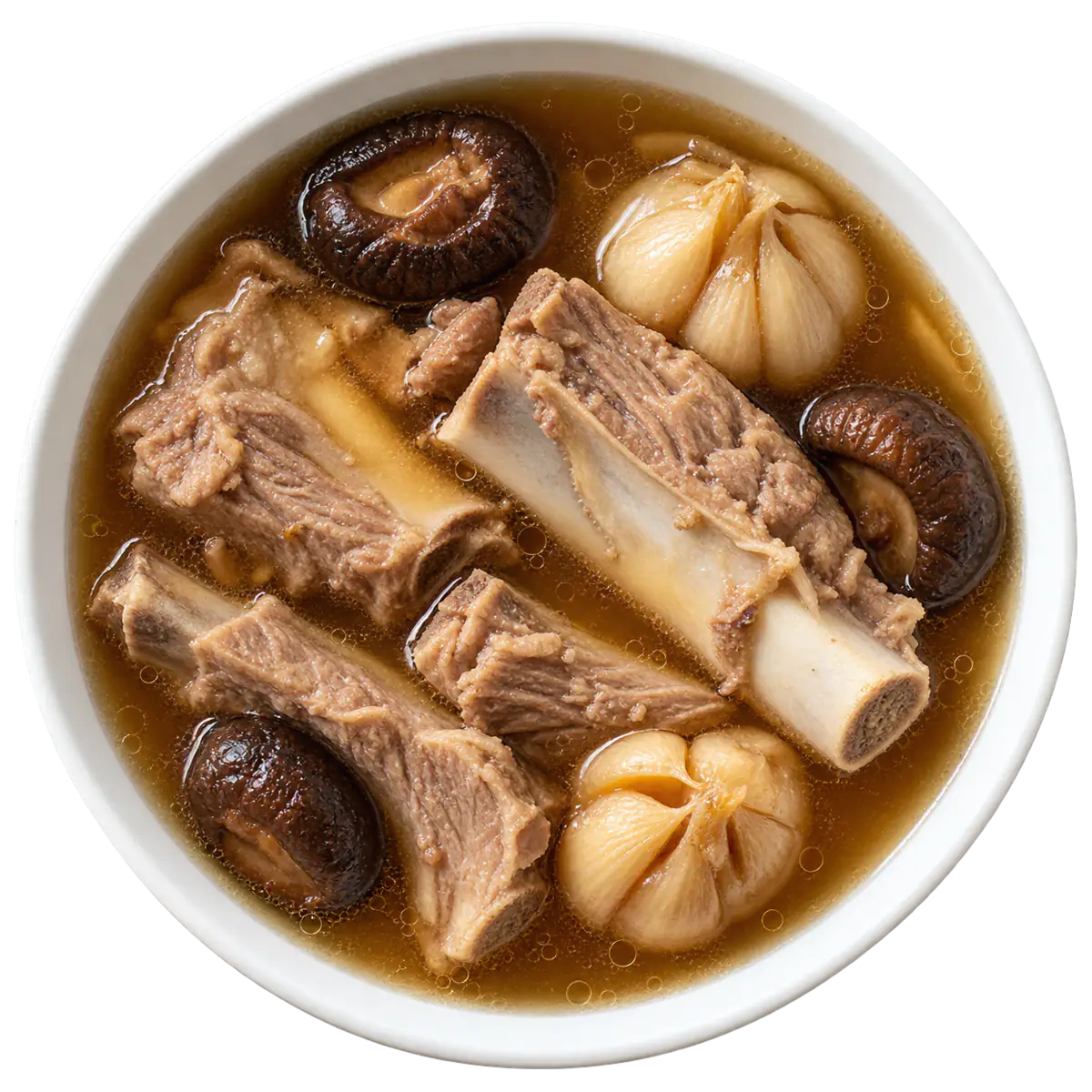
Origin and history
Bak kut teh means 'meat bone tea' in Hokkien; there is no tea in the broth, but tea is drunk with it. Malaysia and Singapore both claim it. The most common account places it among Hokkien immigrants around the port of Klang, where labourers ate it for strength, and Klang's Hokkiens come largely from southern Fujian; Singapore's Teochew cooks made a lighter, peppery version. No origin claim, including a Klang physician of the 1930s, has been proven.
Make it at home
- Makes
- 4-6 servings
- Total time
- 2 h 15 min
- Hands-on
- 30 min
Ingredients
- 1 kg2.2 lb pork spare ribs, cut between the bones into 5-6 cm (2 in) pieces
- 300 g10 oz pork belly, in one piece; optional
- 2.5 l10 1/2 cups water
- 2 whole garlic bulbs, loose skin rubbed off, left whole
- 6 dried shiitake mushrooms, rinsed and soaked 20 minutes in warm water
- 10 g1/3 oz dang shen (codonopsis root, 党参), herb bag
- 10 g1/3 oz dang gui (Chinese angelica root, 当归), herb bag
- 8 g1/4 oz chuan xiong (lovage root, 川芎), herb bag
- 8 g1/4 oz shu di (cured rehmannia root, 熟地), herb bag
- 10 g1/3 oz yu zhu (Solomon's seal, 玉竹), herb bag
- 3 slices gan cao (liquorice root, 甘草), herb bag
- 1 piece dried tangerine peel (chen pi, 陈皮), herb bag
- 8 g2 sticks cassia bark (gui pi, 桂皮), herb bag
- 2 star anise, herb bag
- 1 tsp white peppercorns, lightly cracked; herb bag
- 2 tbsp dark soy sauce
- 2 tbsp light soy sauce
- salt and a pinch of sugar, to taste
- 4 fried tofu puffs (tau pok), halved; optional
- to serve: steamed rice, youtiao (fried dough sticks), chopped garlic and sliced bird's eye chilli in dark soy sauce, hot Chinese tea
Method
-
1. Tie all the herb-bag ingredients in a double layer of muslin (or use a ready-made Klang bak kut teh spice packet of about 40 g).
-
2. Put the ribs and pork belly in a pot, cover with cold water, bring to the boil and boil for 5 minutes. Drain and rinse the meat under running water to remove the scum.
-
3. In a clean large pot (a clay pot is traditional), bring the 2.5 l water to the boil with the herb bag, the garlic bulbs and the soaked shiitake. Simmer for 30 minutes to draw out the herbs.
-
4. Add the pork and the dark and light soy sauces. Bring back to a simmer, cover and cook very gently for 1 1/4-1 1/2 hours, until the ribs are tender but still hold to the bone. Top up with hot water if the meat is no longer covered.
-
5. Add the tofu puffs, if using, for the last 10 minutes.
-
6. Taste the broth and season with salt and a pinch of sugar. It should be dark, savoury and herbal, without tasting bitter or sweet. Remove the herb bag.
-
7. Lift out the pork belly and slice it. Serve the ribs, belly, mushrooms and garlic in bowls with plenty of broth, with rice, youtiao to dip, the garlic-chilli soy dip and Chinese tea on the side.
Notes
- This is the Hokkien style associated with Klang in Malaysia: a dark broth rich with herbs and dark soy. Klang shops may use 15 herbs and spices; dang shen, dang gui and chuan xiong are the core. Chinese herbalists sell the herbs, and ready spice packets are what most home cooks use.
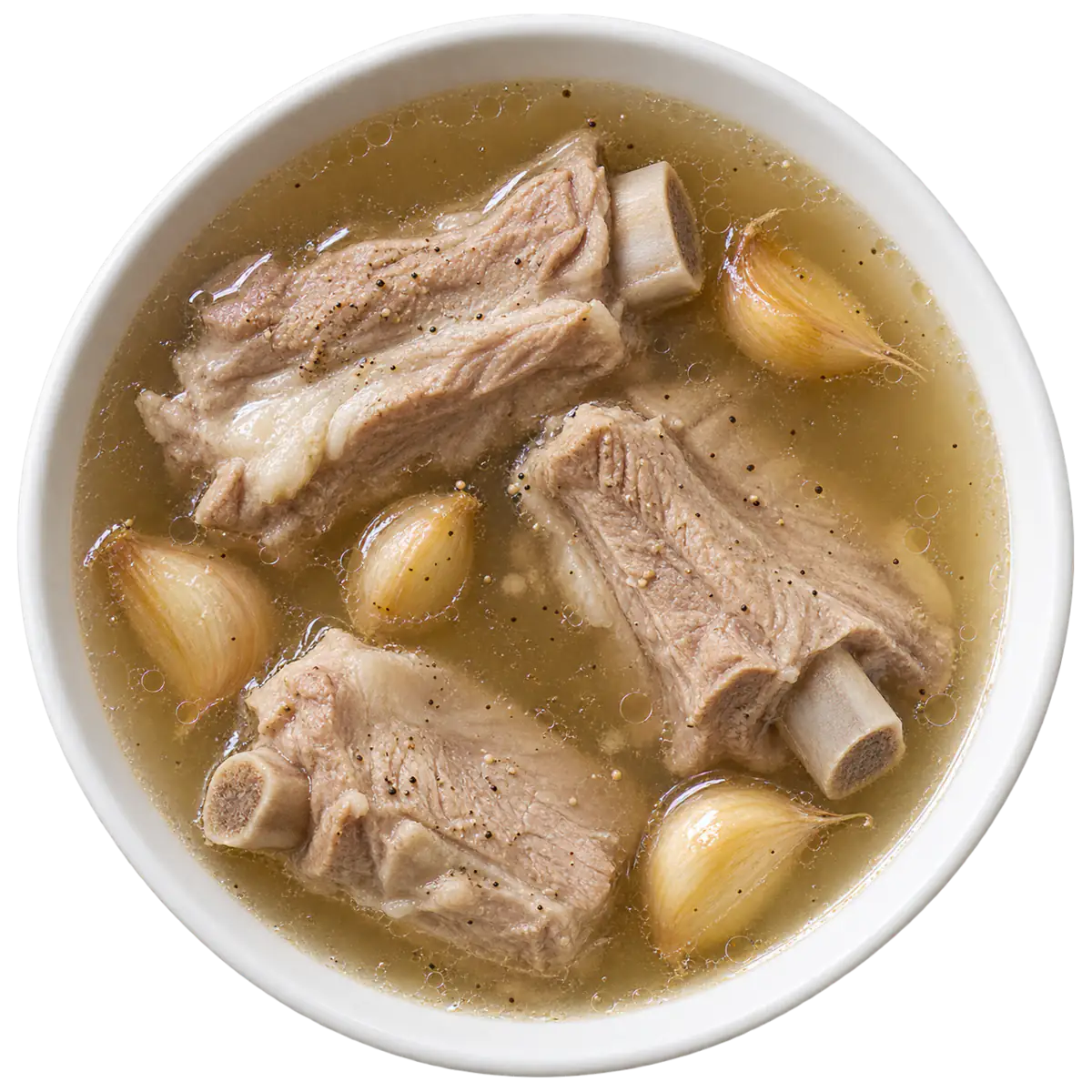
- Teochew style, the usual one in Singapore and Johor: leave out the herb bag and the dark soy. Simmer the ribs with 2-3 tablespoons of crushed white peppercorns and the garlic bulbs, and season with light soy and salt. The broth is clear, light and strongly peppery.
- Singapore also has a Cantonese style, and a 'dry' bak kut teh has become popular in Klang.
- Other cuts are common: pork belly, lean shoulder, trotters, and offal at specialist shops. Enoki, dried beancurd skin and lettuce are frequent additions, though some cooks think they dilute the broth.
- Bak kut teh is often a breakfast dish. Chinese tea is drunk alongside to cut the richness of the pork.
- It keeps 2 days in the fridge; the broth deepens overnight.
Adapted from Adam Liaw, "Bak kut teh" and Noob Cook, "Klang bak kut teh".
Variants
At the festivals
Served at 1 festival in Malaysia.
Earlier editions
-
September 20, 2026
🇲🇾 Klang, Malaysia
6th Klang Bak Kut Teh Charity Festival
-
October 05, 2025
🇲🇾 Klang, Malaysia
5th Centro Klang Bak Kut Teh Festival
On the menu as Bak Kut Teh and Rice
By Xiang, Samy & Min, Ah Tat, Eng Chun, Lai Choon, Teck Huat, Kin Kong, Nan Feng, Mayflower, Hock Li Lai, Yeoh's Bah Kut Teh
-
September 08, 2024
🇲🇾 Klang, Malaysia
4th Klang Bak Kut Teh Charity Festival
By 20 of Klang's most renowned bak kut teh stalls