
🇮🇩 Indonesia · sold across the country by Javanese vendors
BaksoIndonesian meatball soup
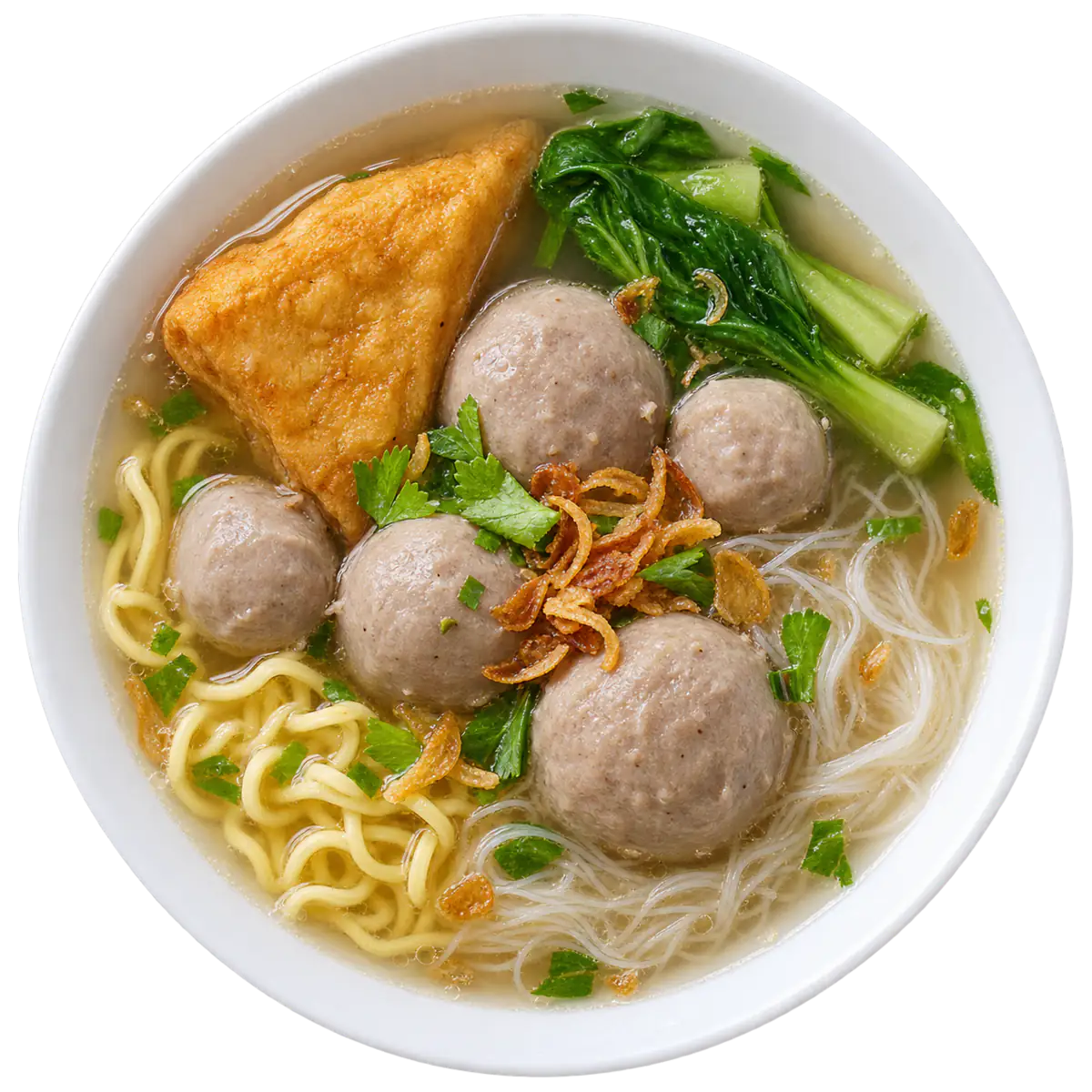
An Indonesian soup of beef (or chicken or fish) meatballs in a clear beef broth with noodles, bok choy, fried shallots and celery, seasoned at the table with sambal, vinegar and sweet soy sauce.
Origin and history
The name comes from Hokkien bak-so, minced meat, and the soup is said to have come to Indonesia with Chinese traders, though the sources read give no dates. Most bakso sellers today come from Wonogiri and Solo in Central Java and from Malang in East Java, and they have carried the soup to cities across the archipelago.
Make it at home
- Makes
- 5 servings
- Total time
- 2 h 30 min
- Hands-on
- 1 h
Ingredients
- 500 g1.1 lb beef bones and trimmings, for the broth
- 2.5 litres10 cups water
- 6 cloves garlic, 3 for the broth, 3 for the meatballs
- 1 tbsp white peppercorns, 1/2 tsp for meatballs
- 2 tbsp neutral oil
- salt, to taste
- 500 g1.1 lb lean beef, from rump, round or chuck, cold, cut small
- 100 g3/4 cup tapioca starch
- 100 g3.5 oz crushed ice
- 1 egg white, for the meatballs
- 1 tsp salt, for meatballs
- 1 tsp baking powder, optional, for a softer, more expanded ball
- 300 g10 oz fresh yellow wheat noodles and rice vermicelli, mixed or one kind
- 2 heads baby bok choy, blanched
- 1 stalk celery, thinly sliced
- 2 spring onions, sliced
- fried shallots, sambal, vinegar or lime, kecap manis, at the table
Method
-
1. Boil the bones and trimmings in the water for 5 minutes, then drain, rinse and refill the pot with 2.5 litres (10 cups) of fresh water. Simmer, skimming, for 1 hour 30 minutes.
-
2. Crush 3 garlic cloves with 1 tablespoon of the peppercorns and fry them in the oil for 2 minutes, then stir into the broth. Season with salt and strain.
-
3. For the meatballs, chop the cold beef in a food processor with the remaining crushed garlic, 1/2 teaspoon ground white pepper, the salt, egg white and ice until a sticky, smooth paste forms.
-
4. Add the tapioca starch and baking powder and pulse until the paste is bouncy and holds together.
-
5. Bring a wide pan of water to a boil, then lower the heat so it barely simmers rather than churns. Scoop the paste into balls the size of a walnut with a wet spoon, or squeeze them through your fist, and drop them in.
-
6. Cook until the meatballs float and feel firm, about 8 to 10 minutes. Lift them out, dip them briefly in cold water to keep them springy, then add them to the hot broth.
-
7. Blanch the noodles and bok choy briefly and divide among bowls. Add 4 or 5 meatballs and ladle over the boiling broth.
-
8. Top with celery, spring onion and fried shallots. Add sambal, vinegar or lime, and a little kecap manis at the table.
Notes
- The meatballs are smooth and springy, not rough like Western ones. Indonesian recipes get that from processing very lean beef cold with ice and mixing in tapioca starch, in a ratio of about 100 g starch to 500 g beef. Using frozen ready-made bakso, as many home cooks do, saves an hour.
- Variants exist: bakso urat has pieces of beef tendon, some versions hide a quail egg inside, and others are cheese-filled or very large. Vendors from Solo and Malang are the best-known names for regional styles.
- Beef is standard because most Indonesians are Muslim. Chicken or fish balls are also made.
- Serving: noodles (yellow wheat noodles, rice vermicelli or glass noodles) and blanched bok choy go in the bowl; sambal, vinegar or lime and sweet soy sauce are added at the table.
- Make ahead: the broth and cooked meatballs freeze well.
Adapted from Cook Me Indonesian, Bakso, Good News from Indonesia, Bakso dan khazanah kuliner Nusantara, Halodoc, Resep bakso sapi rumahan, and Kompas TV, Resep bakso daging sapi.
At the festivals
No festival we list has printed it on a menu yet.