
🇻🇳 Vietnam · Northern Vietnam (Nam Định, Hà Nội), early 20th century
PhởVietnamese noodle soup
Vietnamese soup of flat rice noodles (bánh phở) in a clear, long-simmered beef (or chicken) broth spiced with charred ginger and onion, star anise and cinnamon, served with herbs, lime and chilli.
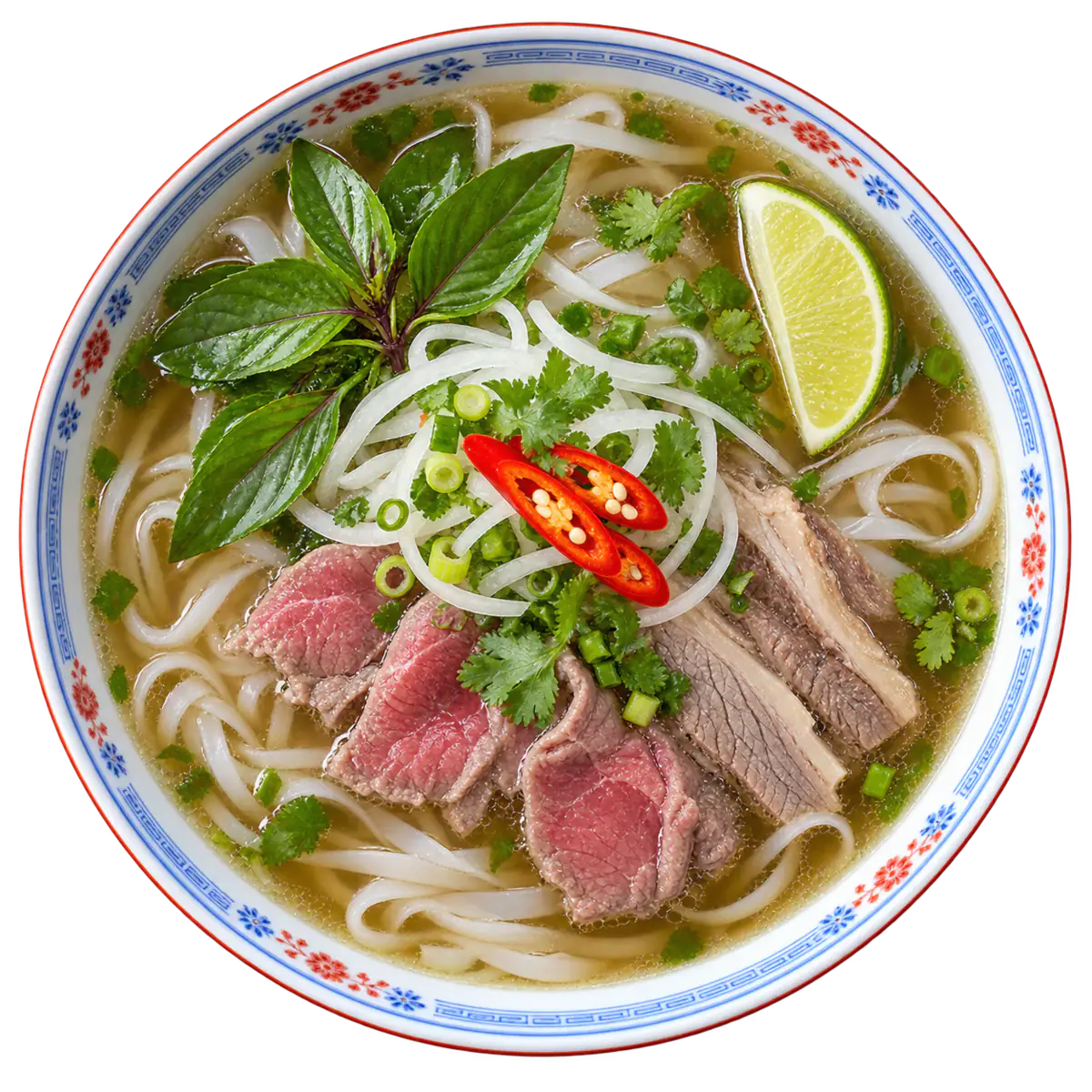
Origin and history
Phở emerged in northern Vietnam during the French colonial period, in Nam Định province and Hà Nội, where it began as street food sold by vendors carrying pots of broth and portable stoves. Cooks from the villages of Vân Cù and Giao Cù in Nam Định took it to Hà Nội and, after the 1954 partition, northern migrants carried it south, where it took on a fuller plate of garnishes. Phở of Hà Nội and of Nam Định were listed as national intangible cultural heritage by Vietnam's culture ministry in 2024.
Make it at home
- Makes
- 6 servings
- Total time
- 5 h 30 min
- Hands-on
- 1 h
Ingredients
- 2.5 kg5.5 lb beef marrow and knuckle bones (xương ống), cut into pieces by the butcher
- 700 g1.5 lb beef brisket or flank (nạm, gầu), in one or two pieces, to cook in the broth
- 5.5 l5.8 qt water, plus more for blanching
- 2 (about 400 g)2 (about 14 oz) yellow onions, unpeeled
- 100 g3.5 oz fresh ginger, one large knob, unpeeled
- 5 star anise (hoa hồi)
- 1 cinnamon or cassia stick (quế), about 8 cm (3 in)
- 2 black cardamom pods (thảo quả), lightly cracked
- 1 tsp coriander seeds
- 4 whole cloves, optional
- 1 tbsp salt, plus more to taste
- 25 g1 oz yellow rock sugar, or 1½ tbsp sugar
- 4–5 tbsp fish sauce (nước mắm), added near the end
- 1 kg fresh or 450 g dried2.2 lb fresh or 1 lb dried flat rice noodles (bánh phở), about 5 mm (¼ in) wide
- 300 g10.5 oz beef sirloin or eye of round, partly frozen, sliced paper-thin across the grain, to serve raw (tái)
- 1 small white onion, sliced paper-thin and soaked in cold water for 20 minutes
- 6 spring onions, green parts in thin rings, white parts halved
- 1 small bunch coriander (cilantro) leaves, roughly chopped
- lime wedges, sliced fresh red chilli, black pepper, to serve
- Thai basil (húng quế), sawtooth coriander (ngò gai) and bean sprouts, optional, southern-style table plate
Method
-
1. Put the bones in a large stockpot, cover with cold water, bring to a hard boil for 5 minutes, then drain and rinse the bones and the pot to remove the scum.
-
2. Char the onions and ginger directly over a gas flame or under a hot grill, turning them, for 10–15 minutes, until blackened in patches and softened.
-
3. Rinse off the burnt skin under warm water, trim the onions and slice the ginger thickly.
-
4. Return the bones to the clean pot with the 5.5 l water, the salt and the rock sugar and bring slowly to the boil.
-
5. Skim off all the foam, then add the brisket and lower the heat until the surface barely trembles.
-
6. Simmer uncovered and without stirring, skimming from time to time; after about 1 hour 15 minutes, when the brisket is tender but still holds together, lift it out, plunge it into cold water for 10 minutes and refrigerate.
-
7. Toast the star anise, cinnamon, cardamom, coriander seeds and cloves in a dry pan for 2 minutes, until fragrant, and tie them in a muslin bag.
-
8. Add the spice bag and the charred onion and ginger to the pot and keep the broth at a bare simmer for another 3 hours, about 4 hours 30 minutes in all.
-
9. Strain the broth through a fine sieve, skim off as much fat as you like, and season it with the fish sauce and more salt; it should taste slightly too salty, since the noodles and meat are unseasoned.
-
10. Soak dried noodles in warm water for 20 minutes, or rinse fresh ones; just before serving, dip each portion in boiling water for 10–20 seconds and drain into a large bowl.
-
11. Slice the cold brisket thinly and arrange it over the noodles with the raw beef slices, spring onion, drained white onion and coriander.
-
12. Bring the broth to a rolling boil and ladle it over each bowl so it cooks the raw beef; serve at once with lime, chilli and black pepper.
Notes
- Northern (Hà Nội) phở is plain and broth-focused: noodles, beef, spring onion and white onion, with lime, chilli and perhaps garlic vinegar at the table. Southern phở adds a plate of herbs and bean sprouts, and diners often add hoisin and chilli sauce; northern cooks consider this a distraction from the broth.
- Common beef choices are tái (raw slices cooked by the broth), chín (cooked brisket or flank) or both; tendon and beef balls are popular in the south.
- Phở gà is the chicken version: a broth of a whole chicken and chicken bones with the same charred aromatics (often lighter on spice), served with shredded chicken. It is a protein choice, not a separate soup.
- Variant: Phở Nam Định, from the villages of Nam Trực district credited as phở's cradle, has a richer, fattier broth with oxtail and a more pronounced fish-sauce flavour.
- Keep the broth clear: blanch the bones first, never let it boil hard, and do not stir. Add fish sauce only at the end; long cooking dulls and sours it.
- The broth is best made a day ahead: chill it overnight and lift off the solid fat before reheating.
Adapted from VnExpress: Hướng dẫn nấu phở bò tại nhà chuẩn vị mà đơn giản, Andrea Nguyen, Into the Vietnamese Kitchen (Ten Speed Press), and Tuổi Trẻ: công thức nấu phở bò tham khảo từ ngũ gia phở Hà Nội.
Variants
At the festivals
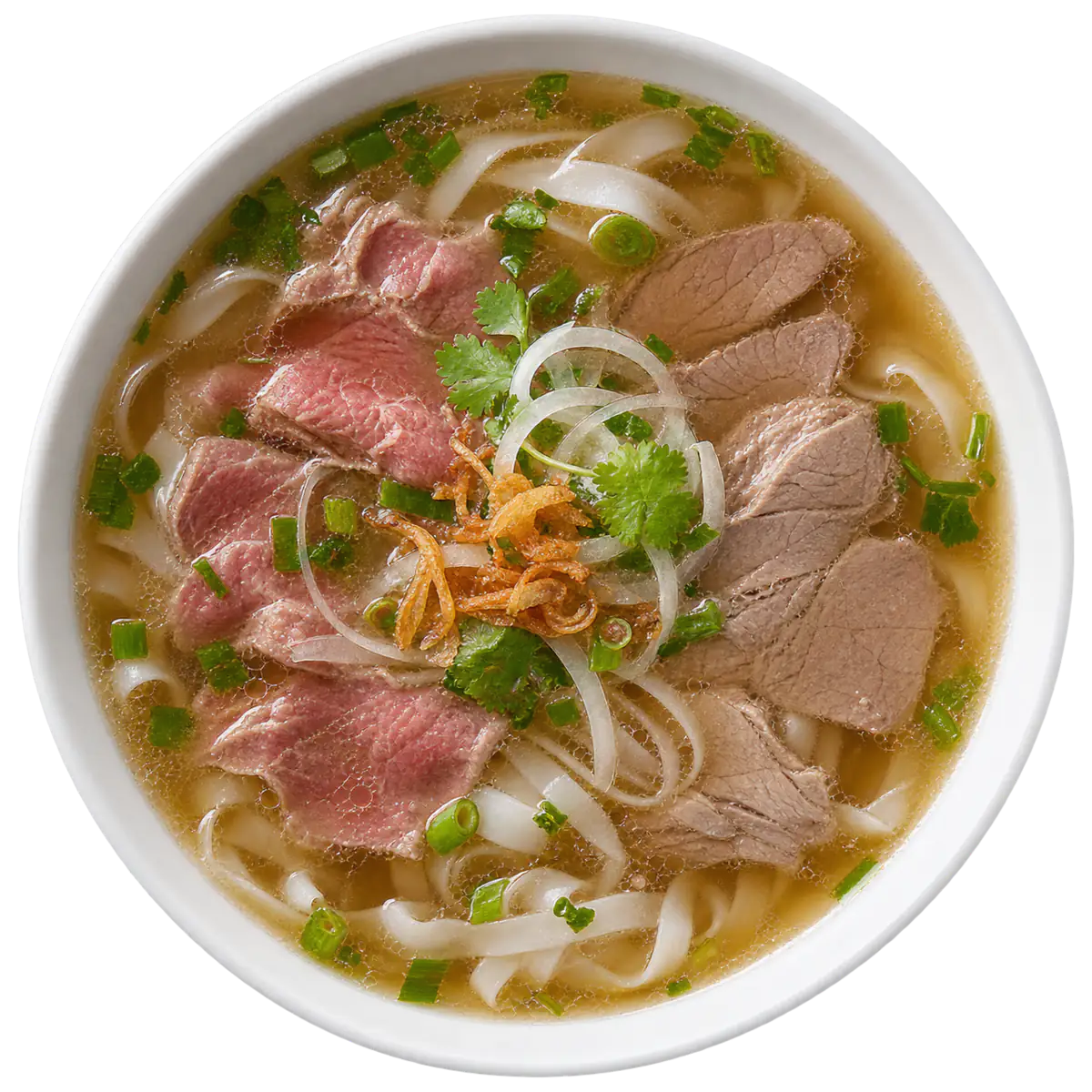
Served at 4 festivals in Czechia, United States, Vietnam, and Germany.
Earlier editions
- October 17, 2026
-
February 01, 2026
🇺🇸 Somerville, Massachusetts, United States
Soup Fest (Bow Market)
On the menu as Mini Phở and 48 hours phở broth with braised brisket and crispy fried dough
By Viet Citron
-
March 15, 2024 – March 17, 2024
🇻🇳 Nam Định, Vietnam
Festival Phở 2024
On the menu as Phở (giant pot, 300 litres), Phở xưa Nam Định, Phở Thìn, Phở ngô Hà Giang, Phở Atiso Đà Lạt, Phở Lâm Đồng, Phở sắn Quảng Nam, Phở bột chuối xanh, and Phở Gia Lai
By 20 artisans and 30 helpers and Brand stall
- October 19, 2019
-
February 24, 2018
🇩🇪 Marburg, Germany
13. Internationales Marburger Suppenfest
On the menu as Vegane Vietnamesische Pho-Suppe
By Adam Ruebsaat-Trott