
🇮🇹 Italy · Marche (Porto Recanati)
Brodetto di Porto RecanatiPorto Recanati fish stew
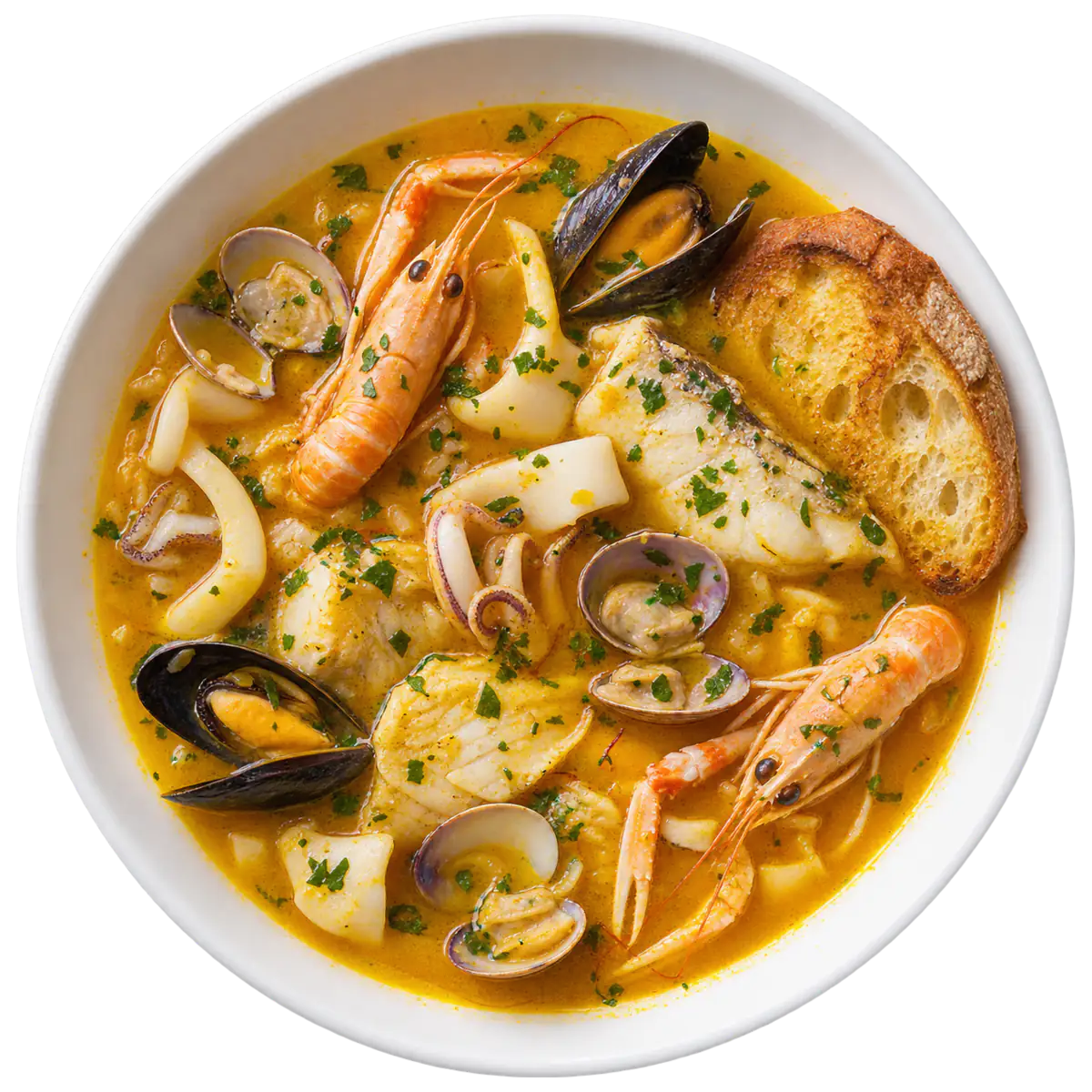
Porto Recanati's brodetto: a golden brodetto coloured with zafferanella (a local saffron substitute) or saffron, with cuttlefish and mixed fish. The original, recognised by the town as a De.Co., has no tomato (Italy's tourism board, ENIT); a home version in red, with tomato passata and no saffron, was the more common one in fishing families.
Origin and history
Porto Recanati, on the Marche coast south of Ancona, makes the only golden brodetto of the region: its colour comes from zafferanella, a local safflower used like saffron, and the original recipe has no tomato, though a red home version with tomato passata was common in fishing families. Unlike most Adriatic fish soups it grew out of the town's restaurant kitchens rather than fishermen's homes, and the town has recognised the recipe as a De.Co. (municipal designation of origin). Restaurants serve it during the town's yearly brodetto week.
Make it at home
- Makes
- 6 servings
- Total time
- 1 h 45 min
- Hands-on
- 1 h
Ingredients
- 1.5 kg3.3 lb mixed Adriatic fish: palombo (smooth-hound), monkfish (rana pescatrice), scorpionfish (scorfano), gurnard (gallinella), hake (merluzzo), red mullet (triglie), sole (sogliole), at least five kinds; cleaned, heads and bones kept, flesh cut in large pieces or fillets
- 400 g14 oz cuttlefish (seppie), cleaned, cut in small pieces
- 1.5 l6 1/3 cups cold water, for the fish broth
- 1 each small onion, celery stalk and carrot, plus a few parsley stalks, for the fish broth
- 5 tbsp extra virgin olive oil, divided
- 1 onion, finely chopped
- 1 tbsp zafferanella (dried safflower petals from the Marche), or 1 sachet (0.15 g) saffron powder
- 50 g1/3 cup plain flour, for dusting the fish
- 150 ml2/3 cup dry white wine (a glass)
- 150 ml2/3 cup water (a glass), hot
- salt and freshly ground black pepper, to taste
- 6-12 slices stale or oven-toasted country bread, to serve
Method
-
1. Fillet or cut the fish into large pieces, taking out the backbones and pin bones, and keep the heads and carcasses; keep the cuttlefish apart.
-
2. Put the heads and carcasses in a pot with the cold water, the onion, celery, carrot, parsley stalks and a little salt, bring to the boil and simmer for 30 minutes.
-
3. Strain the broth through a fine sieve; you need about 500 ml (2 cups). Keep it hot.
-
4. In a pan, warm 2 tablespoons of oil over low heat and cook the chopped onion for about 8 minutes, until soft and pale.
-
5. Add the cuttlefish and let it colour lightly over medium heat for 3 to 4 minutes, stirring.
-
6. Pour in the hot broth, stir in the zafferanella (or saffron) and a pinch of salt, and simmer for about 15 minutes, until the cuttlefish is tender and the broth is golden.
-
7. Meanwhile dust the remaining fish lightly with flour, shaking off the excess.
-
8. Oil a second wide, shallow pan with two handles with the remaining 3 tablespoons of oil and lay the fish in layers: firm fish that needs longest (monkfish, palombo, scorpionfish, gurnard) at the bottom, the tender ones (hake, mullet, sole) on top.
-
9. Pour the cuttlefish and its golden broth over the fish, then add the wine and the hot water; the liquid should come level with the fish without covering it.
-
10. Cook over brisk heat for 15 to 20 minutes without stirring, only taking the pan by its handles and swirling it now and then, until the fish is opaque and the broth has thickened slightly from the flour.
-
11. Put bread in a tureen or in each soup plate, ladle over the broth with a little of every fish, grind over black pepper and serve hot.
Notes
- How it differs from the parent: the brodetto page gives the plain everyday brodetto with a little tomato and no fixed fish count. Porto Recanati's is the 'brodetto giallo': coloured gold with zafferanella, made with no tomato, the fish dusted with flour and the cuttlefish cooked first in its own saffron broth.
- Zafferanella is the dried flower of safflower (cartamo), grown in the Marche, with a scent like saffron but gentler. Outside the region use a sachet of saffron: the colour is the same, the aroma stronger. Plain safflower sold as 'bastard saffron' gives colour but little scent.
- Fish: Italy's tourism board lists cuttlefish, cod or hake, gurnard, smooth-hound, stargazer, scorpionfish, weever, mantis shrimp, monkfish, sole, red mullet, skate and John Dory; a home brodetto uses five to seven of them. Keep shellfish out: this is a fish brodetto.
- Tomato: the original, De.Co. recipe has none (Italy's tourism board: the original recipe excludes tomato). A red home version also exists: fishermen's families in Porto Recanati made it with tomato passata and no saffron, and some chefs still cook it that way. For that version, leave out the zafferanella and stir 200 ml (3/4 cup) of passata into the broth with the cuttlefish.
- The pan matters: a wide tinned pan with two handles lets you swirl the fish instead of stirring it.
- Brodetto does not reheat well. Make the fish broth and the cuttlefish ahead, and cook the rest of the fish just before serving.
- Other town styles with their own pages: Ancona (brodetto/anconetano), Fano (brodetto/fano), San Benedetto (brodetto/sambenedettese) and Vasto (brodetto/vastese).
Adapted from Anna Silveri, Dissapore, Brodetto di pesce: la ricetta perfetta (Porto Recanati version of the restaurant Il Diavolo del Brodetto) and Italia.it (ENIT), Le brodetto dans les Marches.
At the festivals
No festival we list has printed it on a menu yet.