
🇪🇨 Ecuador · Coast (Manabí, Guayas)
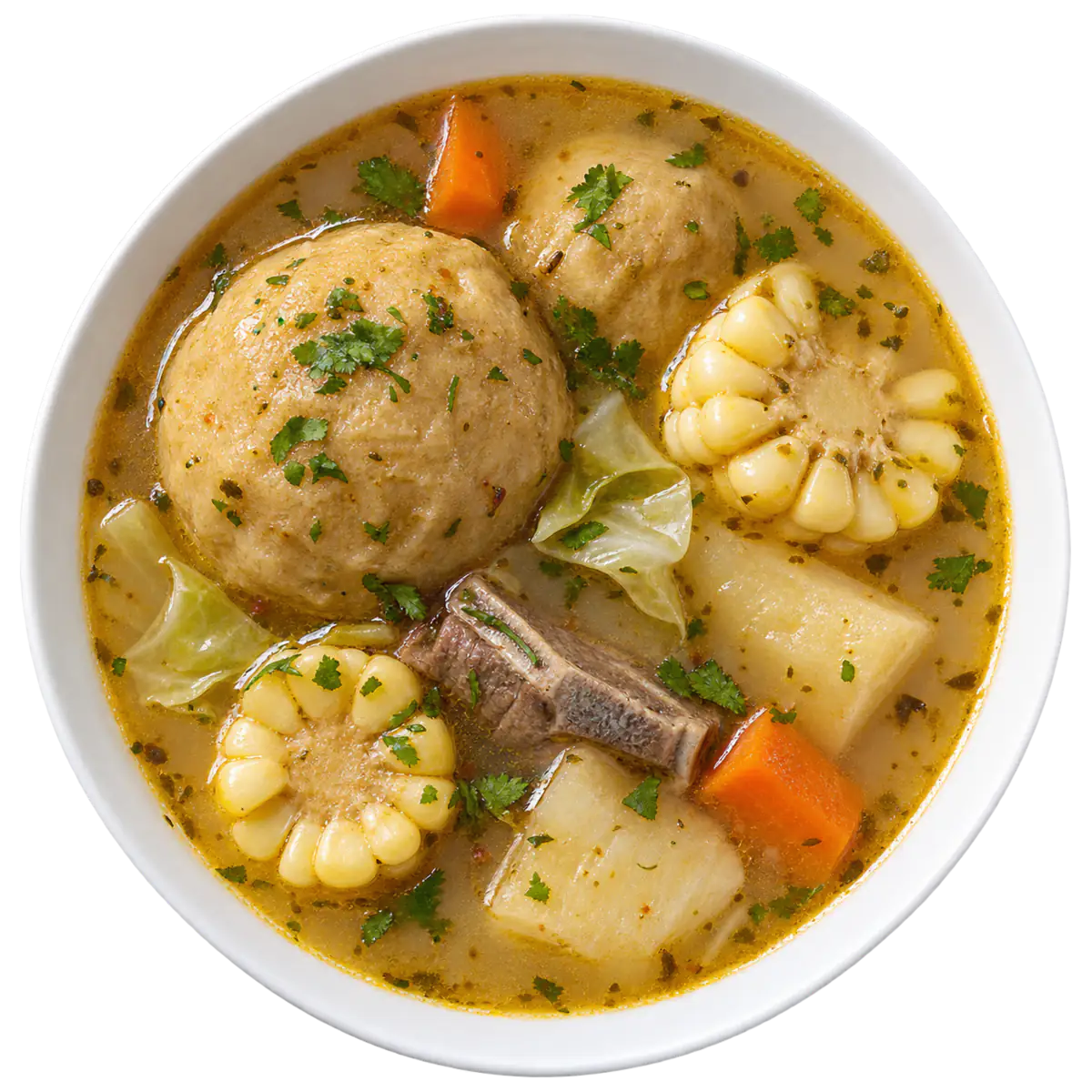
Caldo de bolasEcuadorian plantain dumpling soup
An Ecuadorian coastal soup of green-plantain dumplings stuffed with meat, cooked in beef broth with corn and cassava.
Origin and history
Caldo de bolas de verde is a soup of Ecuador's coast, one of the hearty lunch soups of Guayaquil homes: dumplings of green plantain stuffed with a picadillo of beef, egg, peas and raisins, cooked in beef broth with corn and cassava. El Universo calls it a completely mestizo dish: cassava, corn and peanuts are American, raisins came from Europe, and the plantain itself originally from South-East Asia.
Make it at home
- Makes
- 6 servings
- Total time
- 3 h
- Hands-on
- 1 h 30 min
Ingredients
- 500 g1.1 lb beef short ribs (costilla de res), cut into 6 pieces
- 500 g1.1 lb boneless beef (pulpa), such as flank or chuck, in one or two pieces
- 3 l12 3/4 cups water
- 4 tbsp achiote (annatto) oil, or vegetable oil with 1 1/2 tsp ground achiote
- 2 red onions, finely chopped
- 1 green bell pepper, finely chopped
- 2 ripe tomatoes, peeled and chopped
- 4 garlic cloves, crushed
- 2 tsp ground cumin
- 1/4 cup chopped culantro (cilantro), plus more to serve
- 4 large green plantains (verdes), peeled; 2 halved for cooking, 2 finely grated raw
- 500 g1.1 lb yuca (cassava), peeled, cut into chunks
- 2 choclos (fresh corn on the cob), each cut into 3 rounds
- 2 carrots, one cut in chunks, one finely diced for the filling
- 4 cabbage leaves, cut in wide strips
- 60 g1/2 cup ground toasted peanuts, or 4 tbsp unsweetened peanut paste, for the dough
- 75 g1/2 cup cooked peas (arvejas), for the filling
- 2 hard-boiled eggs, chopped, for the filling
- 2 tbsp raisins, for the filling
- 6 pitted green olives, chopped, for the filling; optional
- 2 tbsp chopped hierbabuena (spearmint), to finish
- salt and black pepper, to taste
- lime wedges, ají (chilli sauce), curtido de cebolla (lime-pickled red onion), to serve
Method
-
1. Make the refrito: heat the achiote oil in a frying pan over medium heat and cook the onions, bell pepper, tomatoes, garlic and cumin for 8 to 10 minutes until soft, then stir in the culantro; divide it into two halves.
-
2. Put both cuts of beef, the water and half the refrito in a large pot, bring to the boil, skim and simmer, covered, for 1 hour.
-
3. Add the halved plantains and simmer for 20 to 25 minutes, until they are soft right through.
-
4. Lift out the plantains and the boneless beef and set them aside to cool a little.
-
5. Add the yuca, corn and carrot chunks to the broth and simmer for 20 to 25 minutes, until the yuca is tender; lift the vegetables out onto a dish and keep them warm, leaving the ribs in the broth.
-
6. For the filling, chop the boneless beef very finely and mix it with the other half of the refrito, the diced carrot, peas, eggs, raisins and olives; season with salt, pepper and a pinch of cumin, and warm it in a pan for 3 to 4 minutes.
-
7. For the dough, mash the cooked plantains while still warm until smooth and sticky (a food processor helps), then knead in the grated raw plantain, the peanut, a spoonful of achiote oil and salt until it holds together.
-
8. With wet hands, divide the dough into 6 portions; flatten each in your palm, put 2 heaped tablespoons of filling in the middle, close the dough around it and roll it into a smooth ball, pressing any cracks shut.
-
9. Bring the broth to a gentle simmer, not a rolling boil, and lower the balls in one at a time with a ladle.
-
10. Cook for about 15 minutes without stirring, until the balls float and feel firm.
-
11. Return the yuca, corn and carrot to the pot with the cabbage and simmer for 5 minutes, then stir in the mint, check the salt and pepper.
-
12. Serve one ball per bowl with a piece of rib, yuca, corn and cabbage and plenty of broth; pass lime, ají and curtido at the table.
Notes
- The dough: some cooks use only cooked plantain, others mix cooked and raw grated plantain as here; the raw plantain binds the dough. If yours cracks, knead in a beaten egg. Do not let the broth boil hard once the balls are in, or they break.
- Peanut goes into the dough in some households and into the filling in others; pepa de sambo (ground squash seeds) is used instead of peanut by some cooks and suits anyone with a peanut allergy.
- Size: golf-ball dumplings make a starter, orange-sized ones a full meal.
- Some cooks also add potatoes and other vegetables to the broth, putting each in according to how long it takes to cook.
- Make-ahead: the broth and filling can be made the day before; shape and cook the balls on the day.
Adapted from El Universo, Historia y sabor: caldo de bolas and Laylita's Recipes, Caldo de bolas de verde.
At the festivals
Served at 1 festival in Ecuador.
Earlier editions
-
June 26, 2025 – July 06, 2025
🇪🇨 Guayaquil, Ecuador
Tercer Festival de Sopas
On the menu as caldo de bolas tingueadas de concha y camarón