
🇪🇨 Ecuador · Guayaquil
Caldo de salchichaEcuadorian sausage soup
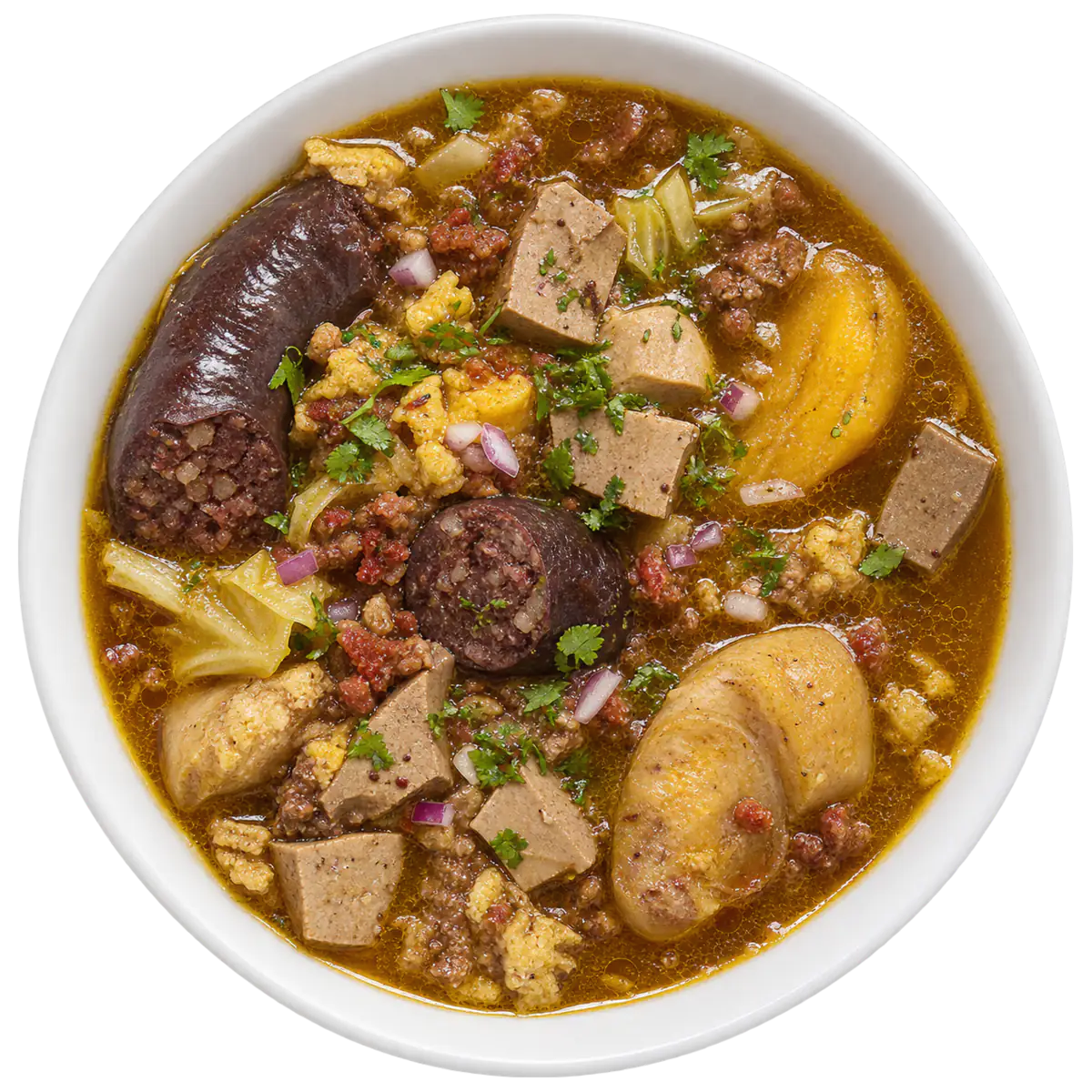
A Guayaquil soup of home-made pork sausages poached in an offal broth with green plantain and cabbage: a black sausage of pork blood, rice, offal and herbs (mint, culantro), usually with a second pale sausage of grated green plantain and peanut; eaten at breakfast or lunch.
Origin and history
Caldo de salchicha is a Guayaquil soup of home-made pork blood sausages and offal. Its forerunner is the Spanish morcilla: according to historian Jenny Estrada, the pig and the ways of processing it arrived with the conquest. Local tradition ties its other name, caldo de manguera ('hose broth'), to Guayaquil's volunteer firefighters, for whom neighbours cooked it; one account places this after the great fire of 1896. Its origin has been passed down orally, without a precise date.
Make it at home
- Makes
- 8 servings
- Total time
- 3 h
- Hands-on
- 1 h 30 min
Ingredients
- about 3 mabout 10 ft pork intestines (tripas): large intestine for the blood sausage, small intestine for the plantain sausage, ask the butcher for them cleaned, or use natural hog casings
- 2 limes, juiced, for cleaning the casings, plus wedges to serve
- 1 large bunch hierbabuena (spearmint), a few sprigs for cleaning the casings, 1 cup (about 25 g) chopped for the fillings and broth
- 1 kg2.2 lb pork menudencia (offal): tongue, heart and liver, rinsed and trimmed
- 3 l12 3/4 cups water
- 4 green plantains (verdes), peeled; 3 cut into chunks for the broth, 1 finely grated for the filling
- 1/2 small white cabbage (col), cut into thin strips
- 6 garlic cloves, crushed
- 2 tsp ground cumin
- 3 tbsp achiote (annatto) oil, or vegetable oil with 1 tsp ground achiote
- 2 red onions, finely chopped
- 2 ripe tomatoes, finely chopped
- 1 green bell pepper, finely chopped
- 1 tbsp dried oregano
- 750 ml3 cups fresh pork blood (sangre de cerdo), very fresh, kept cold, from a butcher who stops it clotting
- 250 g1 1/2 cups cooked white rice, cold
- 1/2 cup chopped culantro (cilantro)
- 2 tbsp peanut paste (pasta de maní), unsweetened, for the plantain filling
- salt, black pepper and ají (chilli), to taste
Method
-
1. Rinse the intestines inside and out under running water, rub them with the lime juice, salt and a few mint sprigs and leave them for 10 minutes.
-
2. Rinse them again several times until they no longer smell, then keep them in a bowl of cold water.
-
3. Put the offal in a large pot with the water, the plantain chunks, half the cabbage, half the garlic, half the cumin, salt and pepper; bring to the boil, skim, and simmer for about 1 hour, until the offal is tender.
-
4. Meanwhile make the refrito: heat the achiote oil in a frying pan over medium heat and cook the onions, tomatoes, bell pepper, the rest of the garlic and cumin and the oregano for 8 to 10 minutes, until soft and deep red.
-
5. Lift the cooked offal out of the broth, let it cool a little and chop it finely.
-
6. For the blood filling, mix the blood with the rice, half the refrito, half the chopped offal, half the mint and half the culantro, and season with salt and pepper; it will be loose.
-
7. For the plantain filling, mix the grated plantain with the peanut paste, 2 tbsp of the remaining refrito, a little culantro and salt.
-
8. Tie one end of the large intestine with kitchen string, pour in the blood mixture through a wide funnel, filling it only two-thirds full so it can swell, and tie it off into links about 15 cm (6 in) long.
-
9. Fill the small intestine with the plantain mixture in the same way and tie it into links.
-
10. Stir the rest of the refrito, the remaining cabbage and the remaining chopped offal into the broth and bring it back to a bare simmer; it must not boil hard or the sausages will burst.
-
11. Lower the sausages into the broth and poach them gently for 25 to 30 minutes, until they are firm and no blood seeps out when pricked with a needle.
-
12. Lift out the sausages and cut them into thick slices; add the remaining mint and culantro to the broth and adjust the salt.
-
13. Serve in deep bowls: slices of both sausages, offal, plantain and cabbage, covered with the hot broth, with lime wedges and ají at the table.
Notes
- The sausage is the soul of the dish: the large casing filled with blood, rice and herbs gives the black sausage (salchicha negra), the small casing filled with grated green plantain and peanut gives a pale one. Some cooks make only the blood and rice sausage.
- Seasoning varies by cook: one well-known Guayaquil cook leaves out pepper, cumin and garlic and seasons with lemongrass, basil, cilantro, parsley and celery instead; others add basil and celery to the blood.
- Shortcut: Guayaquil markets sell the sausage ready made. Outside Ecuador a Spanish rice morcilla (morcilla de Burgos) poached in the broth for 10 minutes is the closest substitute; the flavour is different, with more onion and spice and no mint.
- Fresh blood is perishable: buy it the day you cook, keep it in the fridge and use it the same day.
- Serving: it is eaten at breakfast or lunch, and is famous in Guayaquil as a cure for the chuchaqui (hangover).
Adapted from El Universo, Historia y sabor: caldo de salchicha and Extra, El caldo de salchicha 'guayaco'.
At the festivals
Served at 1 festival in Ecuador.
Earlier editions
-
June 26, 2025 – July 06, 2025
🇪🇨 Guayaquil, Ecuador
Tercer Festival de Sopas