
🇪🇸 Spain · Taboada, Lugo, Galicia
Caldo de ósosGalician pork bone soup
A Galician stew-soup made on the second day of the pig slaughter (matanza), built on pork spine bones with chickpeas soaked 24 hours, potatoes and a paprika-garlic sofrito; some add pork brains.
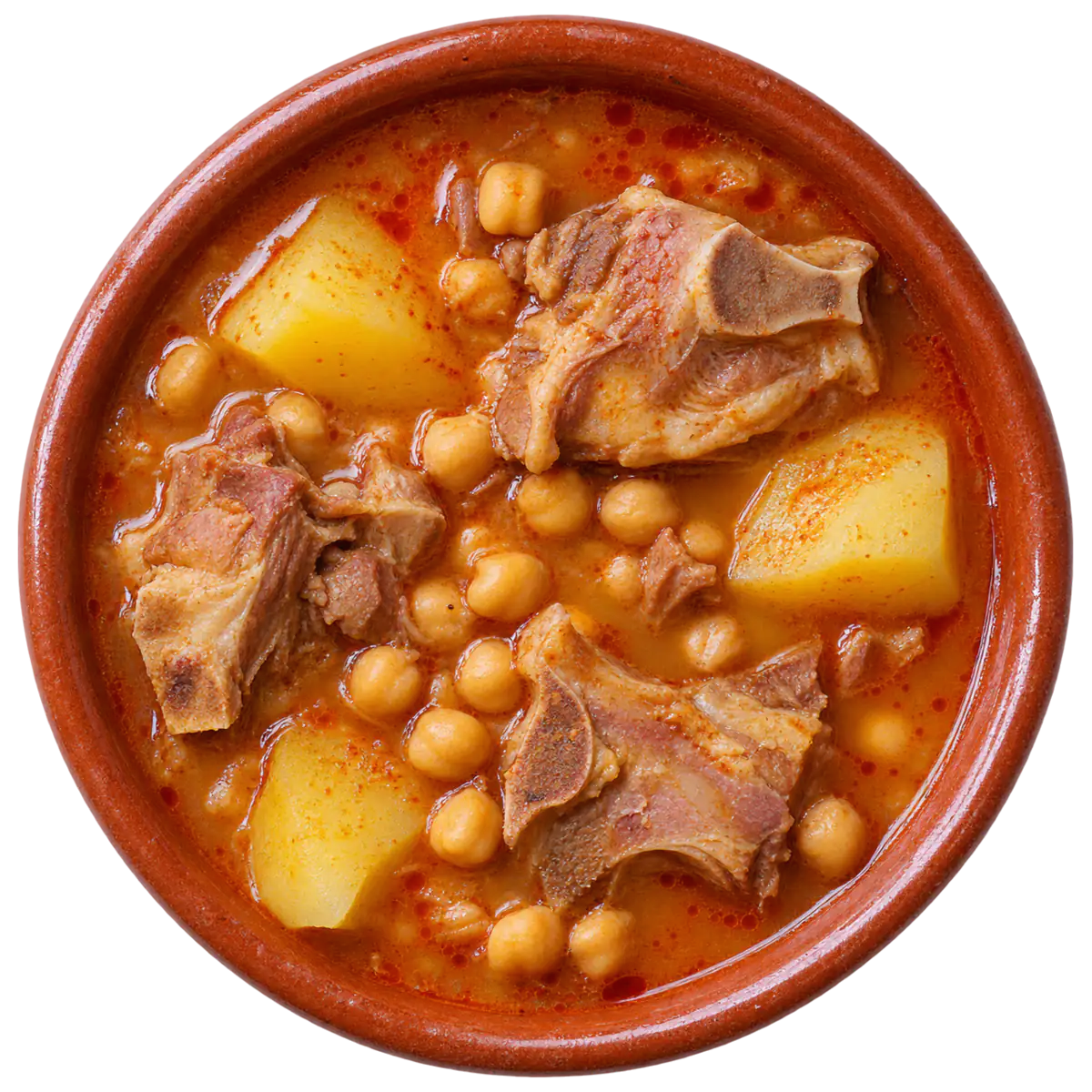
Origin and history
Caldo de ósos belongs to Taboada, in the Ribeira Sacra of Lugo province, where it was made from the pig's spine bones, chickpeas and potatoes on the second day of the matanza and eaten at Carnival. The Festa do Caldo de Ósos, held at Entroido since the late 1980s, reached its 34th edition in 2026 and serves hundreds of litres under a marquee in the town centre; the dish has become a symbol of the municipality.
Make it at home
- Makes
- 6 servings
- Total time
- 3 h
- Hands-on
- 30 min
Ingredients
- 1.5 kg3.3 lb pork spine bones (ósos da soá or espinazo), salted or fresh, with some meat on them, cut in pieces by the butcher; if salted, desalted 24–48 hours in cold water, changing it several times
- 300 g10.5 oz (1 1/2 cups) dried chickpeas (garbanzos), soaked 24 hours in plenty of cold water
- 3 L3 qt (12 1/2 cups) water
- 800 g1.75 lb floury potatoes (Galician Kennebec or similar), peeled and cut in chunks
- 1 (optional) pork brain (sesos), soaked in cold water and membranes removed
- 4 tbsp olive oil
- 4 garlic cloves, sliced
- 2 tsp sweet pimentón (Spanish paprika)
- 1/2 tsp or 1 hot pimentón, or a small dried guindilla chili, to taste
- salt, only if needed, at the end
Method
-
1. Put the drained bones in a large pot with the water and bring slowly to the boil, skimming off the grey foam as it rises.
-
2. Add the drained chickpeas, lower the heat, cover partly and simmer gently for about 2 hours, until the meat comes away from the bones by itself and the chickpeas are tender.
-
3. Add the potatoes, nicking each chunk and snapping it off so the rough edges thicken the broth, and the brain (if using), and simmer for 25–30 minutes, until the potatoes start to break at the edges.
-
4. Just before serving, warm the olive oil in a small pan over low heat and fry the garlic until it is barely golden.
-
5. Take the pan off the heat, stir in the sweet and hot pimentón (or the guindilla) and pour the sofrito straight into the pot.
-
6. Stir, simmer 5 minutes more and taste for salt; salted bones usually give enough. The caldo should be thick enough to stain the bowl.
-
7. Serve very hot in earthenware cuncas, with the bones in the broth or on a plate in the middle of the table.
Notes
- Total time: 3 h, plus 24 h soaking.
- The bones are eaten by hand, picking off the meat and marrow, and the broth, chickpeas and potatoes with a spoon.
- Unlike the everyday caldo gallego, caldo de ósos has no greens (grelos, nabizas or cabbage) and no beans: chickpeas and potatoes carry the broth.
- Traditionally it was made with fresh bones on the second day of the pig slaughter; the rest of the winter, the bones came out of the salting trough and had to be desalted first. Salted bones give a deeper, more cured flavour.
- Brains are a matter of household taste: some cooks insist on them because they make the broth smoother and richer, others never add them. The sofrito is likewise added in many homes but not all.
- In Taboada it is a Carnival (Entroido) dish, often followed by the meats of the pot (rib, loin or lacón) and Carnival sweets, with Ribeira Sacra wine.
- Outside Galicia, ask the butcher for pork backbone or neck bones; lightly salted ones from a Spanish or Portuguese shop come closest. It keeps 3 days in the refrigerator and improves overnight.
Adapted from COPE Lugo: XXXIII Festa do Caldo de Ósos de Taboada, Comer y Viajar: Guía de la XXXIV Festa do Caldo de Osos en Taboada, and El Debate: Solo en un pueblo de Galicia se sirve y celebra este caldo.
At the festivals
Served at 1 festival in Spain.
Earlier editions
-
February 14, 2026 – February 15, 2026
🇪🇸 Taboada, Spain
XXXIV Festa do Caldo de Ósos
- March 01, 2025
- February 19, 2023