
🇨🇺 Cuba · claimed by Camagüey and other localities
Cuban ajiacoCuban root vegetable stew
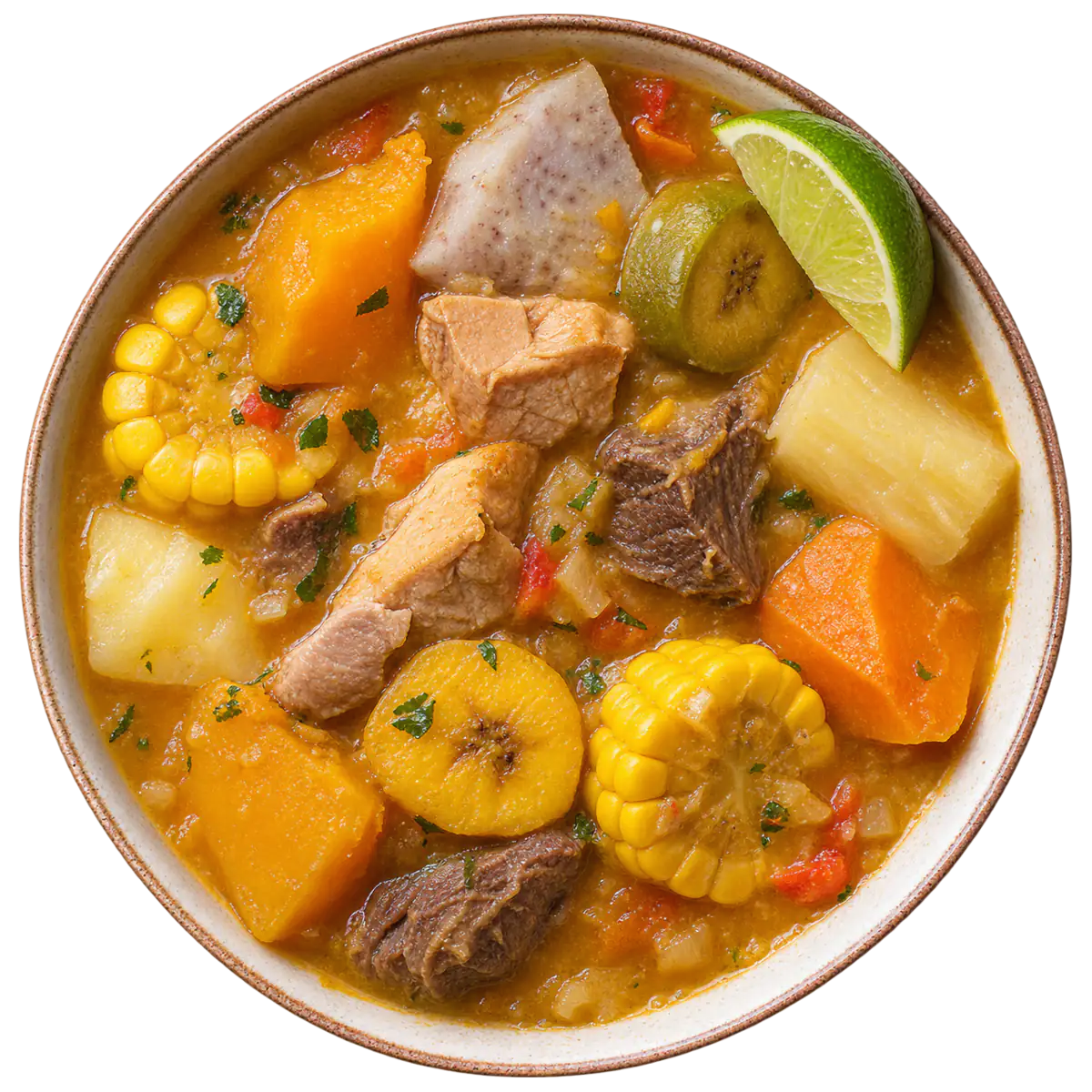
A thick Cuban soup of several meats, usually salted beef (tasajo), pork and sometimes chicken, with root vegetables and plantains (yuca, malanga, boniato, ñame, calabaza, corn, green and ripe plantain), finished with lime and ají.
Origin and history
Ajiaco is a Cuban stew-like soup of meats, root vegetables and plantains. EcuRed traces the tradition to the colonial period and calls the word an indigenous one with an unclear origin. One historian, citing Fernando Ortiz, links it to a Taíno stew of tubers and ají. It is tied to the San Juan festivities of 24 June, when neighbourhoods cook a communal pot, and several towns, including Camagüey, claim it.
Make it at home
- Makes
- 8 servings
- Total time
- 3 h 30 min
- Hands-on
- 1 h
Ingredients
- 250 g9 oz tasajo (dried salted beef), soaked in cold water overnight, water changed a few times
- 500 g1.1 lb pork (shoulder or ribs), in chunks
- 90 g3 oz bacon or salt pork, diced; optional
- 4 l4 quarts water
- 3 ears of corn, tender, each cut in 3 pieces
- 500 g1.1 lb yuca (cassava), peeled, in large chunks
- 250 g9 oz malanga, peeled, in chunks
- 250 g9 oz ñame (white yam), peeled, in chunks
- 250 g9 oz boniato (white sweet potato), peeled, in chunks
- 250 g9 oz calabaza (West Indian pumpkin) or butternut squash, peeled, in chunks
- 2 green plantains, peeled, in thick slices
- 1 ripe plantain, peeled, in thick slices
- 1 onion, finely chopped
- 4 garlic cloves, minced
- 1 green bell pepper, chopped
- 125 ml1/2 cup tomato sauce
- 1 bay leaf
- 1/2 tsp ground cumin, toasted
- 2 tbsp oil, for the criolla sauce
- salt, to taste
- limes and hot chile (ají), to serve
Method
-
1. Drain the soaked tasajo, put it in a large pot with the 4 litres of water and boil for about 1 1/2 hours, until tender. Lift it out, cut into pieces about 1.5 cm (1/2 in) and return it to the pot.
-
2. Add the pork and the bacon and simmer 45 minutes, skimming the foam.
-
3. Add the corn and simmer 30 minutes more.
-
4. Add the yuca, malanga, ñame and green plantain and cook for about 30 minutes, until they begin to soften.
-
5. In a small pan, heat the oil and fry the onion, garlic and pepper for 6 minutes. Stir in the tomato sauce, bay leaf and cumin and cook 5 minutes.
-
6. Add the boniato, calabaza, ripe plantain and the fried sauce to the pot and simmer for 15 to 20 minutes, until everything is tender.
-
7. To thicken, lift out a few pieces of malanga and ñame, mash them and stir them back in. Season with salt and take out the bay leaf.
-
8. Serve in deep bowls with lime juice and chile, ideally with casabe (cassava flatbread) to dip.
Notes
- Cuban ajiaco is a thick soup of meats and root vegetables. The exact meats and tubers vary by cook and by town, and there is no agreed single recipe; EcuRed lists tasajo, pork and pork fat among the meats, and several localities, Camagüey among them, claim the dish. Mashing a few pieces of malanga and ñame back into the pot is a common way to thicken it.
- Tasajo is salted dried beef, soaked about 12 hours to draw out the salt. Beef brisket or short rib is a milder substitute, and the soup will be less savoury.
- Harder roots (yuca, malanga, ñame, green plantain) go in first, and boniato, calabaza and ripe plantain near the end, so nothing turns to mush before the rest is cooked.
- Cooked in a big pot for communal gatherings, notably around San Juan on 24 June, and eaten with casabe (cassava flatbread) and finished with lime juice and ají.
- It is unrelated to the Colombian ajiaco (chicken and three potatoes), which has its own page; the two share a name rooted in ají.
- Time does not include the overnight soak of the tasajo.
Adapted from EcuRed, Ajiaco and Luis Martínez-Fernández, The ajiaco, the Cuban sandwich and other Cuban foods for thought.
At the festivals
Served at 1 festival in Colombia.
Earlier editions
- February 15, 2026