
🇨🇴 Colombia, 🇵🇦 Panama, 🇩🇴 Dominican Republic, 🇻🇪 Venezuela, 🇪🇨 Ecuador, 🇵🇷 Puerto Rico, and 🇨🇺 Cuba · Caribbean and northern South America
SancochoLatin American root vegetable stew
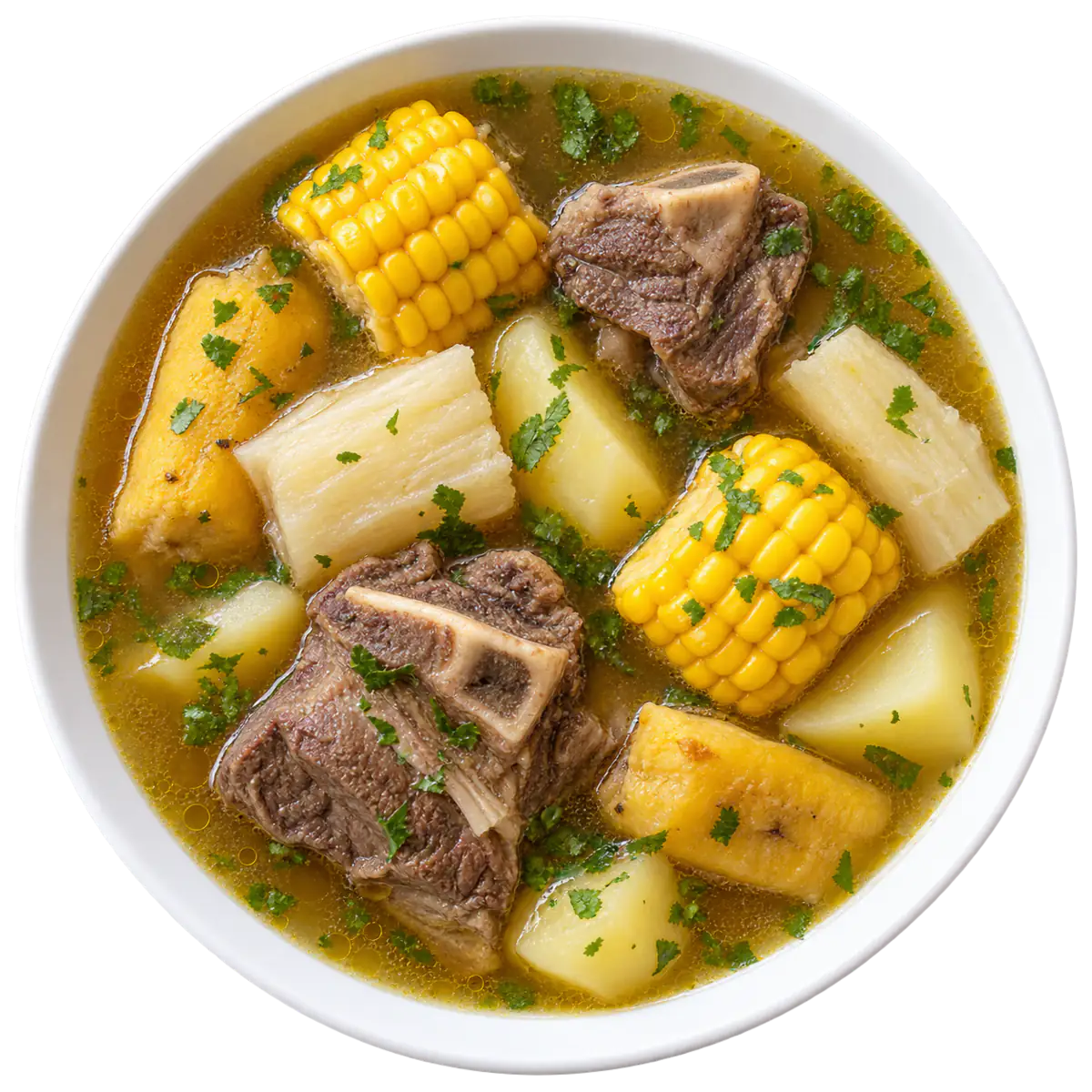
A thick soup of meat (or fish), root vegetables and plantain, named by the meat used, found across Latin America and the Caribbean.
Origin and history
Sancocho takes its name from the Spanish verb sancochar, to parboil, and is shared by the Dominican Republic, Colombia, Panama, Venezuela, Puerto Rico and their neighbours, each naming its versions by the meat. Colombian cooks place its origin in the colonial era, where Spanish cocidos met African and Indigenous boiled dishes. In the Dominican Republic it is the dish of family gatherings and celebrations; in Colombia it is the pot at the centre of the riverside paseo de olla.
Make it at home
- Makes
- 6 servings
- Total time
- 2 h 30 min
- Hands-on
- 45 min
Ingredients
- 1.2 kg2.6 lb bone-in beef: short ribs (costilla de res), shank or chuck, cut in 5 cm (2 in) chunks
- 1 lime, juiced
- 4 garlic cloves, crushed
- 1 tsp dried oregano
- 2 tsp salt, plus more to taste
- 2 tbsp vegetable oil
- 1 onion, chopped
- 1 green bell pepper or cubanelle pepper, chopped
- 3 l3.2 qt water, plus more if needed
- 2 ears of corn, cut in 4 cm (1 1/2 in) rounds
- 3 green (unripe) plantains, peeled; 2 cut in 4 cm (1 1/2 in) pieces, 1 kept whole for grating
- 400 g14 oz yuca (cassava), peeled, woody core removed, in chunks
- 300 g10 oz ñame (white yam), peeled, in chunks
- 300 g10 oz yautía or malanga (taro-like root), peeled, in chunks
- 300 g10 oz auyama (West Indian pumpkin) or kabocha squash, peeled, in chunks
- 6 culantro (recao) leaves, or an extra handful of cilantro
- 1 handful cilantro, chopped
- white rice, sliced avocado, hot sauce and lime wedges, to serve
Method
-
1. Toss the beef with the lime juice, garlic, oregano and 1 teaspoon of salt and leave it to marinate for at least 30 minutes, ideally an hour.
-
2. Heat the oil in a large heavy pot over high heat and brown the beef on all sides, in batches if needed, scraping up the marinade as it sticks.
-
3. Add the onion and pepper and stir for 3 minutes, until they soften.
-
4. Pour in the water, bring to a boil, skim off the foam, then cover and simmer gently for about 1 hour, until the beef is nearly tender.
-
5. Add the corn, the auyama and the plantain pieces and simmer 10 minutes.
-
6. Add the yuca, ñame and yautía, then grate the whole plantain finely (or scrape it with a knife into a pulp) straight into the pot.
-
7. Cover and simmer over low heat for 30 to 40 minutes without stirring much, until the roots are tender all the way through and the auyama and grated plantain have melted into the broth to thicken it. Add a little water if it gets too thick.
-
8. Tear in the culantro leaves and half the cilantro, season with the remaining salt to taste and simmer 5 minutes more.
-
9. Serve in deep bowls, sharing out meat, corn and roots, with the rest of the cilantro on top and rice, avocado, hot sauce and lime on the side.
Notes
- Sancocho is defined by its roots and its long simmer: meat cooked with yuca, plantain, other tubers such as ñame and yautía (or potato), corn and fragrant culantro or cilantro until the broth is thick. It is named after its meat, and the site's variants follow that axis: sancocho trifásico (three meats), sancocho de gallina (hen) and sancocho de pescado (fish).
- The rule that matters is the cooking order: the longest-cooking things go in first, so everything ends tender and some of the roots and squash dissolve to thicken the broth while the rest keep their shape.
- Dominican sancocho seasons the meat with lime, oregano and garlic, counts yuca, plantain and auyama as essential, and leaves out potatoes, noodles and tomato sauce; the festive version, sancocho de siete carnes, mixes seven meats such as beef, goat, pork, ribs, chicken, smoked ham bones and longaniza.
- Colombian versions use papa (potato), mazorca (corn on the cob) and plantain with cilantro and cebolla larga; potatoes and yuca often stand in where ñame or yautía are hard to find. Venezuelan cruzado mixes beef and chicken.
- If you cannot find ñame or yautía, use more yuca and some potato; the broth will be a little less silky. Kabocha or butternut can replace auyama.
- It reheats well and thickens further overnight; thin with a little water.
Adapted from Clara González, Aunt Clara's Dominican Cooking, Sancocho, Colombia.com, Sancocho de costilla de res, and Radio Nacional de Colombia, El sancocho del paseo de olla.
Variants
-
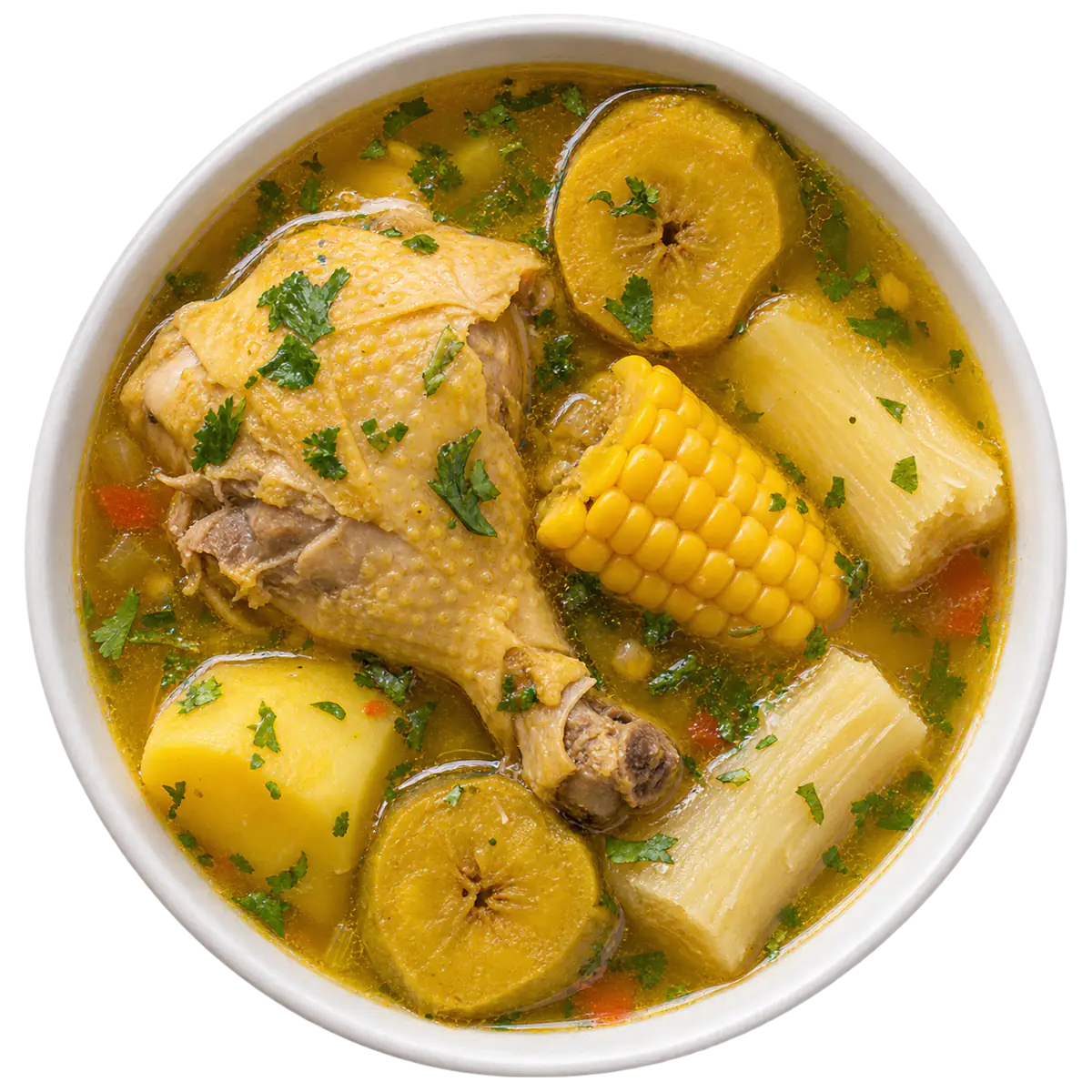 Sancocho de gallina
Hen sancocho
Valle del Cauca (Colombia); Panama, where it is the national dish
Sancocho made with hen (gallina), usually with plantain, yuca and potato, associated in Colombia with the Valle del Cauca.
At 3 festivals
-
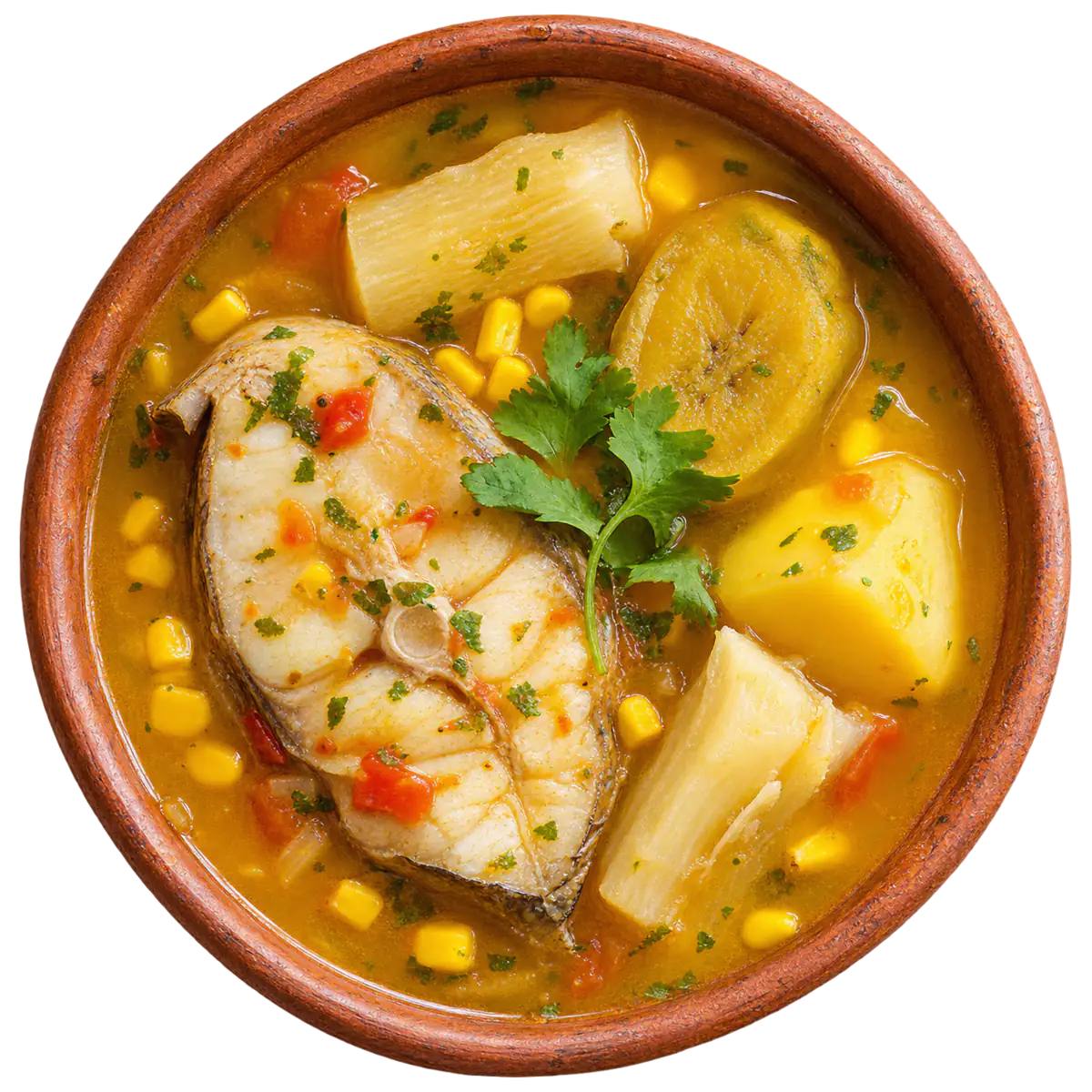 Sancocho de pescado
Fish sancocho
Chiefly Colombia's Pacific coast; also the Colombian Caribbean coast and the Ecuadorian coast
Sancocho made with fish in place of meat, with ñame, yuca and plantain; the traditional sancocho of Colombia's Pacific coast, also made on the Caribbean coast (bocachico) and, with peanut paste, on the Ecuadorian coast.
At 3 festivals
-
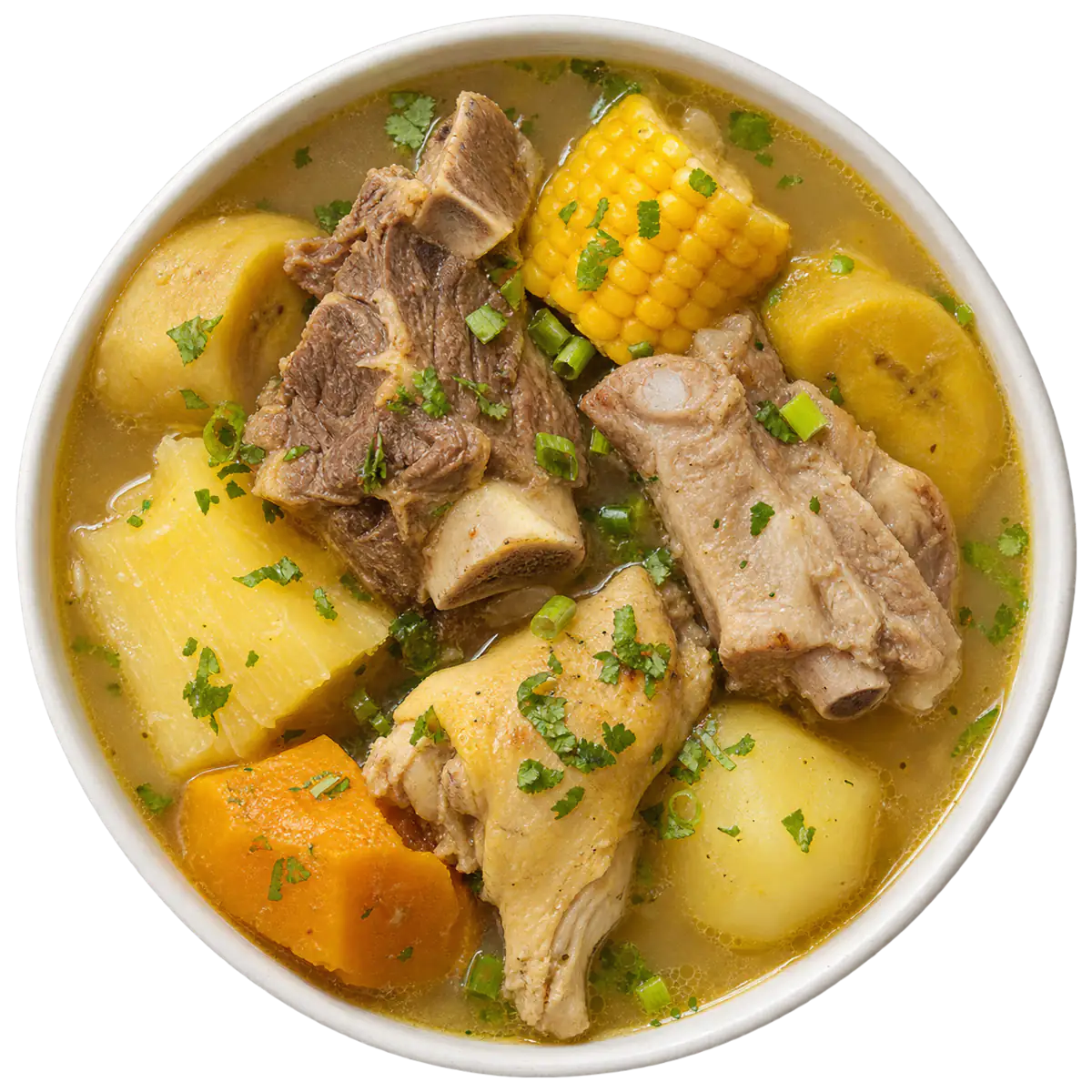 Sancocho trifásico
Three-meat sancocho
Antioquia / Colombian Caribbean (sources disagree)
Colombian sancocho made with three meats, typically beef ribs, pork ribs and chicken or hen, with plantain, potato, yuca and squash.
At 5 festivals
At the festivals
Served at 11 festivals in Ecuador, Colombia, United States, and Panama.
Earlier editions
-
August 02, 2026
🇪🇨 Ricaurte, Cuenca, Ecuador
XI Festival del Sancocho
-
July 26, 2026
🇨🇴 Santa Elena, Medellín, Colombia
Festival de Sancochos de Santa Elena
On the menu as sancocho trifásico, sancocho de pescado, sancocho de gallina, and sancocho vegano
- February 15, 2026
-
February 01, 2026
🇺🇸 Somerville, Massachusetts, United States
Soup Fest (Bow Market)
On the menu as Cruzado Soup - Chicken and Beef with Vegetables
By Buenas and Carolicious
-
January 25, 2026
🇵🇦 Panama City, Panama
XII Feria del Sancocho Panameño
On the menu as Sancocho panameño
By Participating groups
- January 11, 2026
- July 27, 2025
- June 26, 2025 – July 06, 2025
-
February 15, 2025
🇺🇸 Somerville, Massachusetts, United States
Soup Fest (Bow Market)
On the menu as Sancocho (Soy, allium, GF) and Cruzado
By Buenas and Carolicious
- February 02, 2025
Show all 13
-
November 03, 2024
🇨🇴 Ponedera, Colombia
III Festival del Sancocho
On the menu as sancocho de mondongo, sancocho de guandú, sancocho trifásico, and sancocho zaragoza
By matronas of Martillo
-
June 16, 2024
🇨🇴 Arjona, Colombia
Primer Festival del Sancocho
On the menu as Sancocho de costilla con carne salada, Trifásico, Sancocho de mondongo, Sancocho de carne salada, Sancocho de costilla, Sancocho de gallina, Sancocho trifásico, and Sancocho múltiple todas las carnes
By 10 cooks and El Sabor de Neris Rincón
-
December 10, 2023
🇨🇴 Barrancabermeja, Colombia
XVIII Festival del Sancocho
On the menu as sancocho de cabeza de bagre, sancocho de patacón, sancocho trifásico, sancocho de mondongo, sancocho de pata, and El Dinamita
By Heidy Pinto and a participant who cooks at the Muelle