
🇨🇺 Cuba and 🇺🇸 United States · and the Cuban-American communities of Florida
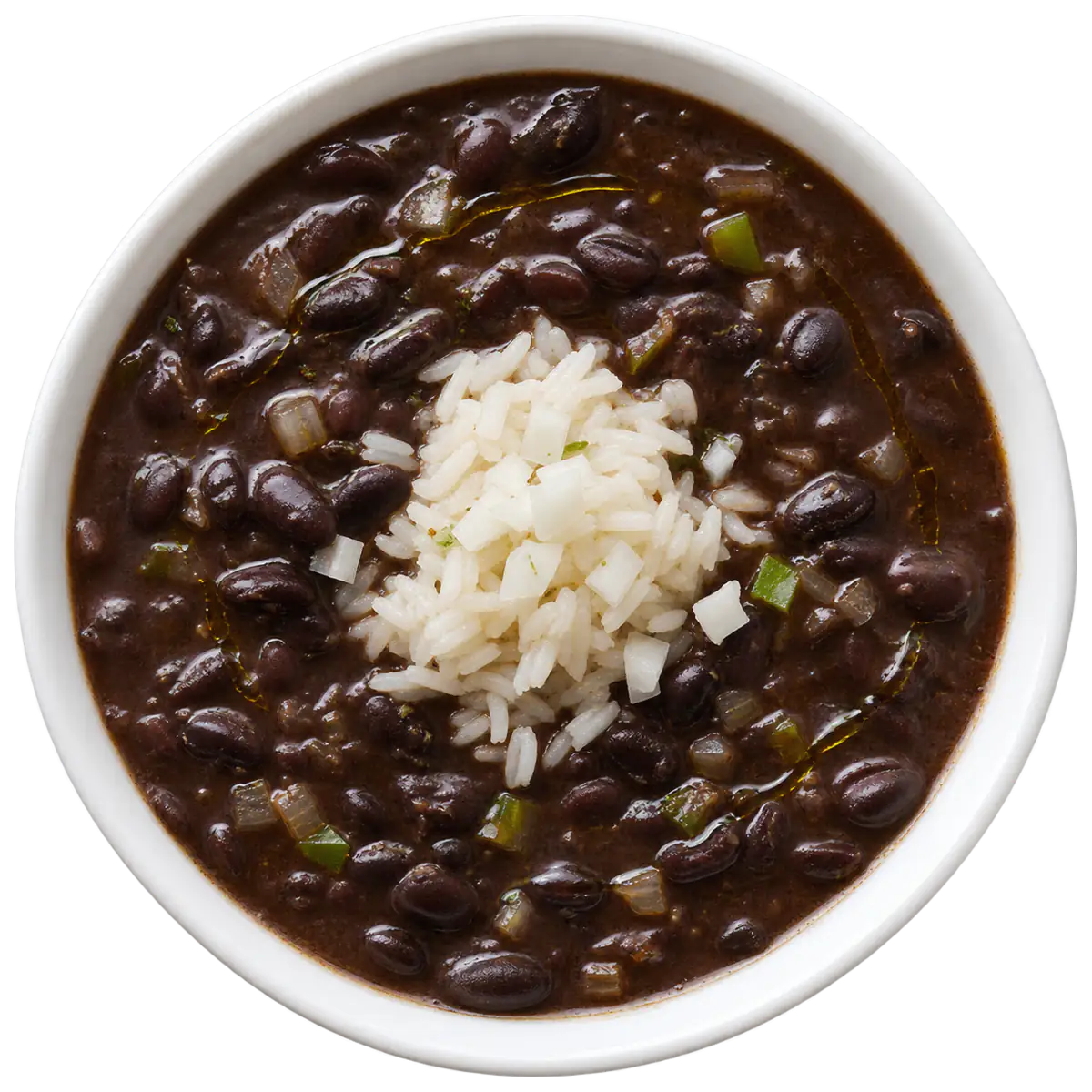
Cuban black bean soup
A thick Cuban soup of black beans cooked with a sofrito of onion, green pepper and garlic, cumin, oregano and a splash of vinegar, finished with olive oil and served with white rice and chopped raw onion.
Origin and history
Black beans with sofrito are a staple of Cuban home cooking, set down in the cookbooks of the 20th century such as Nitza Villapol's Cocina criolla, and carried to Florida and other Cuban-American communities. The bowl form, a looser pot served as sopa de frijoles negros, is the same dish served as soup.
Make it at home
- Makes
- 6 servings
- Total time
- 2 h 30 min
- Hands-on
- 40 min
Ingredients
- 450 g1 lb (about 2 1/3 cups) dried black beans, sorted, rinsed and soaked overnight
- 2.4 litres10 cups water
- 1 large green pepper (ají or pimiento verde), half added whole to the beans, the rest chopped for the sofrito
- 1 large onion, finely chopped
- 4 cloves garlic, crushed
- 150 ml2/3 cup olive oil, for the sofrito
- 1 bay leaf
- 1/4 tsp dried oregano
- 1/2 tsp ground cumin, optional; used in many Cuban-American kitchens
- 2 tbsp sugar
- 2 tbsp vinegar
- 2 tbsp dry white wine or dry cooking wine
- 4 tsp salt, adjust to taste
- 1/2 tsp ground black pepper
- 2 tbsp olive oil, to finish, over the bowls
- white onion, chopped raw, for serving
- white rice, cooked, for serving
Method
-
1. Drain the soaked beans and put them in a large pot with the water and the half of the green pepper left whole. Bring to a boil, then simmer, partly covered, for about 45 minutes to 1 hour, until the beans are tender.
-
2. Chop the remaining pepper finely. Warm the 150 ml of olive oil in a skillet over medium heat and cook the onion, chopped pepper and garlic for 8 to 10 minutes, until very soft and golden. This is the sofrito.
-
3. Scoop about 1 cup of the cooked beans into the skillet and mash them into the sofrito, then scrape the whole mixture back into the pot.
-
4. Add the bay leaf, oregano, cumin if using, salt, pepper and sugar, and simmer for 1 hour, stirring now and then and adding hot water if the beans stop being covered.
-
5. Stir in the vinegar and wine and simmer over low heat for 30 to 45 minutes more, until the soup is thick and the broth looks dark and glossy.
-
6. Remove the bay leaf and the pepper half. Taste and adjust the salt and vinegar.
-
7. Serve in bowls with a spoon of olive oil and chopped raw onion on top, and white rice alongside or stirred in.
Notes
- Total time: 2 h 30 min plus overnight soaking.
- Boundary: in Cuba the everyday pot is frijoles negros, a thick bean dish ladled over white rice. The soup form here is a more liquid, spoonable version that Cuban and Cuban-American cooks serve in a bowl; make the pot looser than a rice-topping stew and you have the soup. It is the same sofrito-based dish, cooked with more water.
- The base follows the cookbook of Nitza Villapol (Cocina criolla): olive oil, onion, green pepper and garlic, a spoon of sugar, and vinegar and wine added at the end. Cumin appears in many modern recipes but is not universal in the older ones, so it is optional.
- Other versions use tomato paste in the sofrito, red pepper alongside the green, lard in place of olive oil, or add diced bacon or pork ribs for body; some cooks purée a few ladles of beans for a smoother, thicker soup.
- A pressure cooker cooks the soaked beans in about 45 minutes after the cooker whistles.
- Serving custom: white rice, chopped raw onion, a drizzle of olive oil, and sometimes fried ripe plantains or bread.
- It keeps for 4 days refrigerated and tastes better on the second day; thin with water when reheating.
Adapted from Cocina criolla, Nitza Villapol (frijoles negros recipe as posted by Seton Hall University), Al mejor estilo cubano: así puede preparar una deliciosa sopa de frijoles, Infobae, and Breve viaje a la cocina cubana: frijoles negros, Paula, La Tercera.
At the festivals
No festival we list has printed it on a menu yet.