🇵🇹 Portugal and 🇧🇷 Brazil · (nationwide) and Brazil

Sopa de feijãoPortuguese bean soup

The everyday bean soup of the Portuguese-speaking kitchen: cooked dried beans (red, white or butter beans) with potato, carrot, onion and cabbage in olive oil and water, often with a pork bone or sausage, blended or left chunky, sometimes with small pasta in Brazil.
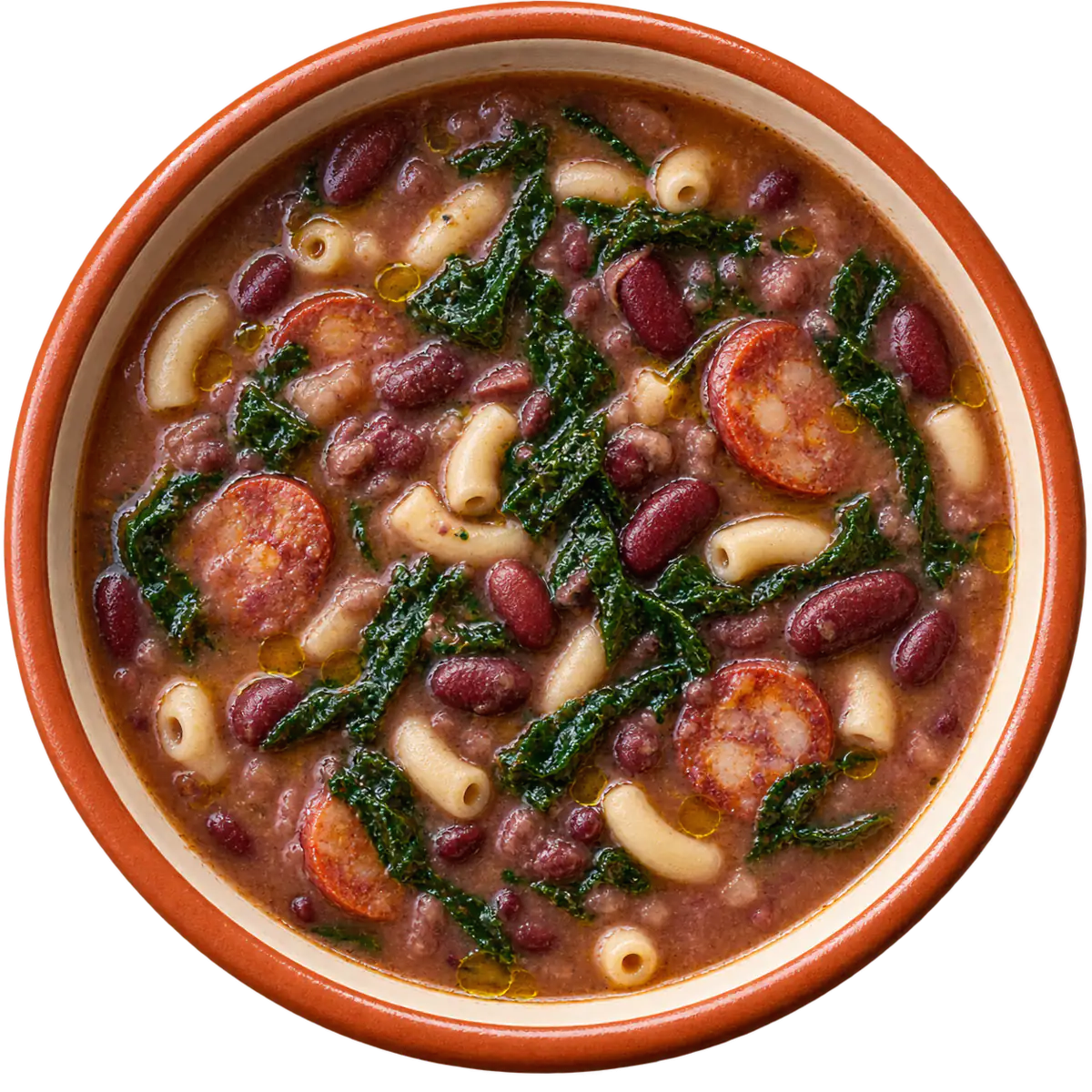
Sopa de feijão (Portuguese bean soup)

Origin and history

Bean soup is part of the everyday Portuguese table, a vegetable-and-bean soup eaten in the evening with bread, and beans have been a daily staple in Portugal and, carried across the Atlantic, in Brazil. Portuguese recipe collections present several forms, with cabbage, pumpkin or pasta, rather than one regional original. Brazilian recipes carry the same base with local habits such as calabresa sausage and small pasta; written sources do not give a dated origin.

Make it at home

Makes
6 servings
Total time
1 h 15 min
Hands-on
30 min

Ingredients

Units
  • 300 g10.5 oz (1 1/2 cups dried) dried red beans (feijão encarnado), soaked overnight and cooked until tender, about 3 cups; or 2 cans (about 800 g / 28 oz) drained and rinsed
  • 3 medium potatoes, peeled, cut in chunks
  • 2 carrots, peeled, sliced
  • 1 large onion, chopped
  • 2 garlic cloves, peeled
  • 1.5 L6 1/4 cups water, plus the bean cooking liquid if you have it
  • 4 tbsp olive oil
  • 250 g9 oz (about 4 cups, packed) couve galega, Lombardy cabbage or collard greens, ribs removed, leaves cut in thin strips
  • 60 g2 oz (1/2 cup) small pasta (macarrão cotovelo or similar), optional
  • 1 chouriço, optional, sliced to serve
  • salt, to taste

Method

  1. 1. If starting from dried beans, drain the soaked beans, cover with fresh water and simmer for about 1 hour until soft. Keep the cooking liquid. Canned beans can go straight into the next step.

  2. 2. In a large pot, combine the potatoes, carrots, onion and garlic with the olive oil, the water and a little salt. Bring to a boil and cook for about 20 minutes, until the vegetables are very soft.

  3. 3. Add two-thirds of the beans and simmer for 5 minutes.

  4. 4. Blend the soup until smooth, with a hand blender or in batches in a blender, and return it to the pot.

  5. 5. Add the remaining whole beans and the pasta if using it, bring back to a boil and cook for 5 minutes.

  6. 6. Add the shredded cabbage and cook for about 7 minutes more, until it is tender but still green. Thin with water or bean liquid if the soup is too thick, and adjust the salt.

  7. 7. Serve hot, with slices of chouriço if you like, and bread.

Notes

  • This is the everyday Portuguese form: beans cooked with potato, carrot and onion, partly blended to thicken it, finished with shredded cabbage, and eaten as the evening soup. The beans are most often red (feijão encarnado), but white or butter beans are also used.
  • Portuguese cooks vary the base: some add pumpkin, turnip and leek to the pot, others fry a little tomato with the onion and serve the soup with slices of chouriço, and a quick household version uses only potato, onion, garlic and cabbage with the beans. All are the same soup.
  • In Brazil the same dish exists as sopa de feijão, usually made with beans that are cooked for the table (carioca, black or red), blended with their cooking water as the base. The pot is typically seasoned with onion, garlic and often bell pepper and tomato paste, with linguiça calabresa or bacon fried in, diced potato and carrot, a handful of small macarrão, and coriander or cheiro-verde to finish. A one-pot version with charque (salted dried beef), potato and carrot is cooked in one pot. The pasta and the sausage are more habitual there than in Portugal.
  • The pasta is optional. Without it, the soup is closer to the plain Portuguese form, and with a meaty pork bone or chouriço it moves toward a sopa de lavrador. See also sopa de legumes and caldo verde for the other everyday Portuguese soups of the same family.
  • Beans cooked in a pressure cooker take about 25 minutes after soaking. The soup keeps 3 days in the fridge and thickens, so thin it with water when reheating.

Adapted from Teleculinária: Sopa de feijão com couve, Teleculinária: Sopa tradicional de feijão encarnado, and e-konomista: Receitas de sopa de feijão.

At the festivals

Served at 12 festivals in Portugal and Brazil.

Coming up

Earlier editions

Show all 15

Where to eat it

Restaurants that brought it to a soup festival.

How to read festival information

We work to keep festival information right, but festivals are run by others and details change. Here is how to read what you see on SoupFestivals.

Confirmed or expected

A confirmed date was announced for that edition. An expected date, such as "usually held around mid-October", is an estimate based on past editions, not an announcement.

Places can be approximate

We show a map pin and directions only when the venue's location is verified. If it is still unconfirmed, we keep the known venue name and town without a pin.

Check before you travel

Dates, prices, menus and venues can change, and festivals can be cancelled. Always confirm with the organizer before you go. If their information differs from ours, theirs is the one to follow.

Help us keep it right

If something looks wrong, tell us and we will look at it. Organizers can claim their festival page to send us updates.

Spotted something wrong? Tell us and we will look at it. You can also message us on Instagram, @soupfestivals