
🇪🇨 Ecuador · Northern highlands (Quito); eaten in Holy Week
FanescaEcuadorian Easter soup
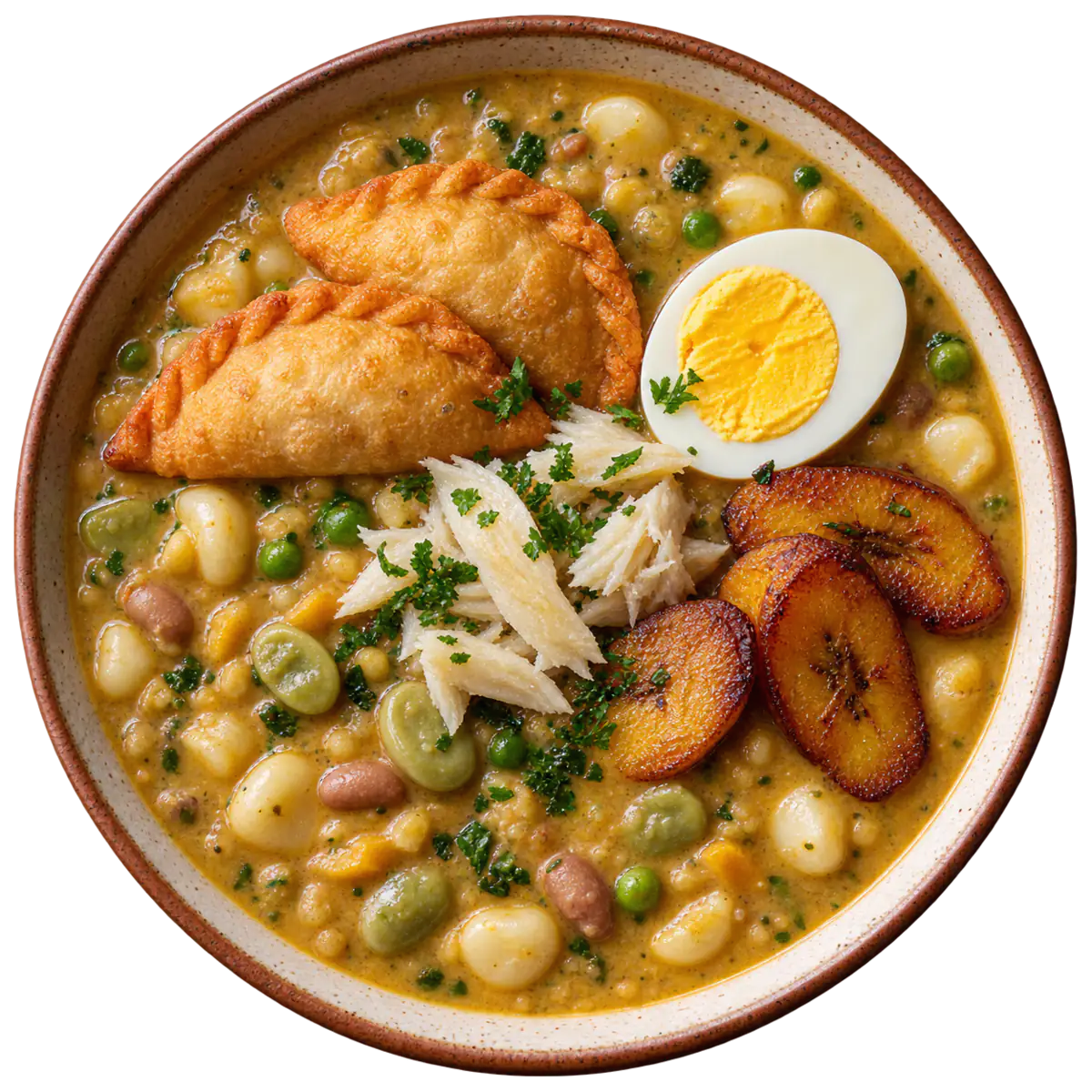
A rich Ecuadorian Holy Week soup of many beans and grains (traditionally twelve) with squash and salt cod cooked in milk, garnished with hard-boiled egg, fried plantain and empanadas.
Origin and history
According to the Asociación de Chefs del Ecuador, fanesca descends from uchucuta, a pre-Hispanic Andean dish of tender grains cooked with chilli and herbs, eaten at the March equinox during the Mushuk Nina and Pawkar Raymi harvest festivities. Under colonial rule the Church gave it a Lenten meaning: meat was forbidden, so salt cod was added, and the twelve grains came to represent the apostles. It is now made once a year in Holy Week across Ecuador.
Make it at home
- Makes
- 10 servings
- Total time
- 4 h
- Hands-on
- 2 h 30 min
Ingredients
- 500 g1.1 lb dried salt cod (bacalao)
- 500 g1.1 lb zapallo (winter squash, such as butternut or kabocha), peeled, diced
- 500 g1.1 lb sambo (fig-leaf gourd), or zucchini, peeled, seeded, diced
- 100 g1 1/2 cups white cabbage, shredded
- 50 g1/4 cup rice, boiled in plenty of water until very soft
- 150 g1 cup habas (fava beans), cooked and skinned
- 150 g1 cup choclo (fresh corn kernels), cooked
- 150 g1 cup arvejas (green peas), cooked
- 150 g1 cup fréjol tierno (fresh shelling beans) or cooked white beans
- 150 g1 cup chochos (Andean lupin beans), or jarred lupini, ready to eat, rinsed and skinned
- 150 g1 cup lentils, cooked
- 150 g1 cup chickpeas or lima beans (pallares), cooked
- 150 g1 cup mellocos (Andean tubers), cooked and sliced; optional
- 100 g2/3 cup roasted peanuts, skinned and unsalted
- 2 l8 1/2 cups whole milk, divided
- 4 tbsp butter, or achiote (annatto) oil
- 1 white onion, finely chopped
- 1 red onion, finely chopped
- 4 garlic cloves, crushed
- 1 tsp ground achiote (annatto), if using butter
- 1 tsp ground cumin
- 1 tsp dried oregano
- 120 ml1/2 cup cream
- 150 g5 oz queso fresco (fresh white cheese), crumbled, plus more to serve
- salt and black pepper, to taste
- 3 tbsp chopped parsley or cilantro
- to garnish: sliced hard-boiled eggs, fried ripe plantain, small fried cheese empanadas, sliced fresh chilli
Method
-
1. A day ahead, soak the cod in plenty of cold water in the fridge for 24 hours, changing the water every 6 to 8 hours; taste a flake, and give it longer if it is still very salty.
-
2. Cook each grain that is not ready yet separately in unsalted water until tender, and drain; peel the favas.
-
3. Cook the squash and sambo in just enough water to cover for about 20 minutes, until very soft; add the cabbage for the last 3 minutes.
-
4. Blend the squash, sambo, cabbage and soft rice into a thick purée, using a little of their cooking water if needed.
-
5. Poach the cod in 500 ml (2 cups) of the milk over low heat for about 10 minutes without letting it boil; lift it out, flake it, removing skin and bones, and keep the milk.
-
6. Blend the peanuts with 250 ml (1 cup) of the milk until smooth.
-
7. Melt the butter in a large heavy pot over medium heat and cook the onions, garlic, achiote, cumin and oregano for about 8 minutes, until soft.
-
8. Stir in the squash purée and 750 ml (3 cups) of the milk and bring to a simmer, stirring.
-
9. Add all the cooked grains except the chochos and simmer for 15 minutes, stirring often and scraping the bottom, as the soup burns easily.
-
10. Pour in the cod milk and the peanut milk, add most of the flaked cod, keeping a little for the top, and simmer for 10 minutes.
-
11. Add the chochos, cream and queso fresco and stir for about 5 minutes, until the cheese melts.
-
12. Check the consistency, thick but still spoonable, adding the remaining milk as needed; season carefully, since the cod and cheese are salty, and stir in the herbs.
-
13. Serve in deep plates topped with the reserved cod, egg slices, fried plantain, a little cheese and chilli, with the small empanadas alongside.
Notes
- Total time: 4 h, plus 24 h soaking the cod.
- Twelve grains: the number is symbolic and the choice varies by household. Counting the squashes, rice and peanuts alongside the beans and corn, most fanescas reach twelve; tender, freshly harvested grains are the Sierra ideal.
- Regional forms: in the Sierra it is served with salt cod, hard-boiled egg, little dough balls and cheese, followed by molo (mashed potato) and a dessert of arroz con leche or figs with cheese. In Guayas the chochos are blended into the soup and dried grains such as lentils and chickpeas are used. In El Oro a seafood version is called 'la marinera'.
- Substitutions: zucchini stands in for sambo and butternut for zapallo; frozen favas, peas and corn and canned beans make the job much shorter. Italian jarred lupini replace chochos.
- Make-ahead: fanesca is better the next day, once the flavours have settled; reheat slowly with a little more milk.
- Custom: it is cooked once a year, in Holy Week and above all for Good Friday, at home and in most restaurants; according to tradition the twelve grains stand for the apostles and the cod for Christ.
Adapted from El Comercio (Quito), Fanesca: el sabor de la tradición en una receta paso a paso and Laylita's Recipes, Fanesca.
At the festivals
Served at 1 festival in Ecuador.
Earlier editions
- April 10, 2025 – April 20, 2025