
🇦🇷 Argentina, 🇧🇴 Bolivia, 🇵🇪 Peru, 🇪🇨 Ecuador, and 🇨🇱 Chile · Andes (Argentine national dish for 25 May and 9 July)
LocroArgentine corn and squash stew
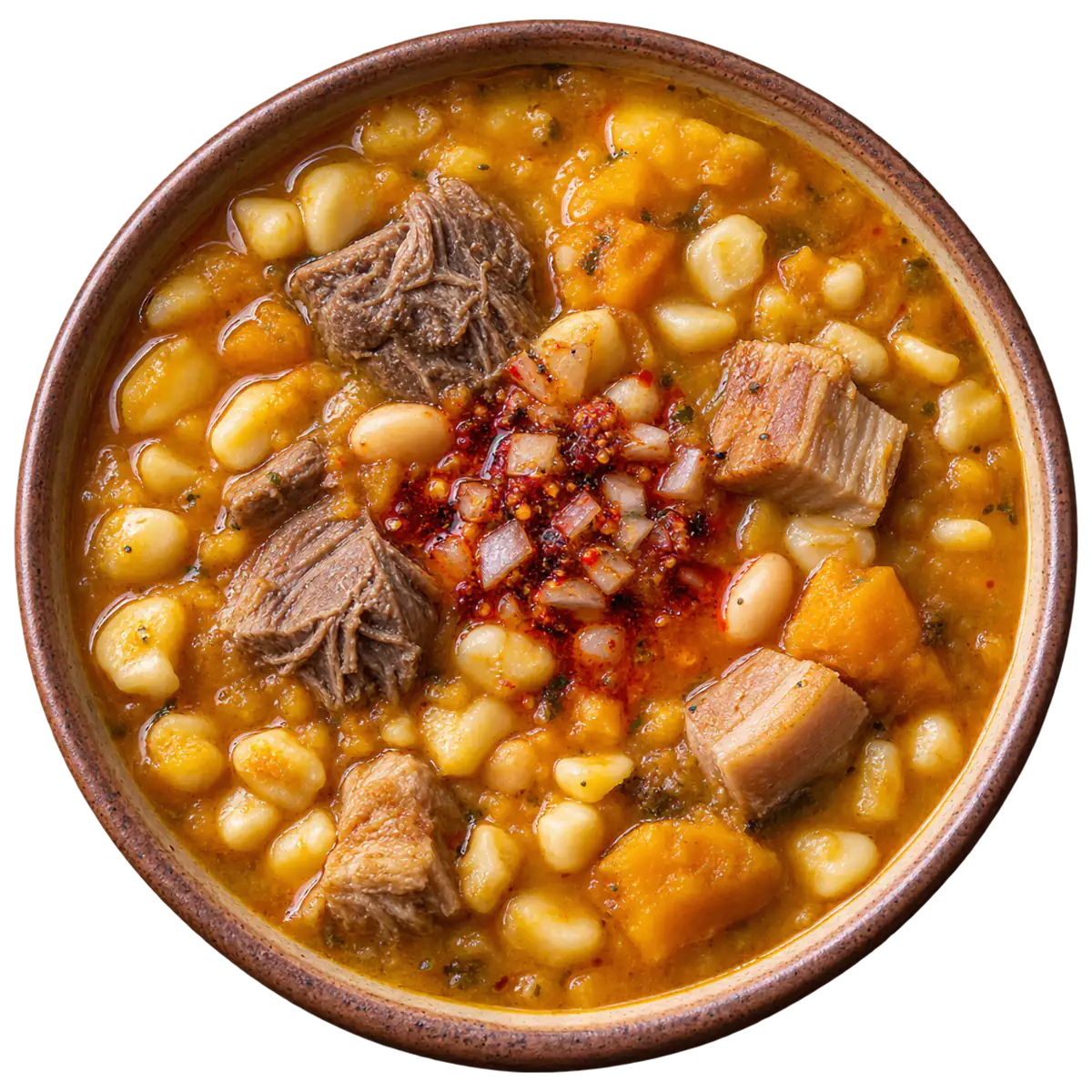
A thick, long-cooked Andean stew-soup of corn (white corn or wheat), beans and squash with pork, beef and/or chorizo, finished at the table with a hot sauce (quiquirimichi). The name is Quechua (ruqru).
Origin and history
Locro comes from the Andes: its name derives from the Quechua ruqru or luqru, and Andean peoples cooked corn, squash and beans together long before the Spanish arrived; colonists added beef and pork. In Argentina it belonged to the north until soldiers returning from the wars of independence carried it south to Buenos Aires. It is now the dish of the national holidays, 25 May and 9 July, and of many 1 May gatherings.
Make it at home
- Makes
- 6 to 8 servings
- Total time
- 4 h
- Hands-on
- 45 min
Ingredients
- 400 g14 oz (2 cups) maíz blanco partido (cracked white corn) or hulled wheat (trigo pelado), soaked overnight in plenty of cold water
- 200 g7 oz (1 cup) dried white beans (alubias or pallares), soaked overnight in a separate bowl
- 1 + 150 g1 + 5 oz pig's trotter (patita) and pork rind (cuerito), optional but traditional; boiled 10 minutes in separate water and drained, to remove excess fat
- 400 g14 oz beef flank or short ribs (falda or asado de tira), cut in bite-size pieces
- 300 g10 oz pork shoulder (bondiola or paleta), cut in bite-size pieces
- 150 g5 oz smoked pork belly (panceta ahumada), diced
- 2 chorizos colorados (cured paprika sausages), sliced
- 800 g1.75 lb zapallo criollo, anco (butternut) or cabutia squash, peeled and cut in cubes
- 1 onion, finely chopped
- 1 leek, white part, finely chopped
- 1 tbsp sweet paprika (pimentón dulce)
- 1 tsp ground cumin
- about 3.5 Labout 3.5 qt water, plus boiling water to top up
- salt and black or white pepper, to taste, near the end
- For the quiquirimichi (red sauce):
- 100 mlscant 1/2 cup grasa de pella (rendered beef fat) or neutral oil
- 4 cebollas de verdeo (green onions), green and white parts, very finely chopped
- 1 tbsp sweet paprika (pimentón dulce)
- 1–2 tbsp ají molido (crushed dried red chili), to taste
- 2 tbsp cold water
Method
-
1. The night before, put the corn and the beans to soak in separate bowls with plenty of cold water.
-
2. Drain the corn and put it in a large heavy-bottomed pot with the blanched trotter and rind; cover with cold water to about three fingers above the corn and bring to the boil over medium heat.
-
3. Skim the foam, add the drained beans, lower the heat and simmer gently for about 1 hour.
-
4. Add the beef, the pork shoulder, the onion and the leek, top up with boiling water to keep everything covered, and simmer for another hour.
-
5. Add the squash, the pork belly, the chorizo, the paprika and the cumin; the squash will slowly fall apart and turn the broth thick and yellow.
-
6. Keep the pot at a bare simmer for 1 1/2 to 2 hours more, stirring the bottom with a wooden spoon every 10–15 minutes so nothing catches, and adding a little boiling water if it gets too thick to stir.
-
7. Lift out the trotter, take the meat off the bone, chop it with the rind and return it to the pot.
-
8. Season with salt and pepper about 20 minutes before the end; the locro is ready when the corn kernels have burst open, the beans are creamy and the broth coats the spoon.
-
9. For the quiquirimichi, warm the fat or oil over low heat in a small pan and soften the green onions in it for about 3 minutes without browning.
-
10. Take the pan off the heat, stir in the paprika and ají molido, then the cold water (it stops the paprika from burning) and stir until the fat turns deep red.
-
11. Serve the locro very hot in deep bowls and bring the red sauce to the table for each person to spoon over their bowl.
Notes
- Total time: 4 h, plus overnight soaking.
- There is no single recipe: every province and household doses the meats differently. Many add mondongo (tripe) or a piece of large intestine, some use only pork, and the most frugal versions use only corn, beans, squash and a little fat.
- Locro pulsudo is the full, meaty version of the patriotic holidays; huaschalocro, from the northwest, is a lighter and cheaper form with far less meat.
- Some cooks make locro de trigo, with trigo pelado (hulled wheat) instead of corn; the method is the same. A sliced ear of fresh corn (choclo) is sometimes added with the squash.
- Outside Argentina, chorizo colorado can be replaced by Spanish cured paprika chorizo; zapallo criollo by butternut or kabocha squash; maíz blanco partido by dried white hominy (it takes longer to cook).
- Locro sticks easily: use a thick-bottomed or cast-iron pot, keep the heat low and stir often.
- It is better made the day before and reheated. It keeps 3 days in the refrigerator and freezes well.
- The Ecuadorian locro de papa, a creamy potato and cheese soup, shares the Quechua name but is a different dish.
Adapted from Perfil: Receta de locro criollo tradicional paso a paso, Diario Uno: Locro, el plato tradicional del 25 de Mayo, and Canal 26: Locro criollo, ingredientes y paso a paso.
At the festivals
Served at 7 festivals in Argentina.
Earlier editions
- July 10, 2026 – July 12, 2026
-
June 14, 2026
🇦🇷 Viale, Argentina
Locro Fest Viale
-
May 24, 2026 – May 25, 2026
🇦🇷 Añelo, Argentina
2ª Fiesta Regional del Locro
By contest cooks and local and regional cooks (contest)
-
May 25, 2025
🇦🇷 San Fernando del Valle de Catamarca, Argentina
XXI Fiesta Municipal del Locro
By 28 competing stalls
- May 24, 2025
-
August 04, 2024
🇦🇷 Concepción, Argentina
10ª Edición Festival Nacional del Locro
- July 13, 2024 – July 14, 2024
-
May 25, 2024
🇦🇷 San Fernando del Valle de Catamarca, Argentina
XX Fiesta Municipal del Locro
On the menu as Locro patrio
By Centro Vecinal Amanecer del Norte (best dish)
- July 16, 2023
-
May 25, 2022
🇦🇷 San Fernando del Valle de Catamarca, Argentina
XVIII Fiesta Municipal del Locro
By 39 participating organisations, 200 to 300 plates each
Show all 11
-
May 25, 2022
🇦🇷 General Enrique Godoy, Argentina
VI Fiesta Provincial del Locro
By The 24 participating institutions and The 21 participating institutions