
🇬🇷 Greece and 🇨🇾 Cyprus · widely eaten across the mainland and islands
FasoladaGreek white bean soup
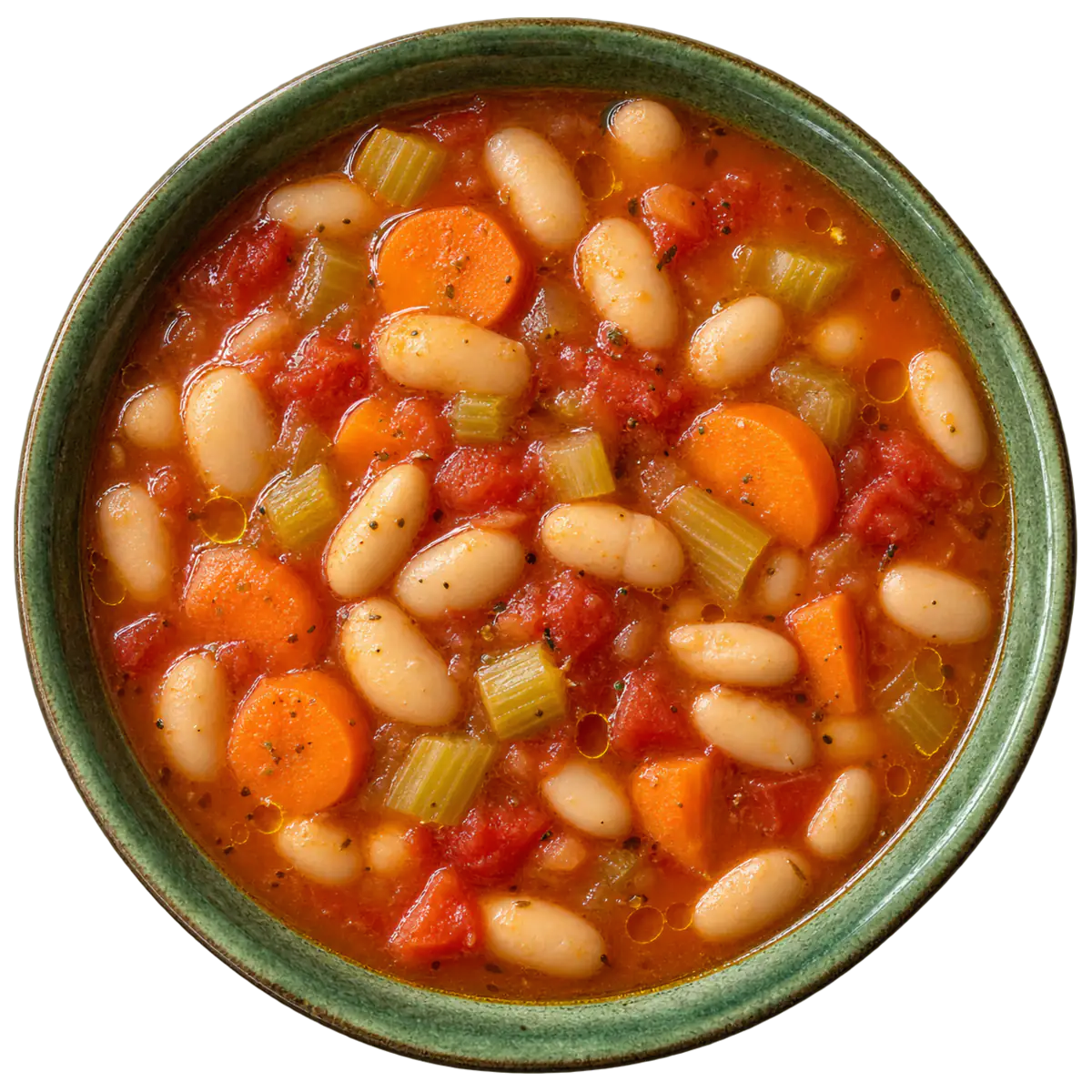
The classic Greek soup of dried white beans slowly cooked with olive oil, onion, carrot, celery and (usually) tomato, finished with more olive oil, often with feta, olives and bread; commonly called Greece's unofficial national dish.
Origin and history
Beans of the white kind reached Greece from the Americas by way of Italy in the 16th century, replacing the lentils, broad beans and chickpeas that came before; Greek writers describe fasolada as the staple of poorer households, 'the meat of the poor', and often call it the national dish of the Greeks. It is also eaten widely in Cyprus.
Make it at home
- Makes
- 6 servings
- Total time
- 1 h 50 min
- Hands-on
- 25 min
Ingredients
- 500 g1 lb (about 2 1/2 cups) dried white beans (fasolia, small haricot or medium white beans), soaked overnight in plenty of cold water
- 2 medium onions, finely chopped
- 3 carrots, cut in small rounds or dice
- 3 stalks celery, with some leaves, finely chopped
- 3 ripe tomatoes, grated, skins discarded (or 1 tbsp tomato paste)
- 120 ml1/2 cup extra-virgin olive oil, plus more to finish
- 1 bay leaf, optional
- salt and freshly ground black pepper, to taste
- 1 small dried hot red pepper or a pinch of chili flakes, optional
Method
-
1. Soak the beans overnight in plenty of cold water, then drain and discard any that float.
-
2. Put the beans in a large pot, cover with fresh cold water and bring to a boil; boil for 5 to 10 minutes, then drain and rinse. This first water is thrown away.
-
3. Return the beans to the pot with fresh water to cover by about 5 cm (2 in), add the bay leaf and bring to a gentle boil, skimming off any foam.
-
4. Add the onions, carrots, celery and grated tomatoes, stir, and lower the heat to a gentle simmer (not a hard boil, which splits the skins).
-
5. Pour in the olive oil and simmer, partly covered, for 50 minutes to 1 hour 15 minutes, topping up with boiling water if the level drops, until the beans are completely tender and break easily when pressed against the pot.
-
6. Add salt and pepper only now, plus the chili if using, and cook 10 more minutes so the broth thickens slightly; press a few beans against the side of the pot with a spoon to make it creamier.
-
7. Take the pot off the heat, cover and let it rest 20 to 30 minutes; the soup thickens as it stands.
-
8. Serve in warm bowls with a thin stream of raw olive oil over each, with bread and olives alongside.
Notes
- Total time: 1 h 50 min (plus overnight soaking).
- The traditional core in Greek sources is dried white beans, a generous amount of olive oil and a base of onion, carrot and celery; tomato is the usual red element, but some cooks leave it out for a pale, 'white' fasolada, and some add a little lemon at the table.
- Salt goes in late in most Greek recipes so the bean skins stay tender. Discarding the first boiling water and a gentle simmer are the two points cooks stress most.
- Large white beans (gigantes, 'elephant' beans) can replace the small ones: soak them longer and expect a longer cook.
- It is a meat-free soup traditionally eaten through Lent. Typical companions are olives, a salad of tomato and onion, salted sardines or pickled herring (lakerda), crusty bread and red wine. Some add thyme or dried hot pepper.
- It reheats well and is better the next day; loosen with a splash of hot water. Regional versions exist (for example with cabbage, or Pelion-style); the site has no separate variant page for them.
Adapted from Alfavita: Μια συνταγή για φασολάδα (traditional fasolada recipe), Athens Voice: Φασολάδα αγάπη μου, and Parapolitika: Εύκολη συνταγή για παραδοσιακή φασολάδα (A. Aggelopoulou-Souladaki).
At the festivals
No festival we list has printed it on a menu yet.