
🇧🇴 Bolivia · La Paz
Fricasé paceñoBolivian pork and hominy soup
A spicy pork soup of La Paz: pork pieces in an abundant broth seasoned with ají amarillo, garlic, cumin and herbs, with white corn (mote) and chuño in the bowl.
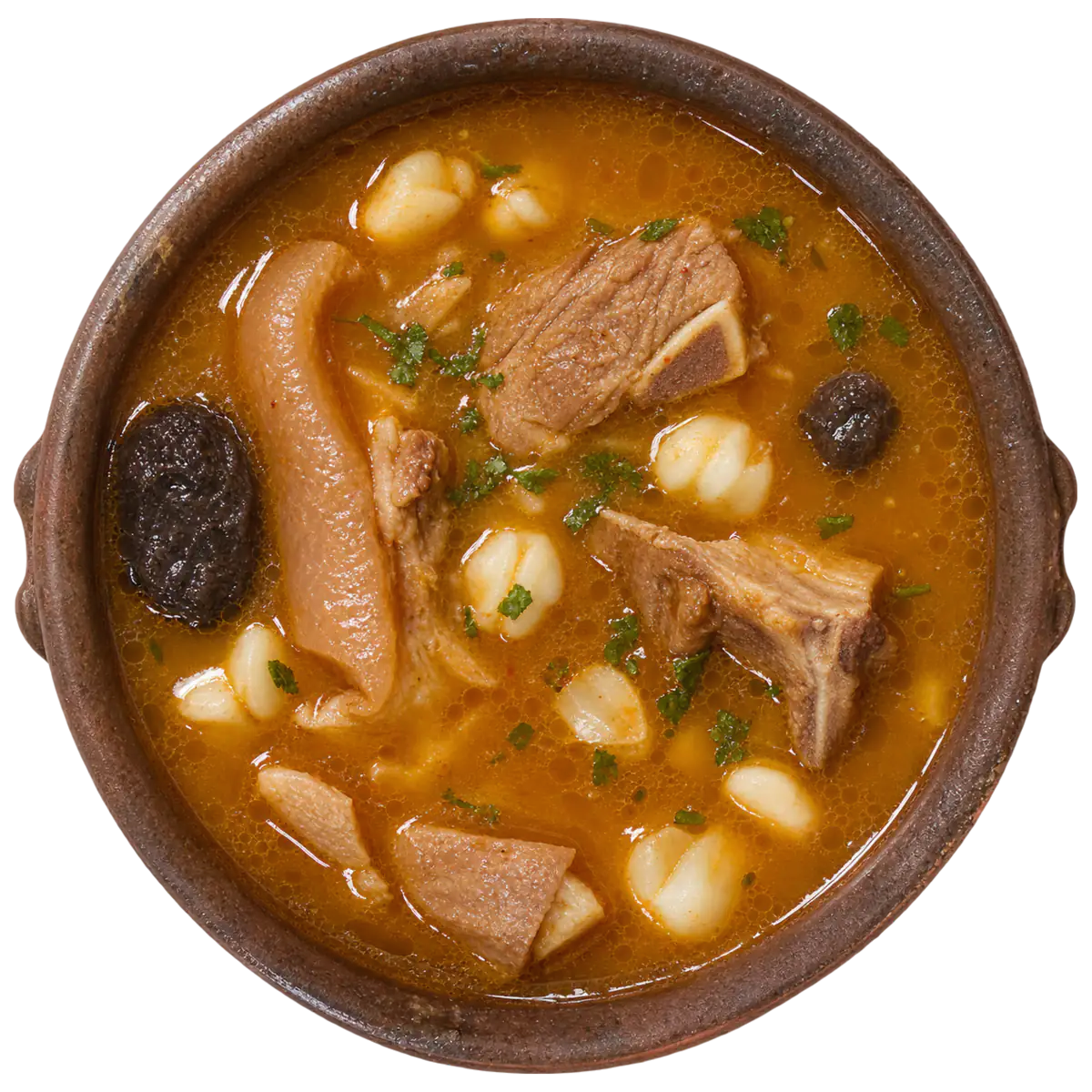
Origin and history
Los Tiempos describes fricasé as a traditional caldo of La Paz, colonial in origin and an adaptation of the French fricassee; Bolivia Es Turismo also attributes the idea to France but says the Bolivian dish is a spicy, abundant broth with no egg sauce. A story told by Bolivian Thoughts, which it presents as anecdote without sources, has a Frenchman, Louis de Aragón, improvising it in La Paz around 1735 from local ingredients, and has a cook known as Doña Petita running a famous fricasería in the mid-19th century.
Make it at home
- Makes
- 6 servings
- Total time
- 2 h 30 min
- Hands-on
- 45 min
Ingredients
- 900 g2 lb pork loin or pork shoulder with some ribs, in large pieces; the Cocina Boliviana recipe gives one medium loin with no weight, so the amount is a cook's estimate for six
- 110 g4 oz extra pork shoulder or belly, to be puréed and thicken the broth
- 340 g12 oz (about 2 cups) dried white corn (mote), soaked overnight in warm water
- 700 g1.5 lb chuno, soaked and peeled, rinsed until the water runs clear
- 6 ají amarillo (yellow chile) pods, peeled and seeded; or 3 tbsp ají amarillo paste
- 5 cloves garlic
- 2 tsp whole cumin
- 2 tsp whole black peppercorns
- 2 tbsp breadcrumbs, to thicken, if not using pork purée
- 5 scallion tops, for cooking the chuno
- 2 sprigs fresh mint
- salt, to taste
- locoto sauce and marraqueta or other crusty bread, to serve
Method
-
1. The night before, wash the mote and soak it in plenty of warm water.
-
2. Boil the mote in its soaking water, unsalted, adding water as needed, until the kernels have burst open; set aside.
-
3. Tie the pork loin with kitchen string and simmer it with the extra pork in salted water for about 1 h 30 min, until tender.
-
4. Meanwhile, grind the garlic, cumin, peppercorns, yellow chiles and a pinch of salt into a thick yellow paste in a mortar or blender.
-
5. Stir the paste and the mint into the pot with the pork and simmer 10 minutes more.
-
6. Lift out the extra pork, purée it, and stir it back into the broth (or use breadcrumbs) to give the broth body; simmer until lightly thickened.
-
7. Cook the chuno in warm salted water with the scallion tops until tender when pierced.
-
8. Serve each bowl with mote and chuno first, then pork and the broth over them, with locoto sauce and bread alongside.
Notes
- Quantities follow the Cocina Boliviana recipe for six (1/4 lb of extra pork for thickening, 1 1/2 lb chuño, 3/4 lb corn, 6 yellow chiles, 2 tsp each cumin and peppercorns, 5 garlic cloves, 2 mint sprigs); it gives no weight for the pork loin. The Bolivian Thoughts article adds bay leaf, red chile (ají colorado), wild parsley and huacataya, and no quantities.
- Cocina Boliviana cooks the pork in a pressure cooker for about 30 minutes, grills only two of the chiles over a flame, and says pork skin and fat are traditional; it also suggests grinding a quartered onion with the spices for more body.
- Canned white hominy can replace the soaked mote; there is no good substitute for chuno, but small boiled potatoes will do. Cocina Boliviana also serves it with cooked pataska (another dehydrated potato).
- The yellow chile paste is what makes it a fricasé paceño. Bolivia Es Turismo says the French original is a pale vegetable and meat stew finished with an egg sauce, while the Bolivian dish is an abundant spicy broth with mote and chuño and no egg sauce.
- Served with locoto sauce and marraqueta bread, which Bolivian Thoughts calls the ideal accompaniments.
Adapted from Cocina Boliviana, Fricase and Bolivian Thoughts, Bolivian Fricase.
At the festivals
No festival we list has printed it on a menu yet.