
🇲🇽 Mexico · Western and southern Mexico (Jalisco, Guerrero, Michoacan, Morelos, etc.)
PozoleMexican hominy soup
A Mexican soup of nixtamalized hominy (commonly cacahuazintle corn) simmered with pork or chicken, finished with chile and garnishes.
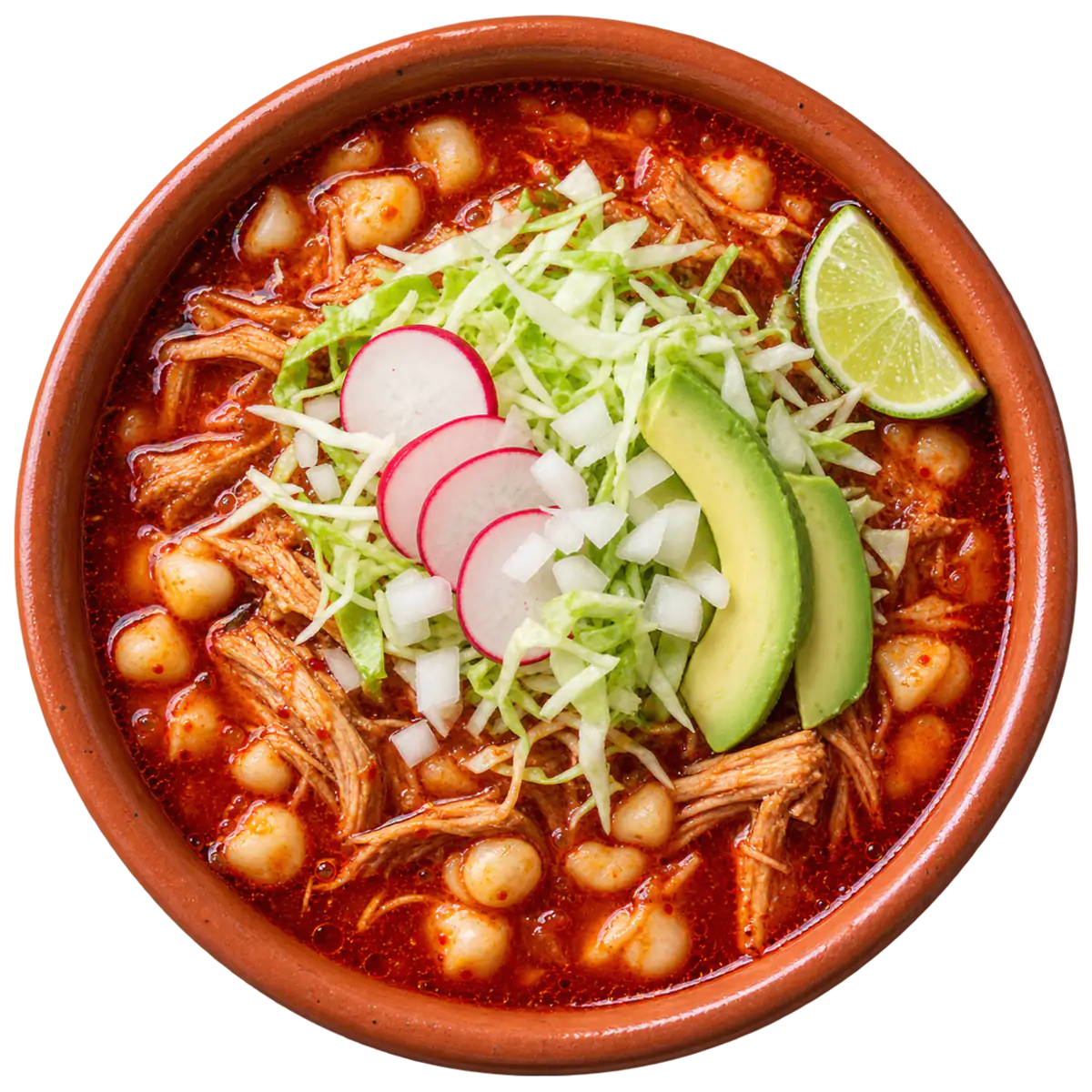
Origin and history
Pozole comes from the Nahuatl pozolli, after the foam the maize kernels throw off as they burst open. A pre-Hispanic dish of cacahuazintle maize, it was ritual food among the Mexica; Fray Bernardino de Sahagún described it at ceremonies. After the conquest pork replaced the older meats, and pozole became everyday food across New Spain, splitting into the white, red and green regional styles of today.
Make it at home
- Makes
- 6 to 8 servings
- Total time
- 2 h 45 min
- Hands-on
- 40 min
Ingredients
- 1 kg2.2 lb boneless pork shoulder (maciza), cut in 5 cm (2 in) pieces
- 700 g1.5 lb pork backbone (espinazo) or meaty neck bones, cut in pieces by the butcher
- 4 l17 cups water, plus more as needed
- 1 white onion, halved
- 1 head garlic, loose papery skin removed, halved crosswise
- 2 bay leaves
- 1 tbsp coarse salt, plus more to taste
- 1 kg2.2 lb (about 6 cups) cooked cacahuazintle hominy (maíz pozolero precocido), drained and rinsed, or 500 g / 1.1 lb dried nixtamalized corn, cooked as in the notes
- 1/4 head green cabbage or romaine lettuce, finely shredded, to serve
- 10 radishes, thinly sliced, to serve
- 1 white onion, finely chopped and rinsed, to serve
- 2 tbsp dried Mexican oregano, to serve
- ground chile piquín or chile de árbol, or a red table salsa, to serve
- 4 limes, cut in wedges, to serve
- 12 tostadas, to serve
Method
-
1. Put the pork shoulder and backbone in a large pot with the water and bring to a boil over medium-high heat. Skim off the grey foam for the first 10 minutes.
-
2. Add the halved onion, the garlic, the bay leaves and the salt. Lower the heat, partly cover and simmer for about 1 1/2 hours, until the shoulder is tender enough to pull apart with a fork.
-
3. Lift out the meat. Strain the broth, discard the onion, garlic and bay, and spoon off most of the fat from the surface.
-
4. Return the broth to the pot with the hominy and simmer for 30 minutes, until the kernels are soft and opened like small flowers, adding hot water if the broth gets too thick.
-
5. Meanwhile, shred the shoulder into large pieces and pick the meat off the backbone.
-
6. Return the meat to the pot and simmer for 10 minutes more. Taste and add salt; hominy absorbs a lot of it.
-
7. Set the cabbage, radishes, onion, oregano, chile, limes and tostadas on the table.
-
8. Ladle the pozole into deep bowls and let everyone add garnishes, rubbing the oregano between the palms over the bowl and squeezing in lime.
Notes
- This is the base pozole, served white, as it is in much of Mexico. It is also finished with a sauce of dried red chiles (pozole rojo) or of tomatillo, green chile and pumpkin seeds (pozole verde); the site has a page and full recipe for each of the three colours.
- Hominy: cacahuazintle is a large, soft, white maize. Cans or bags of cooked pozole corn are the practical choice; dried nixtamalized corn (maíz pozolero) has a better texture. Soak it overnight, then simmer it in unsalted water for 2 to 3 hours until the kernels burst open, before adding the broth; salt too early keeps the kernels hard.
- Meat: pork is the classic, often with head, trotters or backbone for a richer, gelatinous broth. Chicken is a common, lighter choice: use a 1.6 kg (3.5 lb) chicken in pieces and simmer it for only 35 to 40 minutes. Coastal kitchens in Sinaloa and Colima make it with shrimp or seafood.
- Pozole is a party dish, served at Independence Day in September and at family celebrations. It keeps for several days in the fridge and often tastes better the next day; keep the garnishes separate.
- Related soups: caldo tlalpeño, locro and mute share the corn-and-meat idea in other forms.
Adapted from Rick Bayless, Classic White Pozole with All the Trimmings, Pozole blanco: receta fácil, Milenio, and Historia del pozole, México Desconocido.
Variants
-
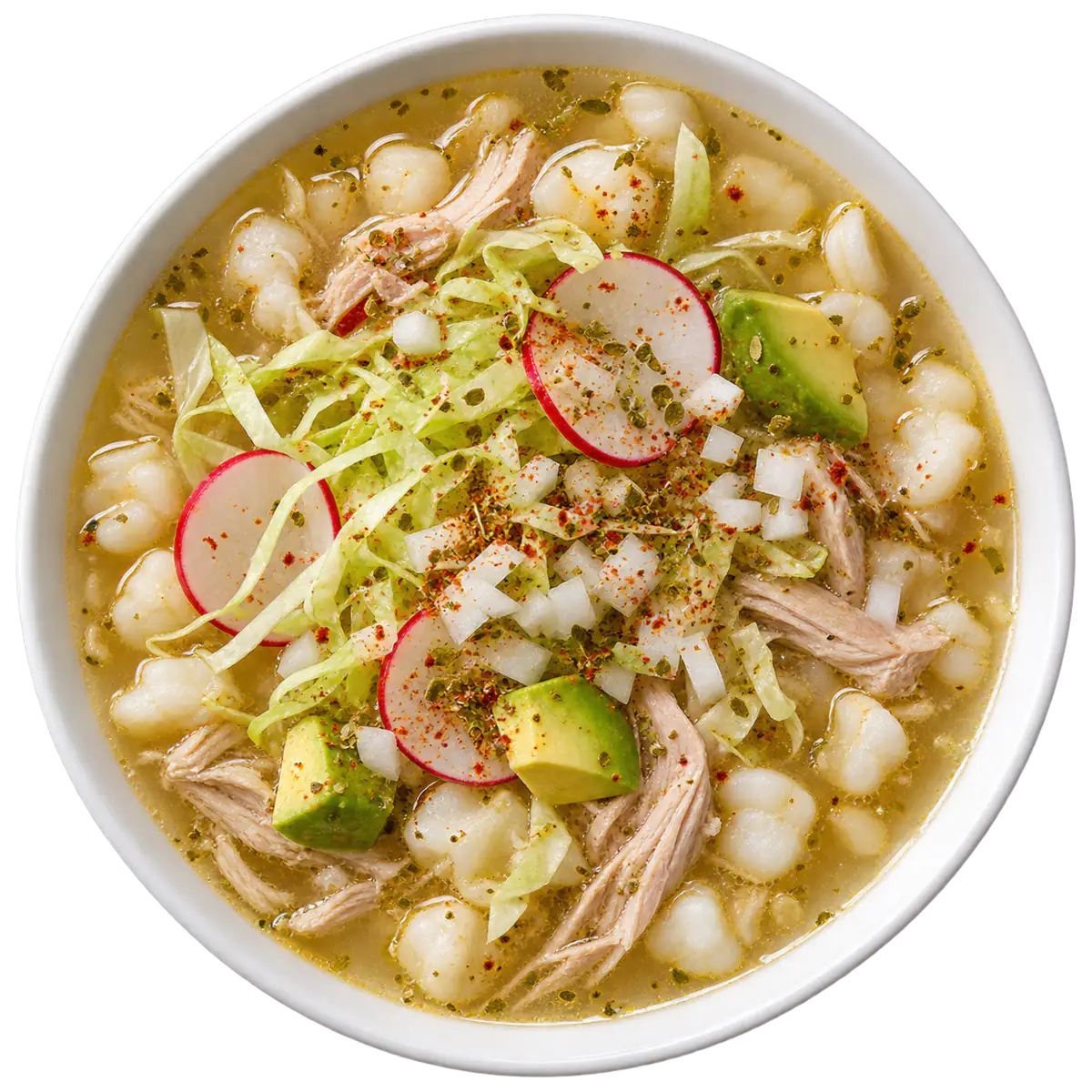 Pozole blanco
White pozole
Widespread; often Guerrero and Jalisco
Pozole served without red or green sauce: a plain hominy and meat broth to which each diner adds salsas and garnishes.
At 2 festivals
-
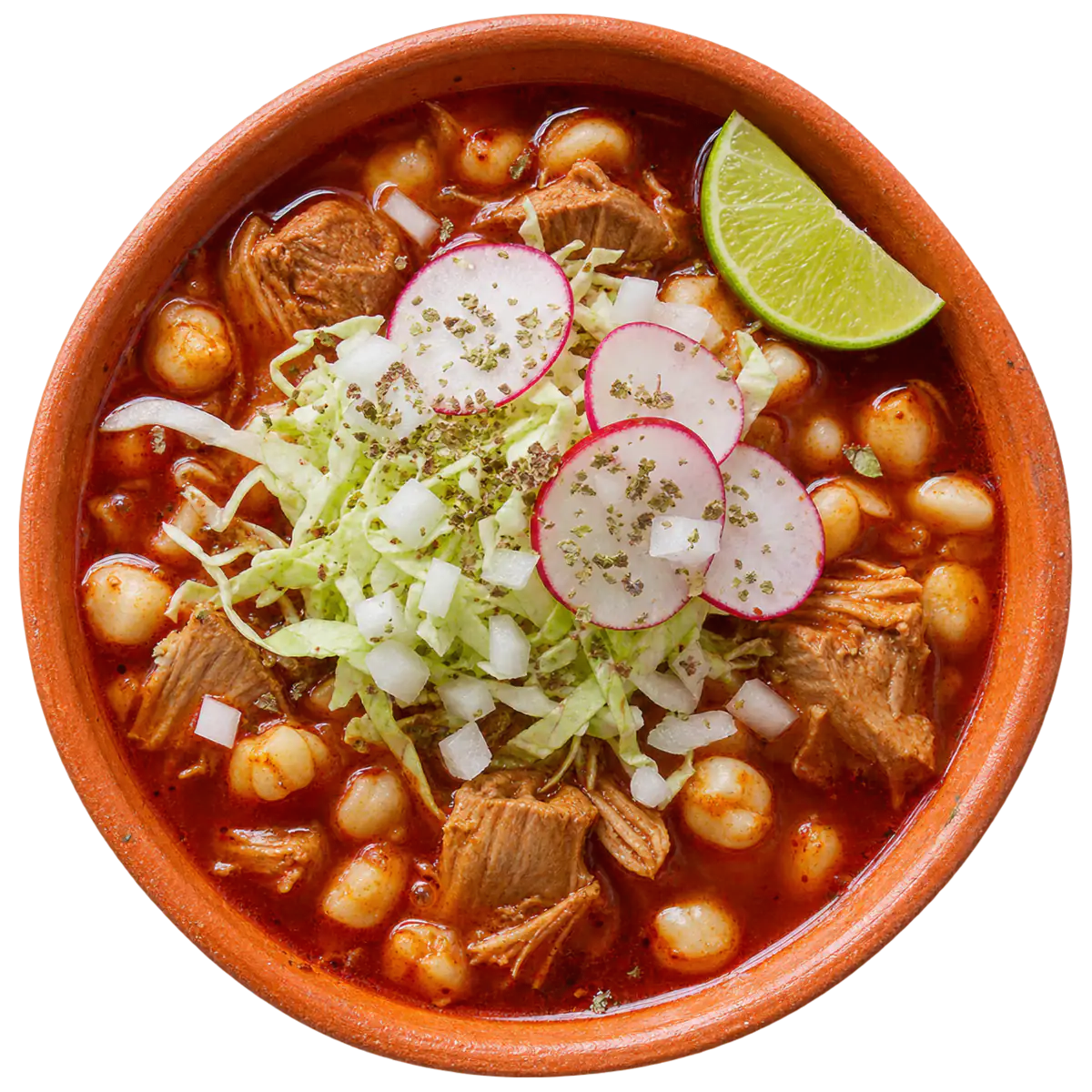 Pozole rojo
Red pozole
Jalisco (most associated); also Michoacan, Zacatecas, Sinaloa
Pozole seasoned with a red sauce of dried chiles such as guajillo and ancho, which colors the broth.
At 3 festivals
-
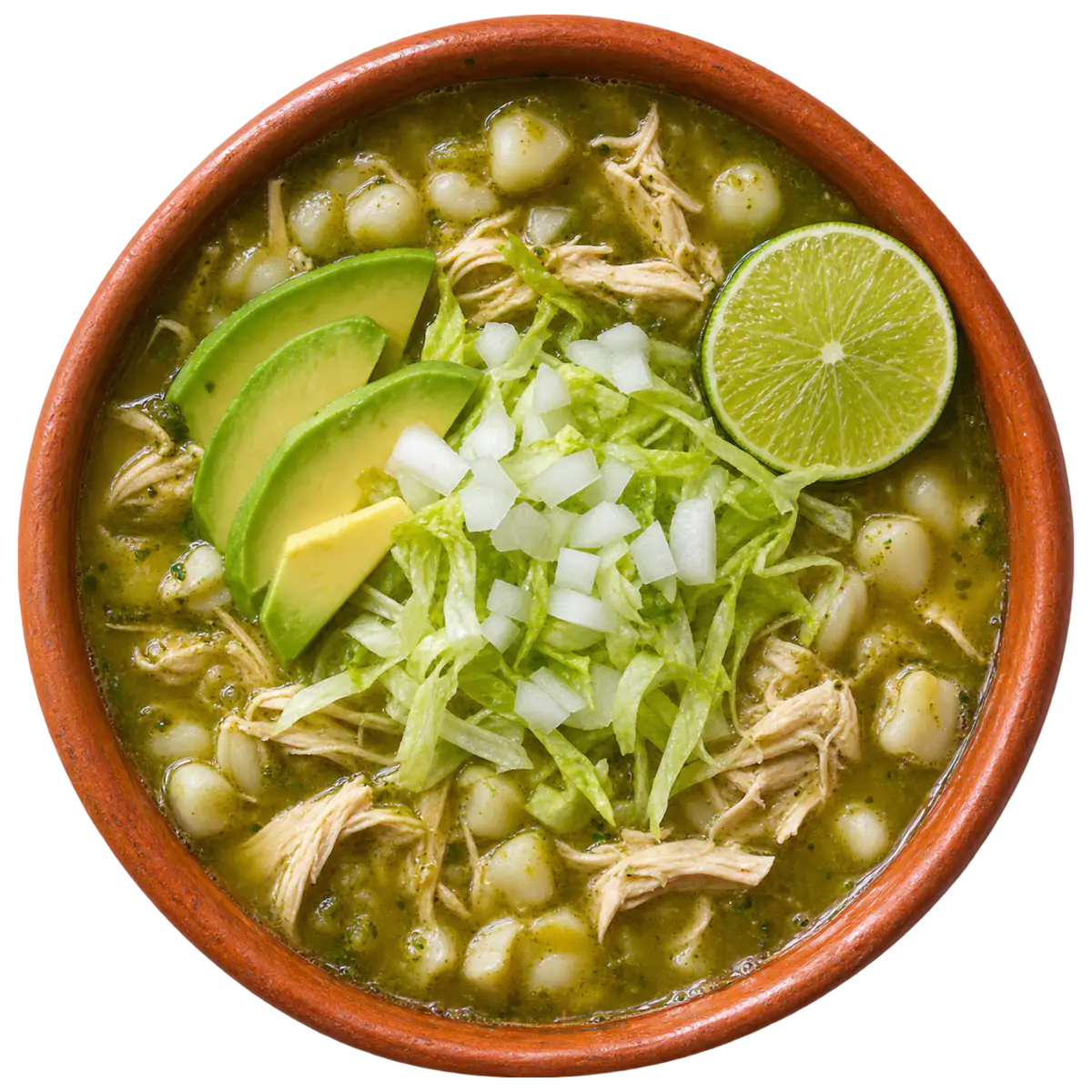 Pozole verde
Green pozole
Guerrero
Pozole with a green sauce of tomatillo, green chile, herbs and often ground pumpkin seeds (pepitas).
At 4 festivals
At the festivals
Served at 8 festivals in United States and Mexico.
Earlier editions
-
November 07, 2026
🇺🇸 Long Beach, California, United States
Inaugural Empty Bowls Long Beach
On the menu as pozole verde
By Chef Matthew Roberts and his True North Social Club
-
October 24, 2026
🇺🇸 Albuquerque, New Mexico, United States
Albuquerque Empty Bowls
On the menu as Posole
By Loyola’s Family Restaurant
-
September 24, 2026 – September 27, 2026
🇲🇽 Atlacomulco, Mexico
Sabor que Provoca 2026
-
September 15, 2026 – September 16, 2026
🇲🇽 Morelia, Mexico
6.º Festival del Pozole y la Quesadilla
By Cooks of the families of Morelia and Tenencia Morelos
-
October 17, 2025 – October 19, 2025
🇲🇽 Xochitepec, Mexico
XVII Feria del Pozole
On the menu as Pozole negro, Pozole rojo, Pozole blanco, Pozole verde, and Pozole de pollo, cerdo, camarón y costilla
By Local exhibitors
-
September 13, 2024 – September 15, 2024
🇲🇽 San Juan del Río, Mexico
Festival del Pozole y Chile en Nogada
On the menu as Pozole estilo norteño, Pozole estilo jaliscience, Pozole estilo guerrerense, and Pozole estilo oaxaqueño
By 35 pozole exhibitors
-
November 17, 2023 – November 19, 2023
🇲🇽 Xochitepec, Mexico
15ª Feria del Pozole
On the menu as pozole rojo, pozole verde, pozole blanco, pozole de camarón, pozole de pollo, and pozole de puerco
By more than 16 local stalls in the gastronomic pavilion
-
May 07, 2017 – May 14, 2017
🇲🇽 Chilpancingo, Mexico
12º Festival Nacional del Pozole y el Mezcal
On the menu as pozole rojo, pozole blanco, and pozole verde con pipían y semilla de calabaza
-
October 15, 2016
🇺🇸 Appleton, Wisconsin, United States
8th Annual Soup Walk
On the menu as Vegan Verde Pozole made with local organic ingredients
By Stone Cellar Brewpub, 1004 S. Olde Oneida Street (bonus riverfront stop)
-
May 09, 2013 – May 12, 2013
🇲🇽 Chilpancingo, Mexico
8º Festival del Pozole y el Mezcal
By Pozolerias of Chilpancingo, Eduardo Neri, Tixtla, Mochitlán and Quechultenango