
🇳🇬 Nigeria · South-west Nigeria (Yoruba, Ibadan and Lagos)
GbegiriYoruba bean soup
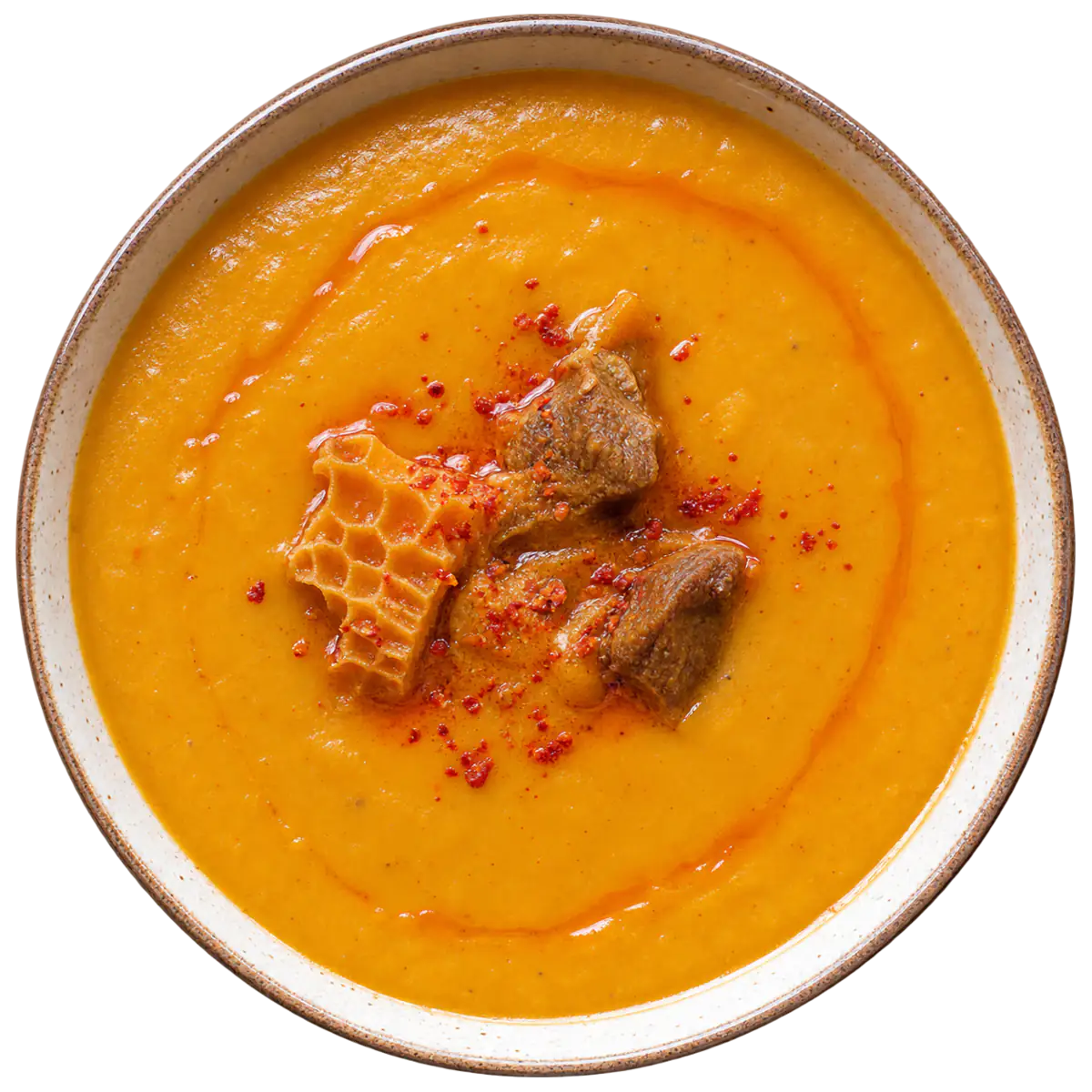
A smooth, pale orange Yoruba soup of peeled and puréed beans (brown beans or black-eyed peas) with a little palm oil, crayfish and locust beans, eaten with amala and ewedu in the combination called abula.
Origin and history
Gbegiri is a Yoruba bean soup from south-western Nigeria, strongly associated with Ibadan, where amala restaurants serve it with ewedu. Where and when it began is not documented; it is traditional Yoruba food made from the local brown or black-eyed beans, eaten with amala.
Make it at home
- Makes
- 6 servings
- Total time
- 1 h 15 min
- Hands-on
- 35 min
Ingredients
- 250 g1 1/4 cups brown beans (honey beans) or black-eyed peas, soaked, skins rubbed off
- 500 g1.1 lb assorted beef, shaki (tripe) or smoked turkey, optional, cooked until tender, stock saved
- 60 ml1/4 cup red palm oil, heated gently, not bleached
- 2 tbsp ground crayfish
- 1 to 2 tbsp iru (fermented locust beans, dawadawa), ideally the soft kind, iru woro
- 1/2 to 1 tsp ground dried cayenne pepper, to taste
- 1 onion, for the meat
- salt and seasoning cube, to taste
Method
-
1. Soak the beans for an hour or more; rub them between your hands and rinse off the skins, repeating until almost all are gone.
-
2. Cook the peeled beans in plenty of water for 30 to 40 minutes (about 15 in a pressure cooker), until they crush to a paste.
-
3. While they cook, simmer the meat with onion, salt and a cube until tender, and keep the stock.
-
4. Purée the beans with a blender, or whisk them traditionally, adding a little water. Pass the purée through a fine sieve to remove any skin. It should be silky.
-
5. Warm the palm oil in a pot for 2 to 3 minutes without smoking, stir in the purée, then add pepper, iru, crayfish and a cube. Add stock or water to a loose consistency.
-
6. Cook on medium heat for about 10 minutes, stirring so it does not catch; it spits and boils over easily. Turn off the heat once it thickens slightly and coats a spoon. It thickens further as it cools.
-
7. Season, and serve with the meat on the side or in the soup.
Notes
- Gbegiri is a Yoruba soup of south-west Nigeria, closely tied to Ibadan and Lagos. It is eaten with amala (yam or cassava flour swallow). With ewedu (jute leaf soup) and a pepper stew called obe ata, it makes the plate called abula.
- The swallow is amala, usually lafun (cassava) or amala isu (yam flour); pounded yam or eba also work. Gbegiri is also eaten with rice.
- Peeling the beans thoroughly and sieving are what makes it smooth. Bean flour is a quick substitute: whisk it in cold water and stir into boiling water; it comes out more custard-like.
- Iru is available in African shops; if you cannot find it, use a little miso or a couple of anchovies, which give savoury depth but lose the particular funk. Palm oil can be replaced with a little paprika-tinted oil, but the flavour is lost.
- Keep it looser than you think it should be. Reheat with water.
Adapted from Afrifood Network, Gbegiri soup (beans soup) and Ounje Aladun, Gbegiri (beans soup).
At the festivals
No festival we list has printed it on a menu yet.