
🇳🇬 Nigeria, 🇨🇲 Cameroon, and 🇬🇭 Ghana · West and Central Africa; Nigerian national soup
Egusi soupNigerian melon seed soup
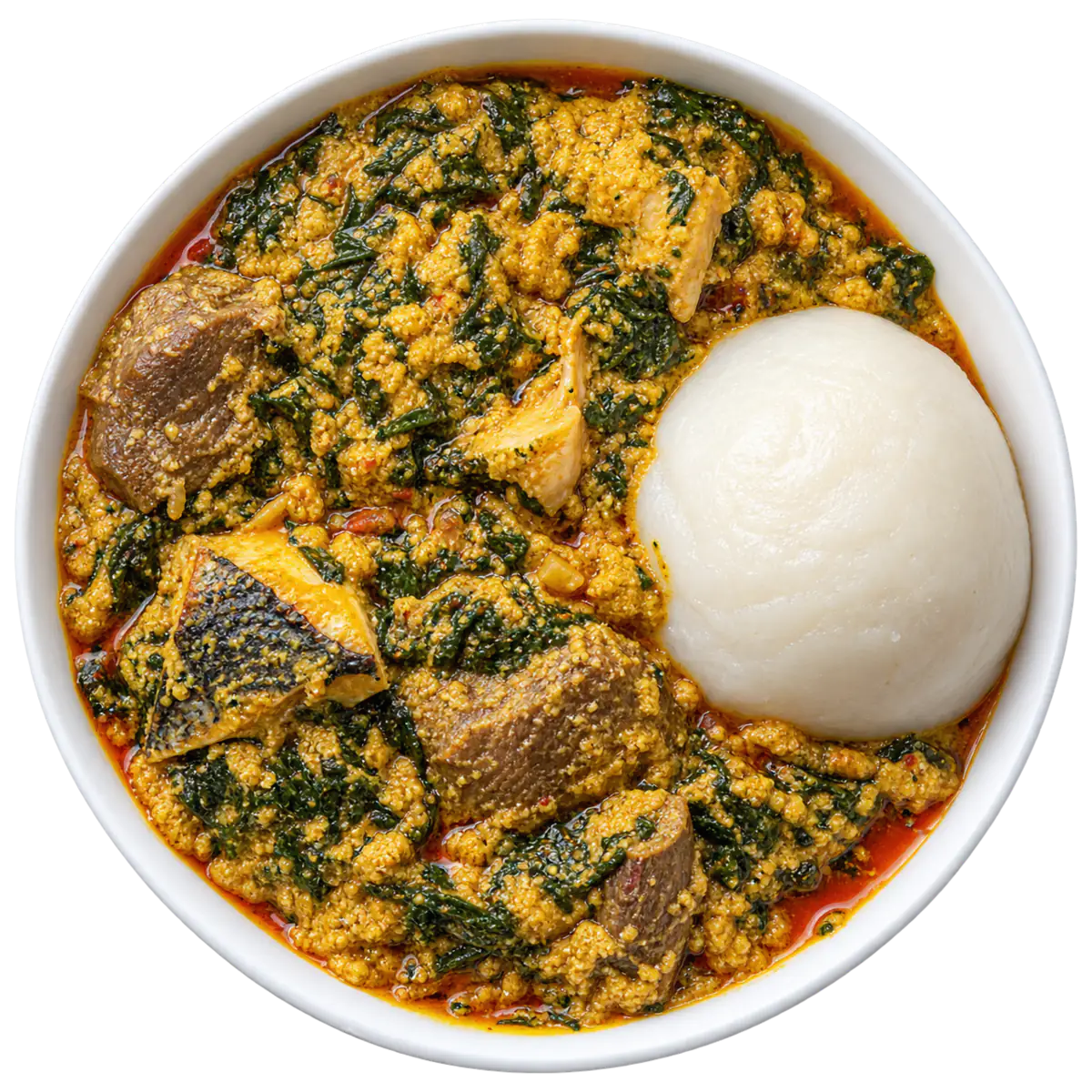
A thick Nigerian soup thickened with ground egusi (melon seeds), fried in palm oil and simmered with assorted meat or fish, crayfish, pepper and usually leafy greens such as bitterleaf or spinach. Eaten with a swallow such as pounded yam, eba or fufu.
Origin and history
Egusi soup is one of Nigeria's best-known dishes, cooked by Yoruba, Igbo, Hausa and south-south peoples alike and carried by migration to neighbouring countries such as Ghana and Senegal and to the diaspora. It is built on the melon seeds that West African cooks use as a thickener. Nigerian writers have argued it deserves recognition as national cultural heritage.
Make it at home
- Makes
- 6 servings
- Total time
- 1 h 15 min
- Hands-on
- 40 min
Ingredients
- 300 g10.5 oz (about 2 cups) egusi (ground melon seeds), or whole seeds ground in a spice mill
- 500 g1.1 lb assorted meat, beef, shaki (tripe) or goat, cut in chunks
- 150 g5 oz stockfish or dried fish, soaked until soft, bones removed
- 1.2 litres5 cups meat stock, from cooking the meat
- 120 ml1/2 cup red palm oil
- 1 medium onion, half chopped, half blended
- 2-3 scotch bonnet chillies, ground, to taste
- 3 tbsp ground dried crayfish
- 1 tbsp iru (fermented locust beans), optional
- 200 g7 oz leafy greens, bitterleaf (washed), ugu (fluted pumpkin leaf) or spinach, shredded
- 1-2 stock cubes, optional
- salt, to taste
Method
-
1. Cook the meat in a pot with half the onion, a stock cube and salt until tender, about 40 minutes (tripe takes longer). Keep the stock and add the soaked stockfish for the last 15 minutes.
-
2. Mix the ground egusi with the blended onion and a few spoonfuls of water to make a thick, damp paste.
-
3. Heat the palm oil in a wide pot over medium heat for about 2 minutes, then add the chopped onion and iru and fry for a minute.
-
4. Spoon in the egusi paste in small lumps. Let it set for 5 minutes without stirring, then turn it gently and fry another 5 minutes until the curds are firm and the oil comes to the top.
-
5. Pour in the stock a little at a time, stirring gently, then add the crayfish and chilli.
-
6. Add the meat and stockfish, cover and simmer for 15 minutes, stirring now and then so the base does not stick. Add water if it is too thick.
-
7. Stir in the greens and cook for 3 to 5 minutes (bitterleaf a little longer) until just wilted.
-
8. Taste for salt and heat and serve hot with your swallow.
Notes
- Egusi are the shelled seeds of a melon grown for its seeds, known as egusi in Yoruba and Igbo and as agushi or gushi in Hausa. They are sold ground or whole at African grocers; whole seeds are ground to a coarse powder at home. There is no true substitute. In a pinch, ground pumpkin seeds (pepitas) give a similar nutty, thickening effect with a greener, less rich taste.
- Palm oil gives egusi its colour and flavour. Neutral oil works but the soup will be paler and milder; a tablespoon of palm oil in it restores much of the flavour. Where palm oil is hard to find, use West African red palm oil from a grocer rather than the refined kind.
- Greens: bitterleaf (onugbu), ugu or waterleaf are traditional. Outside West Africa, spinach, kale or collards are common alternatives; bitterleaf is the one that has no real match (a little chicory or dandelion leaf gives bitterness).
- Two styles: the clumped style above, in which the egusi is fried until it forms curds, and a smooth style where the egusi is stirred into the stew and boiled with no frying. Ijebu-style egusi in Yoruba cooking is cooked more like a stew with tomato and pepper. Some cooks steam or fry the seeds first.
- Swallow: eaten with pounded yam (iyan), eba (garri), fufu, amala or semovita. Rice, yam and boiled plantain are also eaten with it.
- Egusi can be combined with ogbono; see ogbono soup. Keeps three days in the fridge and freezes well.
Adapted from Eat Well Abi, Nigerian Egusi Soup (Efo Elegusi), BusinessDay Nigeria, Egusi soup: proudly Nigerian superfood, and Google Arts & Culture, Six Savoury and Sumptuous Soups.
At the festivals
No festival we list has printed it on a menu yet.