
You need to sign in or sign up before continuing.
🇭🇺 Hungary · Szeged, Tisza
Szegedi halászléSzeged fish soup
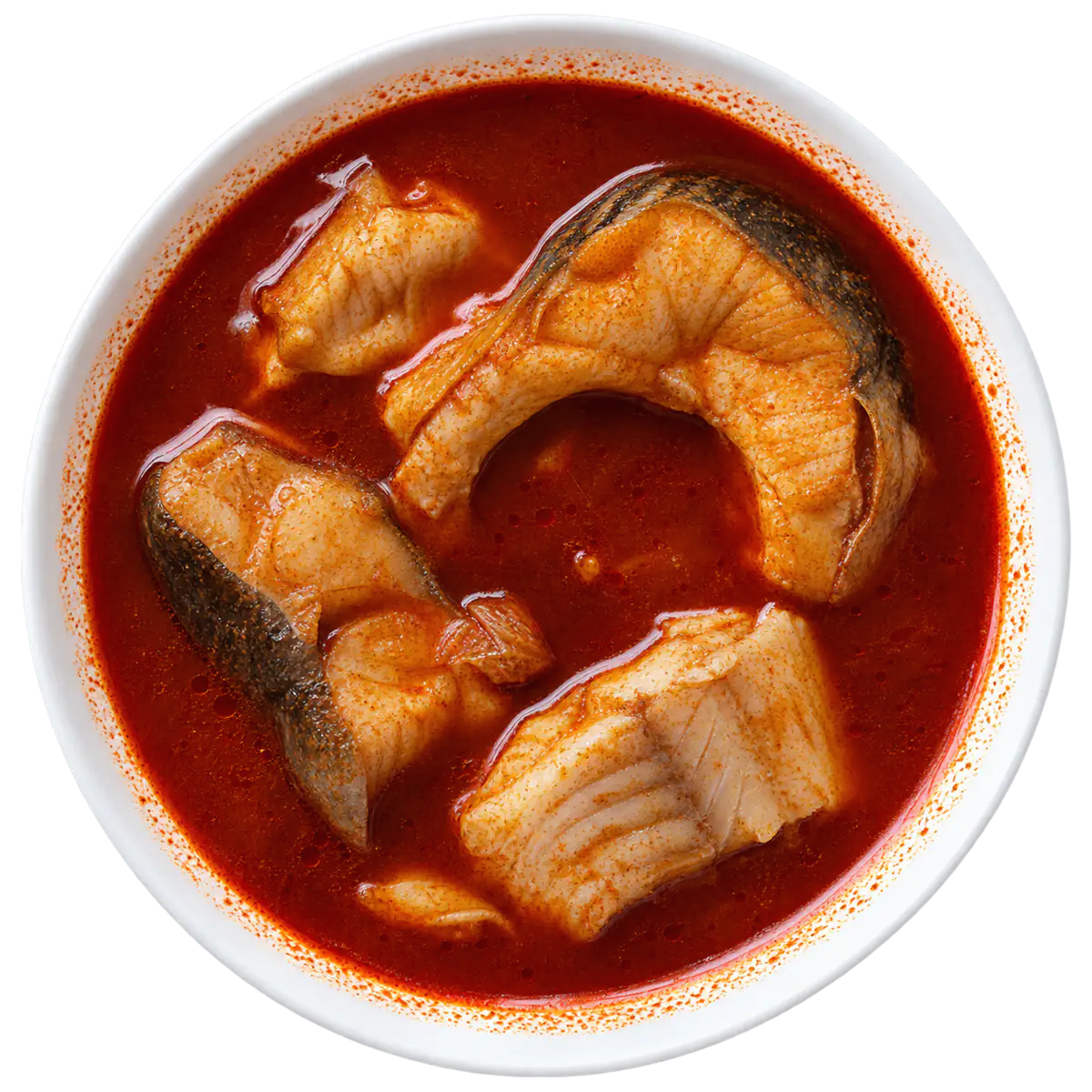
The Tisza form of halászlé from Szeged: several fish species (carp, catfish, sturgeon, pike or perch), with the base stock of trimmings, onion and paprika strained before the fish pieces are poached in it; thicker than Baja style, eaten with bread.
Origin and history
Szeged on the Tisza is the most famous home of halászlé. The oldest known printed recipe for the dish, 'halpaprikás halászosan', appears in Rézi néni's Szegedi szakácskönyv (1871), and the city's riverside fishermen's inns made the strained style famous; Ottó Herman noted the use of sterlet, carp and catfish. The Tisza style of halászlé, with its sieved stock of carp head and trimmings, was later added to the Hungarikum Collection.
Make it at home
- Makes
- 6 servings
- Total time
- 2 h
- Hands-on
- 45 min
Ingredients
- 1.5 kg3.3 lb whole carp (ponty), scaled and gutted; body cut into 3 cm steaks, head, tail, fins and backbone kept for the stock
- 600 g1.3 lb other Tisza fish: catfish (harcsa), pike (csuka), pike-perch (süllő) or sterlet (kecsege), cut into thick pieces; trimmings kept for the stock
- 700 g1.5 lb small whole white fish (keszeg, bream) and extra fish heads and bones, gills removed; this gives the stock its body
- 400 g14 oz yellow onions (Makó onions are the local choice), roughly chopped
- 2.5 l10.5 cups cold water
- 4 tbsp Szeged sweet ground paprika, divided
- 1–2 tsp hot ground paprika, Szeged halászlé is meant to have a bite
- salt, about 1 tbsp, to taste
- 2–3 hot cherry peppers or green chillies, optional, to serve
- white bread, to serve
Method
-
1. Salt the carp and other fish steaks lightly and keep them cold.
-
2. Put the carp head, tail, fins and backbone, the trimmings of the other fish and the small whole fish in a large pot with the onion.
-
3. Cover with the cold water, bring to the boil and skim off the foam.
-
4. Stir in 2 tbsp of the sweet paprika, lower the heat and simmer for 1 hour, until the onion has melted and the small fish have fallen apart.
-
5. Pass everything through a food mill or press it through a sieve with a ladle (passzírozás), working the soft onion and fish flesh through so that the stock becomes thick and opaque; discard the bones and skin left behind.
-
6. Return the strained stock to a wide, clean pot and bring it back to the boil; it should be about 2 l, so add a little water if it has reduced too far.
-
7. Add the remaining sweet paprika and the hot paprika, then lay in the carp and other fish steaks in one layer.
-
8. Simmer briskly for 15 minutes without stirring, shaking the pot from time to time, until the fish is just cooked through.
-
9. Taste and adjust the salt; the broth should be thick, deep red and peppery.
-
10. Serve each person a few pieces of fish in plenty of broth, with white bread and fresh hot peppers on the side.
Notes
- What makes it Szegedi: the stock of trimmings, small fish and onion is passed through a sieve before the fish steaks are cooked in it, giving a thicker, heartier, darker red soup than the Baja style. It is eaten with bread, not pasta. Bajai halászlé, by contrast, is never strained and is served over gyufatészta.
- Szeged cooks favour several species in the pot, plant-eating and predatory fish together: carp with catfish, pike, pike-perch, sterlet or even eel. Carp alone also makes a good Szegedi, and catfish versions are increasingly common.
- Hot paprika belongs here; the old saying is that the broth should be as red as the eye of the angriest bull. Spoon a little Erős Pista (hot paprika paste) into the bowl if you want more.
- The stock can be made a day ahead and kept in the fridge; bring it back to the boil and cook the fish steaks just before serving.
- The wider Tisza style (tiszai halászlé) is listed in the Hungarikum Collection; Szolnok and Tisza wine versions belong to the same family.
Adapted from Hungarikum Collection: Tiszai halászlé, Origo Tafelspicc: Az örök kérdés a magyaroknak: a szegedi vagy a bajai halászlé a jobb?, and Pénzcentrum / HelloVidék: Eredeti halászlé recept (szegedi, bajai, balatoni).
At the festivals
Served at 3 festivals in Hungary.
Earlier editions
-
July 11, 2026
🇭🇺 Tiszafüred, Hungary
Tiszai Halételek Fesztiválja
On the menu as Tiszai típusú halászlé
By Competing cooking teams
-
April 11, 2026
🇭🇺 Kiskunhalas, Hungary
5th Félúton Fesztivál és Halászléfőző Verseny
-
July 10, 2014
🇭🇺 Baja, Hungary
Bajai Halfőző Fesztivál