
🇨🇳 China · hot-and-sour soups are made in several regional kitchens; a standard of Chinese American menus
Hot and sour soup
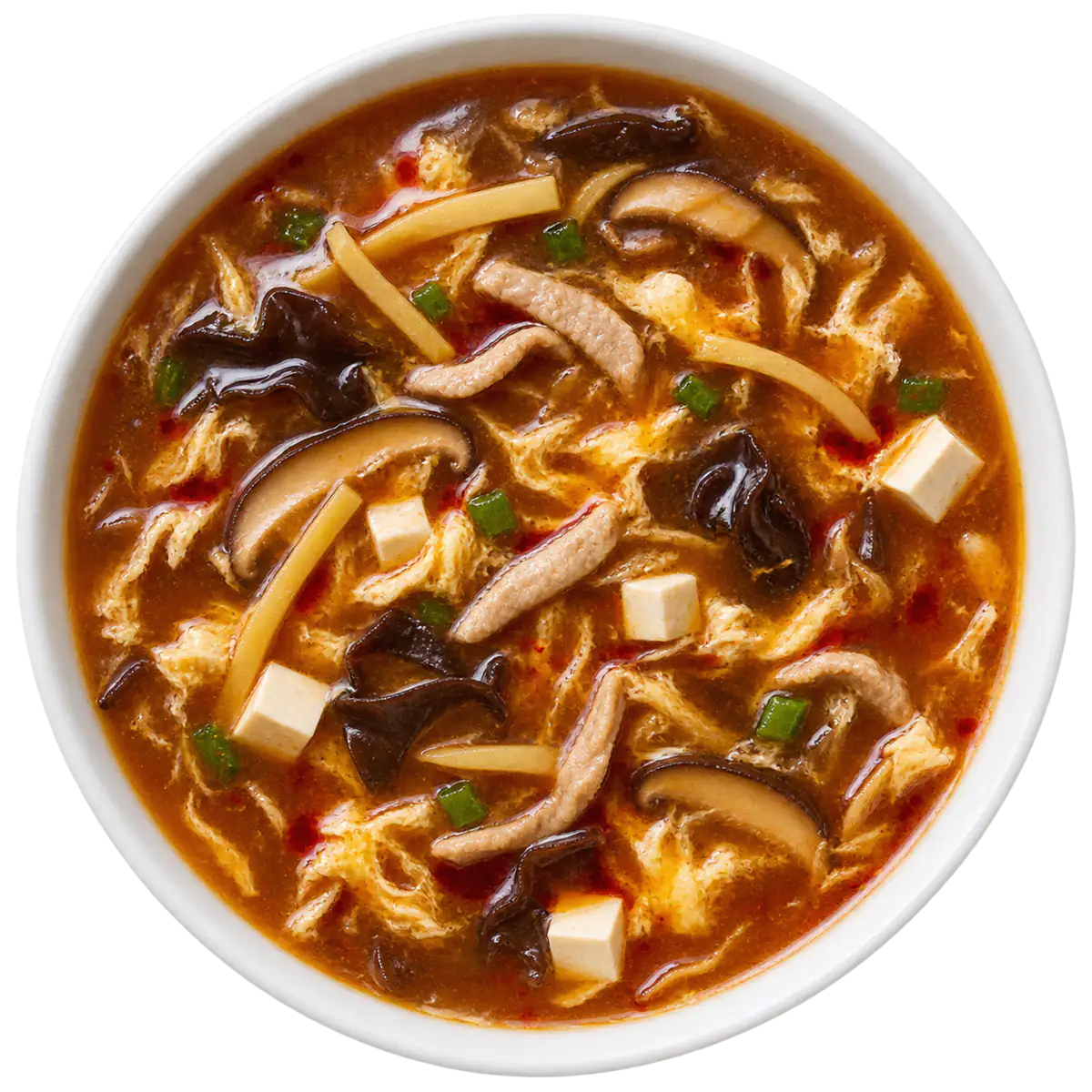
A thickened chicken or pork stock soured with vinegar and heated with white pepper, holding strips of pork, tofu, bamboo shoots and wood ear or other mushrooms, finished with a swirl of beaten egg.
Origin and history
Hot-and-sour soups are made in several Chinese regional kitchens, and sources disagree about where and when the dish began. One site calls the Sichuan version a soup for warming poor people and dates it loosely to the Qing dynasty without giving a date; ChineseFoodWiki lists no single origin and treats "Sichuan" as a loose flavour hint. It became a standard starter on Chinese American menus, where the thick, vinegary version is best known.
Make it at home
- Makes
- 6 servings
- Total time
- 1 h 30 min
- Hands-on
- 35 min
Ingredients
- 10 g1/3 oz dried wood ear mushrooms, soaked until soft, trimmed and shredded
- 10 g1/3 oz dried shiitake mushrooms, soaked, stems removed, thinly sliced
- 10 g1/3 oz dried lily flowers (golden needles), optional, soaked and halved
- 115 g4 oz pork shoulder or loin, cut into thin matchsticks
- 1 tsp cornstarch, to coat the pork
- 2 L8 cups chicken stock, unsalted or low-sodium
- 115 g4 oz bamboo shoots, cut into matchsticks
- 225 g8 oz firm tofu, cut into thin strips
- 1 tbsp light soy sauce
- 2 tsp dark soy sauce, for colour
- 1 1/2 tsp ground white pepper, more to taste
- 80 ml1/3 cup Chinkiang black vinegar or white vinegar, more to taste
- 45 g1/3 cup cornstarch, stirred with 60 ml (1/4 cup) cold water
- 1 large egg, beaten
- 1 tsp toasted sesame oil
- 1 scallion, finely chopped
- salt and a pinch of sugar, to taste
Method
-
1. Soak the wood ear, shiitake and lily flowers in separate bowls of hot water for 30 to 60 minutes, until soft; shred or slice them and discard the shiitake stems.
-
2. Toss the pork with 1 teaspoon of cornstarch and a splash of water so the strips stay tender.
-
3. Bring the stock to a boil in a large pot, add the pork and stir to separate the strips, then skim off the foam once it returns to a simmer.
-
4. Add the mushrooms, lily flowers, bamboo shoots, both soy sauces, white pepper, a little salt and a pinch of sugar, and simmer for 10 minutes.
-
5. Add the tofu and the vinegar and heat through gently for 2 minutes.
-
6. Stir the cornstarch slurry again and pour it in slowly while stirring in a circle; simmer until the soup is glossy and lightly thick, adding a little more slurry if you want it thicker.
-
7. With the soup at a steady simmer, stir it in one direction and drizzle in the beaten egg in a thin stream so it sets in ribbons.
-
8. Turn off the heat, stir in the sesame oil, then taste and adjust: more pepper for heat, more vinegar for sourness. Serve in bowls topped with scallion.
Notes
- The balance is the point: sourness and white-pepper heat should both be clear. Vinegar loses some of its aroma if boiled for long, so many cooks add it near the end.
- Regional kitchens differ. Sichuan-style bowls lean on black vinegar and plenty of pepper; a northern form (hu la tang) can use beef or lamb stock. Henan's hulatang is a different, wheat-thickened breakfast soup.
- Cannot find dried lily flowers or wood ear? Leave out the lily flowers and use more shiitake; the texture changes but the soup still works. Rehydrated wood ear is worth seeking out for its crunch.
- Restaurant bowls are usually thicker than home ones; use less slurry for a lighter soup.
- Make ahead: the soup keeps 2 days in the fridge; reheat gently and add the egg fresh.
Adapted from The Woks of Life, Hot and Sour Soup, ChineseFoodWiki, Hot and Sour Soup, and China Sichuan Food, Hot and Sour Soup.
At the festivals
No festival we list has printed it on a menu yet.