
🇻🇳 Vietnam · Southern Vietnam, descended from Phnom Penh noodle soup
Hủ tiếuVietnamese clear noodle soup
A light, clear Southern Vietnamese noodle soup of rice or egg noodles in a pork-bone, dried-shrimp and dried-squid broth, topped with pork, shrimp, quail eggs and herbs.
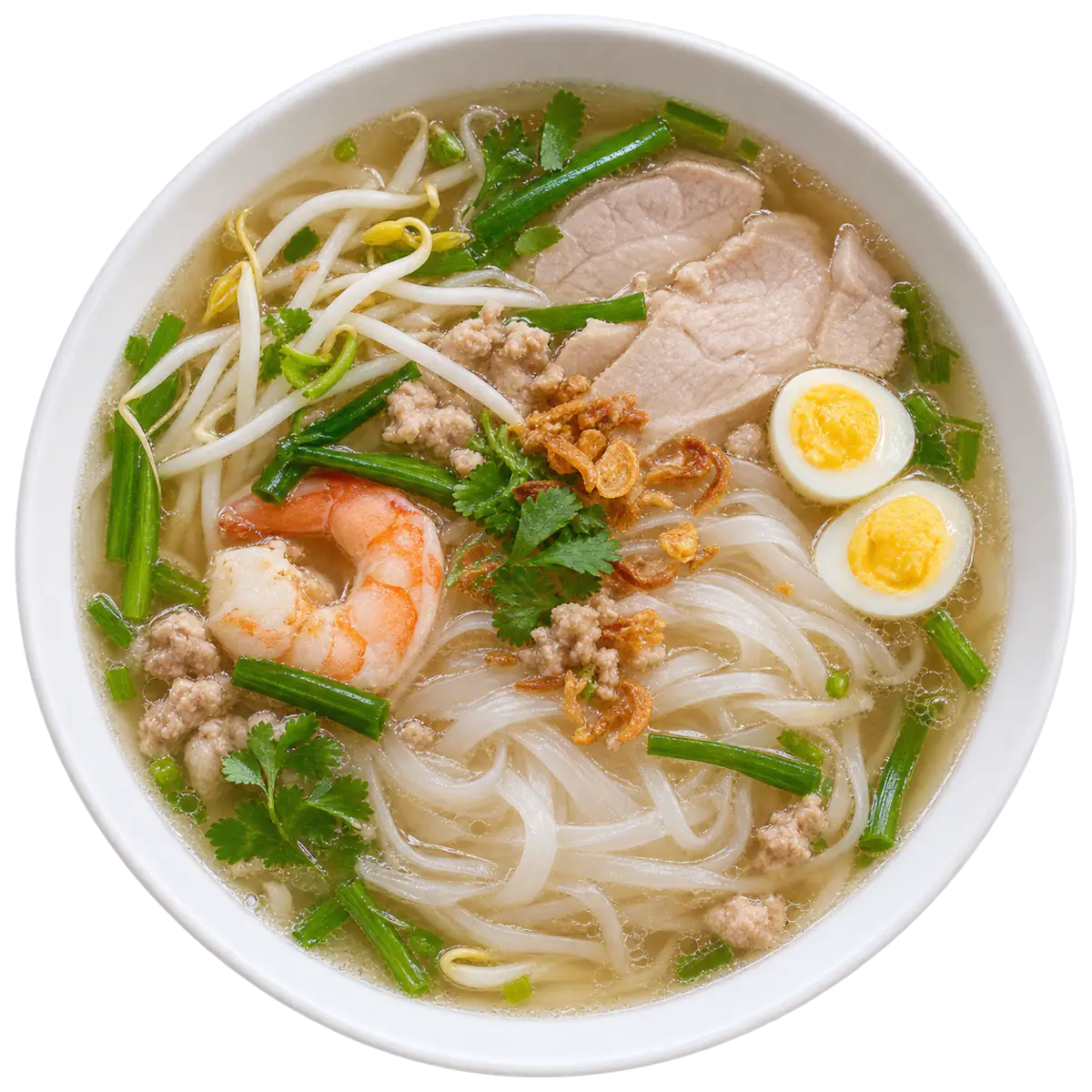
Origin and history
Hủ tiếu descends from kuy teav, the noodle soup Teochew Chinese took to Phnom Penh, where cooks adapted it with dried seafood. It later spread through southern Vietnam and the Mekong Delta, where Vietnamese cooks added toppings and the dry style. Nam Vang is the Vietnamese name for Phnom Penh. Sources disagree on when it arrived, from the early 20th century to the 1960s, so no date is given.
Make it at home
- Makes
- 6 servings
- Total time
- 3 h
- Hands-on
- 50 min
Ingredients
- 1 kg2.2 lb pork neck bones
- 500 g1.1 lb pork shoulder or butt, one piece
- 3 litres12 cups water
- 30 g1 oz dried shrimp
- 1 dried squid, about 30 g / 1 oz
- 1 yellow onion, halved, charred in a dry pan
- 200 g7 oz daikon, peeled, in chunks
- 20 g3/4 oz rock sugar
- 2 tbsp fish sauce, to taste; optional, see notes
- salt, to taste
- 250 g9 oz ground pork
- 3 cloves garlic, minced
- 1/2 tsp ground black pepper
- 12 quail eggs, boiled and peeled
- 400 g14 oz medium shrimp, head-on or peeled
- 500 g1.1 lb tapioca or rice noodles, fresh hủ tiếu, or dried flat rice noodles
- 100 g3.5 oz pork fat or 3 tbsp lard, optional, for crisp cracklings and oil
- Chinese celery or garlic chives, chrysanthemum greens, bean sprouts, to finish
- fried shallots, fried garlic, lime, chili, hoisin sauce, at the table
Method
-
1. Boil the bones and pork shoulder in water for 5 minutes, drain and rinse everything, and clean the pot.
-
2. Return the pork to the pot with 3 litres (12 cups) of fresh water, the dried shrimp, dried squid, charred onion and daikon. Bring to a boil, skim, then simmer gently.
-
3. After 1 hour, lift out the onion and daikon so they do not cloud the broth.
-
4. Keep simmering for a second hour, then take out the shoulder and cool it. Slice it thinly once it is cold.
-
5. Season the broth with rock sugar, salt and a little fish sauce if you like, then strain.
-
6. Fry the garlic and ground pork in a little lard or oil for 5 minutes, seasoning with pepper and a splash of fish sauce. Warm the quail eggs in the same pan.
-
7. Poach the shrimp in the hot broth for 2 minutes until pink, then lift out.
-
8. Blanch the noodles in boiling water until chewy and divide among bowls with the herbs and sprouts.
-
9. Top with sliced pork, minced pork, shrimp and quail eggs, ladle over the boiling broth and finish with fried shallots and garlic. Serve with lime, chili and hoisin.
Notes
- The broth is light and clear, and its sweetness comes mainly from the bones, charred onion and daikon rather than from sugar. A Vietnamese source describes a seven to eight hour simmer for the shop version; an English-language recipe gets by with about two hours, as here, and a Vietnamese home recipe uses one to two hours.
- Fish sauce: one Vietnamese source says the traditional broth takes none, while others season with a little. Start with less and add at the end.
- Noodles: the classic is a chewy, translucent tapioca noodle (bột năng); flat rice noodles, thin egg noodles or a mix are also used. Mỹ Tho and Sa Đéc each have their own noodle style and broth.
- A dry (khô) serving, from the Mekong Delta, tosses the noodles with a sauce of soy, oyster sauce and sugar instead of pouring broth over them; this recipe is the soup form.
- The Nam Vang style often has offal; leave it out or ask for none.
- It is closely related to Cambodian kuy teav, from which it descends.
- Make ahead: broth keeps 3 days refrigerated; cook noodles to order.
Adapted from Feed the Pudge, Hủ tiếu Nam Vang, Vietnam Tourism, Hủ tiếu, Saigoneer, From kuy teav to hủ tiếu, and Mytour, Cách nấu hủ tiếu Nam Vang.
At the festivals
No festival we list has printed it on a menu yet.