
🇹🇭 Thailand · a southern Thai sour curry, with a central Thai form
Kaeng somThai sour soup
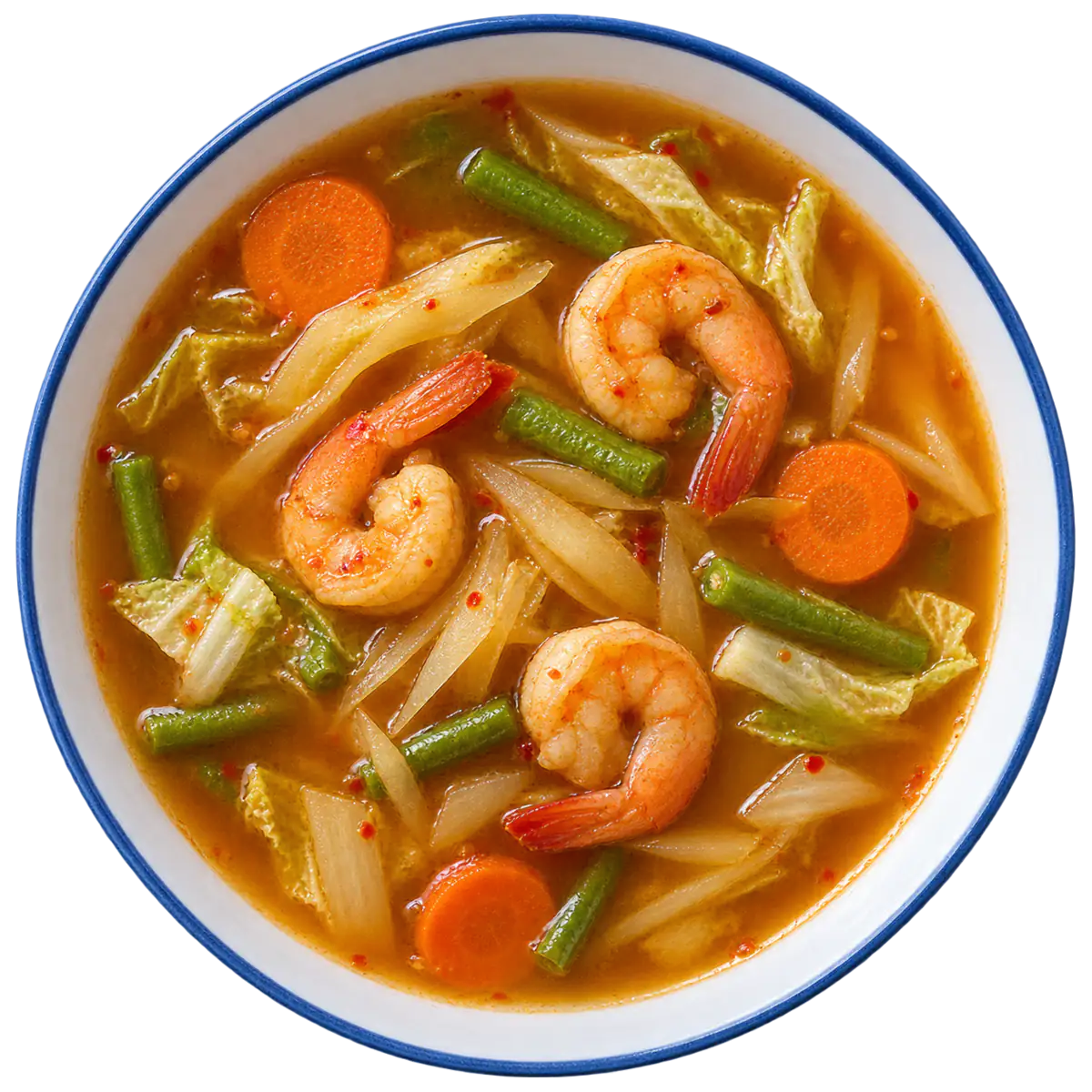
A thin, water-based sour and spicy Thai soup of fish or prawns with vegetables (green papaya, long beans, carrot, cabbage, water spinach), built on a paste of dried chilies, shrimp paste, shallot, garlic and fingerroot and soured with tamarind.
Origin and history
Kaeng som is a traditional Thai home dish, described in English-language sources as originating in southern Thailand, with recipes that vary by region; the Thai press calls it a folk dish. In Thai, som means sour: chef Chumpol Jangprai notes that the ancient Thais used the word for anything sour. Laos and Malaysia have their own versions.
Make it at home
- Makes
- 4 servings
- Total time
- 45 min
- Hands-on
- 30 min
Ingredients
- 5 large dried red chilies (spur chilies), soaked in hot water until soft, then drained and sliced; for the paste
- 4 small dried chilies, soaked and drained; for the paste
- 1/2 cup (about 70 g)1/2 cup shallots, chopped; for the paste
- 4 cloves garlic, for the paste
- 2 tbsp fingerroot (krachai), chopped; for the paste
- 1 tbsp shrimp paste (kapi), for the paste
- 1/2 tsp salt, for the paste
- 1 liter4 cups water
- 300 g10 oz green papaya, peeled, shredded or cut in thin bite-sized pieces
- 100 g3 1/2 oz long beans or green beans, cut in 4 cm pieces
- 120 g4 oz carrot, sliced
- 150 g5 oz Chinese (napa) cabbage, cut in pieces
- 5 tbsp tamarind paste, thin, seedless; add to taste
- 2 tbsp fish sauce, to taste
- 1 tbsp palm sugar, to taste
- 300 g10 oz medium prawns, peeled, tails on; or 300 g firm white fish, see notes
Method
-
1. Pound the salt and the soaked chilies to a paste in a mortar, then add the garlic, shallots and fingerroot and pound until fine. Add the shrimp paste last and mix well. A blender or small food processor will also do.
-
2. Bring the water to a boil, stir in the paste until it dissolves, and boil for 1 to 2 minutes.
-
3. Add the carrot and papaya and simmer for 5 minutes, until they begin to soften.
-
4. Stir in the tamarind paste, fish sauce and palm sugar. Taste: the broth should be clearly sour first, then salty, with a little sweetness behind and a lingering chili heat.
-
5. Add the beans and cabbage and simmer for 3 to 4 minutes.
-
6. Add the prawns and cook for 2 minutes, until they turn pink. Serve right away with jasmine rice.
Notes
- Kaeng som is a water-based soup with no coconut milk; the sourness comes from tamarind, balanced with fish sauce and palm sugar. The quantities here are scaled from Thai and English-language recipes that agree on the paste (dried chilies, shallot, garlic, fingerroot, shrimp paste) and differ in how sour and hot they run, so taste and adjust the tamarind and chilies.
- Fish version: simmer 300 g firm white fish (snapper, sea bass or snakehead) in the broth for about 3 minutes, lift it out, remove the skin, mash the flesh to a paste and stir it back in (the way one traditional recipe does), or simply serve the pieces whole.
- A southern version in Thai recipes (kaeng som tai) uses a southern sour curry paste with extra shrimp paste, sea bream and lotus stem.
- Vegetables vary: cabbage, daikon, long beans, water spinach, cauliflower, green papaya, moringa pods, bamboo shoots or lotus stem. Take what is in season.
- Cha-om (acacia shoot) omelette is a popular addition: beat eggs with chopped cha-om, fry thin, cut into pieces and add at the end.
- Store-bought kaeng som paste can replace the homemade paste: a Thai recipe uses about 100 g for 4 cups of water with 300 g prawns. The soup tastes better after resting for a day and keeps for up to 3 days in the fridge.
Adapted from Hungry in Thailand, Kaeng Som (Southern Thai Sour Curry), Thairath, สูตรแกงส้ม (Kaeng som recipes: mixed vegetables with shrimp, green papaya, southern fish), and Real Thai Recipes, Sour Curry (Gaeng Som).
At the festivals
No festival we list has printed it on a menu yet.