
🇹🇭 Thailand · Central Thailand (riverside communities of the Central Plains)
Tom yumThai hot and sour soup
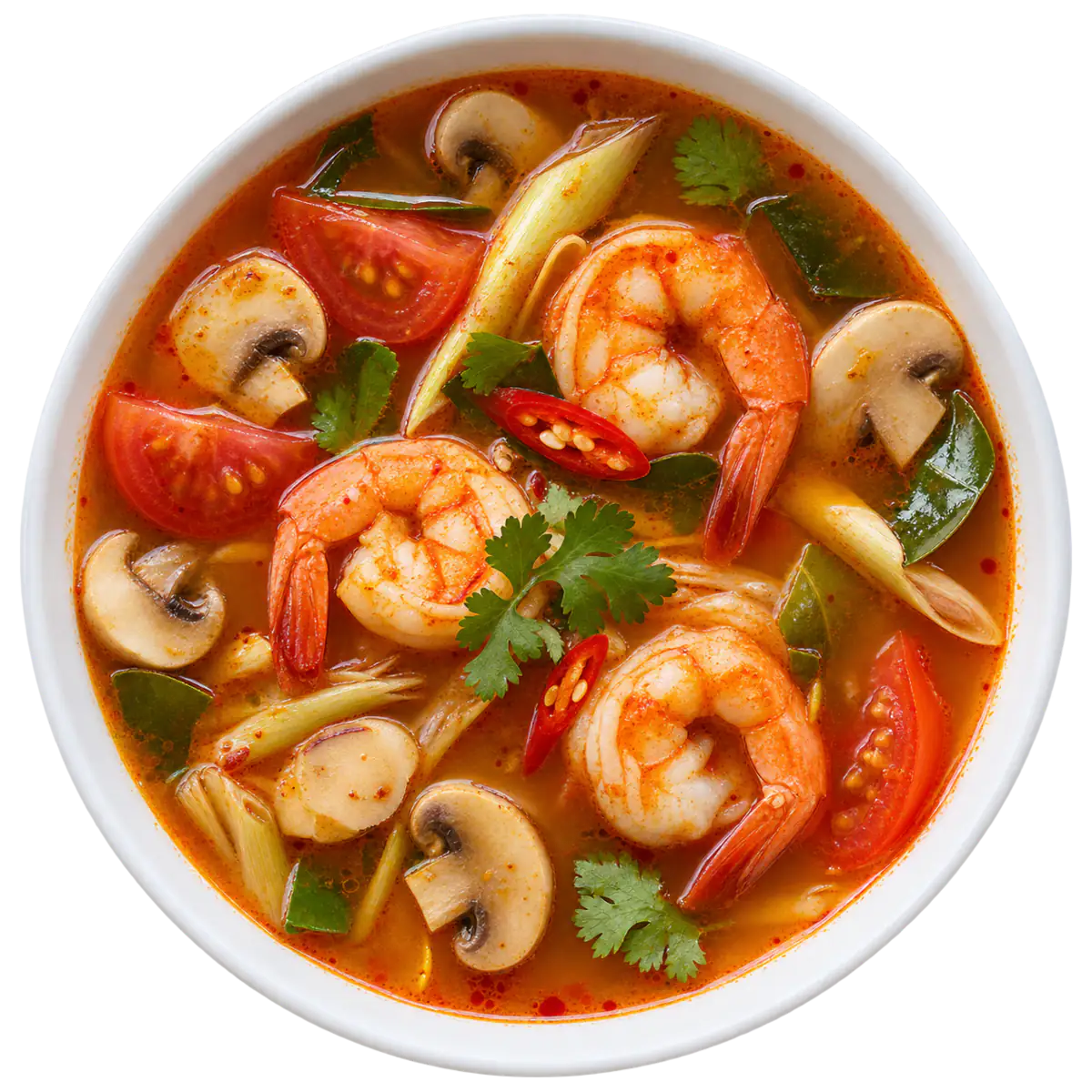
A hot and sour Thai soup built on lemongrass, galangal and makrut lime leaves with bird's eye chilies, fish sauce and lime juice, most famously with prawns (tom yum goong); the clear form is nam sai and the creamy form nam khon.
Origin and history
UNESCO inscribed tom yum kung (kung, prawn) on the Representative List of the Intangible Cultural Heritage of Humanity in 2024, describing prawns boiled with herbs and tracing the dish to Buddhist riverside communities of the Central Plains of Thailand. The Thailand Foundation says the earliest recorded references to similar soups come from the reign of King Rama V (1868 to 1910), in texts such as Tam Ra Patanukrom (1898) and Mae Krua Hua Bpak (1908), whose early versions differed slightly from today's prawn soup.
Make it at home
- Makes
- 4 servings
- Total time
- 40 min
- Hands-on
- 25 min
Ingredients
- 500 g1.1 lb large prawns, whole, heads and shells on (goong)
- 1.2 L5 cups water, or light chicken stock
- 3 stalks lemongrass, trimmed, bruised and cut in 5 cm (2 inch) pieces
- 5 cm piece2 inch piece galangal (kha), cut in thin slices, not peeled
- 6 makrut lime leaves (bai makrut), torn
- 3 cloves garlic, smashed
- 5 to 6 bird's eye chilies (phrik kee nu), lightly crushed; fewer for a milder soup
- 200 g7 oz straw or oyster mushrooms, halved or torn
- 2 small tomatoes, in wedges
- 1 small white onion, in wedges
- 4 tbsp fish sauce, to taste
- 1 tsp sugar, optional
- 4 to 5 tbsp fresh lime juice, to taste, added off the heat
- coriander leaves, to finish
Method
-
1. Peel the prawns, leaving the tails on, and devein them. Keep the heads and shells.
-
2. Bring the water to a boil, add the heads and shells and simmer for 5 to 7 minutes. Strain the stock back into the pot and discard the shells.
-
3. Add the lemongrass, galangal, lime leaves, garlic and chilies. Simmer for about 10 minutes, until the broth smells strongly of the aromatics.
-
4. Add the mushrooms, tomatoes and onion and simmer for 3 to 4 minutes, until the mushrooms soften.
-
5. Add the prawns and cook for 2 to 3 minutes, until pink, curled and firm. Skim off any foam.
-
6. Stir in the fish sauce and the sugar, if using. Take the pot off the heat.
-
7. Stir in the lime juice and the coriander. Taste: the soup should be sour, hot and salty in balance, so adjust with more fish sauce or lime. Serve at once with steamed jasmine rice.
Notes
- This is the everyday tom yum goong: a clear, sharp broth with no milk and no chili paste. The page has two variants. Nam sai (clear) is the plain form with the prawn shells fried first for a deeper stock. Nam khon (creamy) adds nam prik pao (roasted chili paste) and evaporated or coconut milk. Thai Foundation describes nam sai as the original form and nam khon as a modern adaptation.
- Lemongrass, galangal and lime leaves flavour the broth but are not eaten; leave them in the bowl or strain them.
- Goong (prawn) is the most famous version, but the same broth is made with chicken (gai), fish (pla) or mixed seafood (talay). Tom kha is a separate soup, built on coconut milk and galangal.
- Ginger is a poor substitute for galangal: the flavour turns sharper and less piney. Lemon zest can stand in for makrut lime leaves, less well.
- Add the lime juice off the heat; boiling it dulls the flavour.
- Make-ahead: the strained, aromatic broth keeps two days; add prawns and lime juice just before serving.
Adapted from UNESCO Intangible Cultural Heritage, Tom yum kung, Thailand Foundation, Tom yum kung, Eating Thai Food, Tom yum soup, and Cooking with Nart, Tom yum goong.
Variants
-
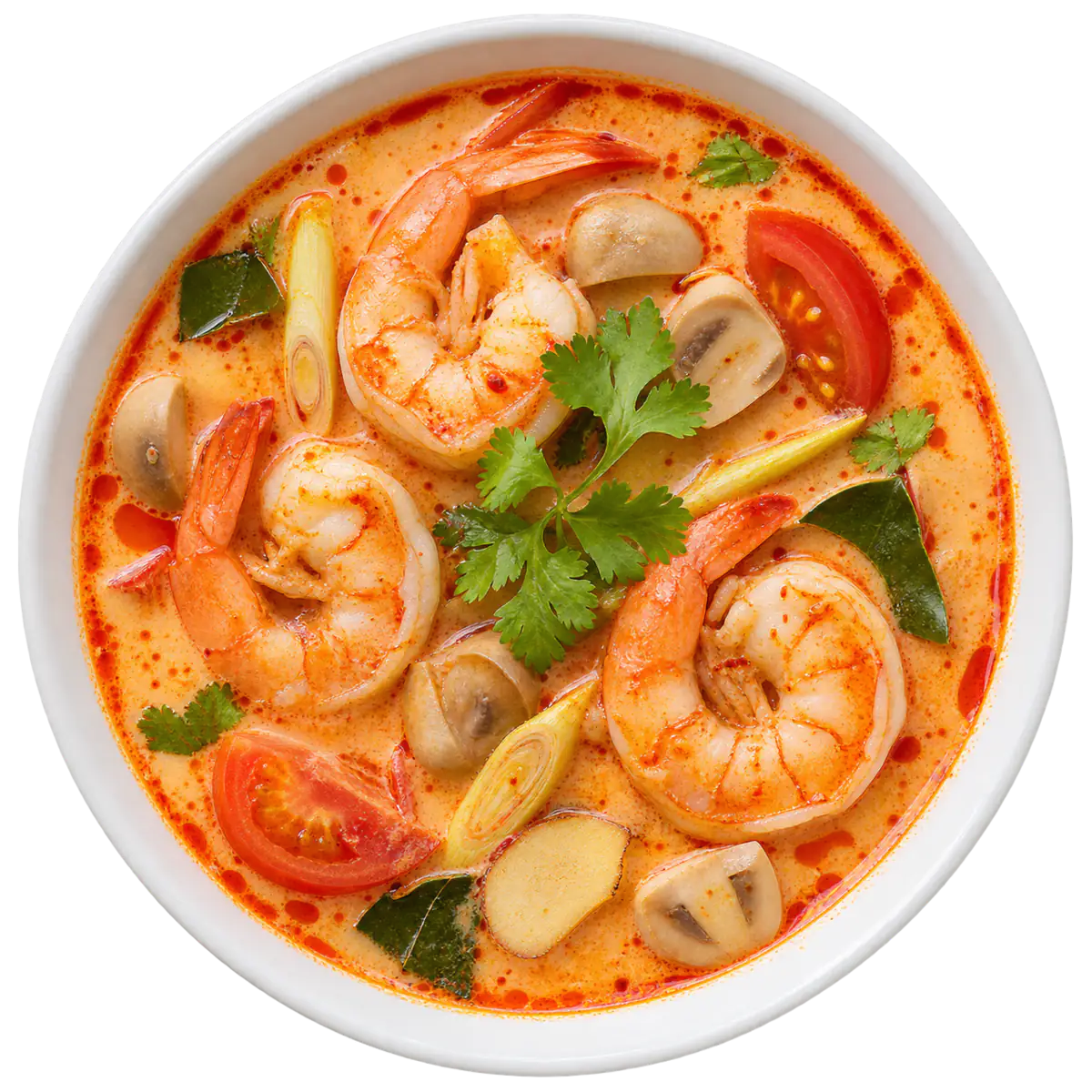 Tom yum nam khon
Thai creamy tom yum
Central Thailand
Tom yum with a creamy broth: the usual lemongrass, galangal and makrut lime base enriched with roasted chili paste (nam prik pao) and evaporated milk, which makes it milder, smoother and slightly sweeter than the clear form.
-
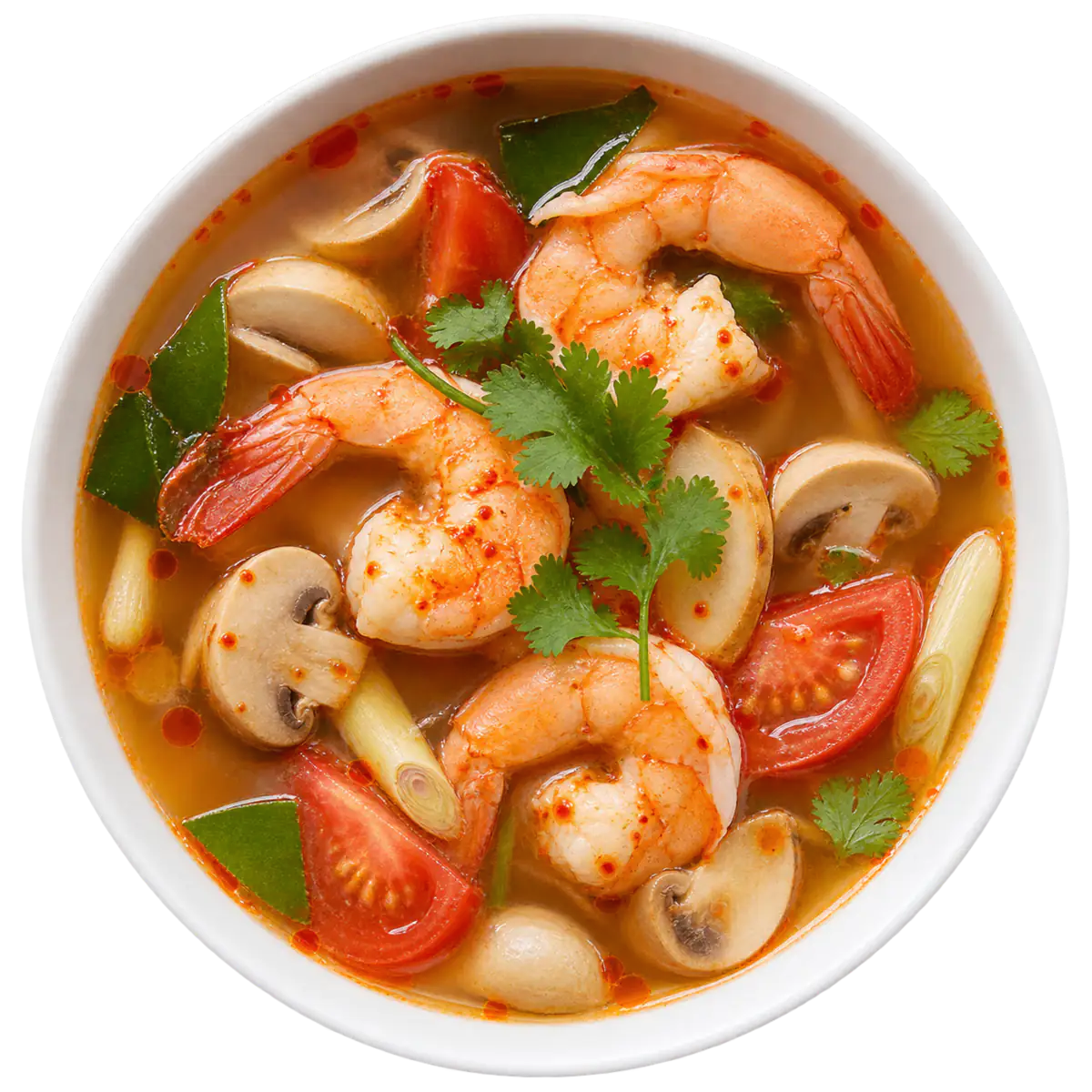 Tom yum nam sai
Thai clear tom yum
Central Thailand
Tom yum in its clear form: a light, intense hot and sour broth of lemongrass, galangal, makrut lime leaves, chilies, fish sauce and lime, with prawns, mushrooms and tomato, and no milk.
At the festivals
No festival we list has printed it on a menu yet.