
🇺🇿 Uzbekistan, 🇰🇿 Kazakhstan, 🇰🇬 Kyrgyzstan, 🇹🇯 Tajikistan, and 🇨🇳 China · Central Asia; Uyghur and Dungan (Hui) communities of Xinjiang and Central Asia
LagmanCentral Asian noodle soup
Hand-pulled wheat noodles in a hot lamb or beef broth with peppers, radish, tomato, onion and garlic, eaten from a deep bowl; a dish of Chinese-Muslim origin carried across Central Asia by Uyghur and Dungan cooks.
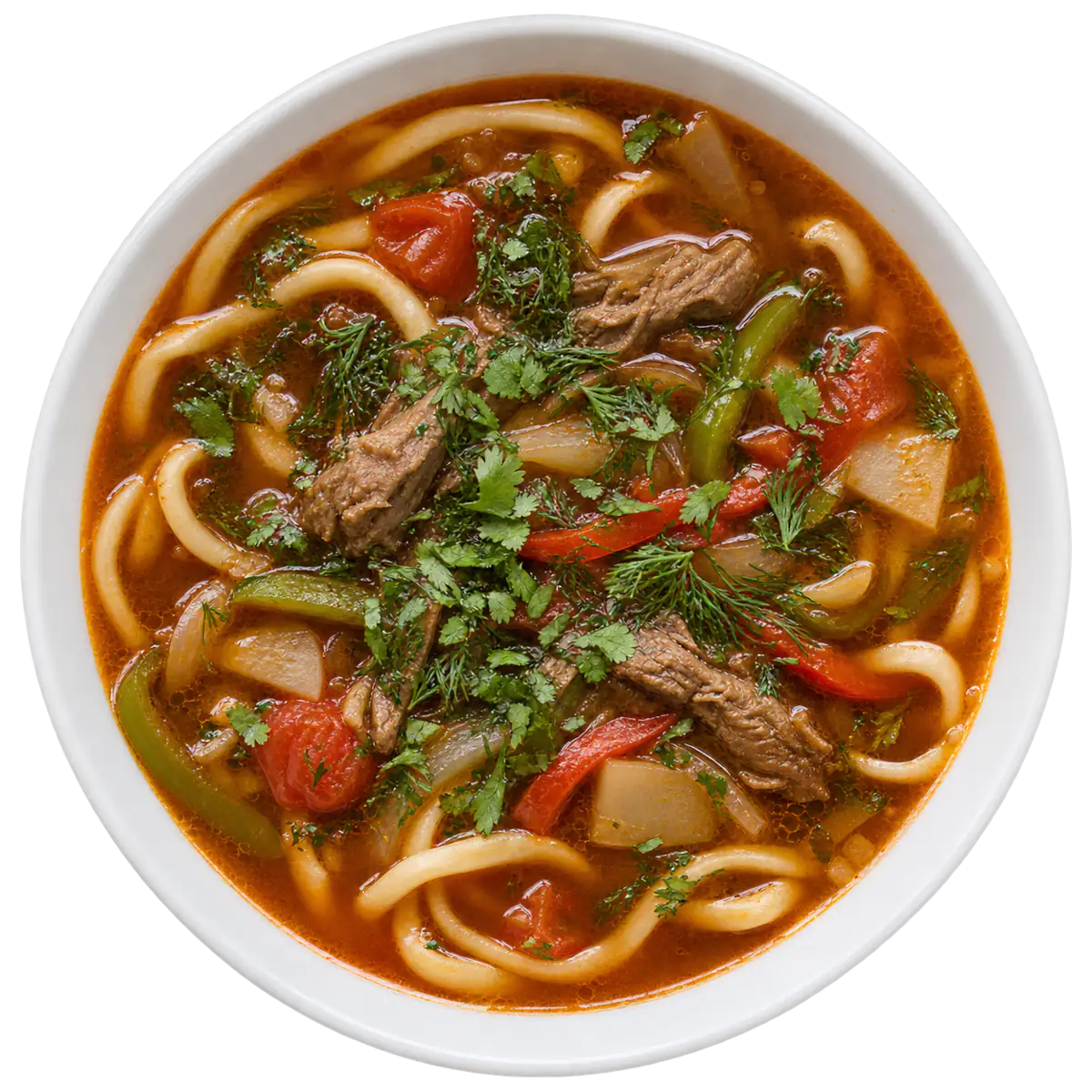
Origin and history
Lagman is thought to have first appeared in what is now China and to have reached Central Asia through the Uyghur and Dungan (Hui) peoples; its name may come from a Dungan word for stretched dough, and the dish is related to Chinese lamian. It is now a signature dish of Uzbekistan and is also eaten in Kyrgyzstan, Kazakhstan and Tajikistan, where it appears as a thick first course or a noodle soup.
Make it at home
- Makes
- 6 servings
- Total time
- 3 h
- Hands-on
- 1 h 15 min
Ingredients
- 500 g3 3/4 cups bread or all-purpose flour, for the noodles
- 1 egg, for the noodles
- 150 ml2/3 cup lukewarm water, with 1 tsp salt dissolved in it
- 4 tbsp vegetable oil, for greasing the dough and noodles
- 600 g1.3 lb lamb or beef, boneless, in 2 cm (3/4 in) cubes, plus a few bones if you have them
- 4 tbsp vegetable or sunflower oil, for the sauce
- 2 large onions, sliced in half-rings
- 1 small green or black radish, peeled, cut in strips
- 2 sweet bell peppers, seeded, cut in strips
- 3 ripe tomatoes, chopped, or 2 tbsp tomato paste
- 8 cloves garlic, minced
- 1 tsp ground paprika
- 1 tsp ground coriander
- 1 litre4 cups hot water or meat broth
- 1 bunch dill, cilantro or green onion, chopped, to serve
- salt and black pepper, to taste
Method
-
1. Make the dough: stir the egg and the salted water into the flour and knead for 10 minutes until firm and smooth. Cover and rest for 2 hours.
-
2. Roll the dough into a sausage, cut it into pieces the size of a walnut, roll each into a short rope, coat them well with oil and leave them covered for 15 minutes.
-
3. Heat 4 tablespoons of oil in a heavy pot over high heat. Brown the meat in batches for about 7 minutes per batch.
-
4. Add the onion and cook for 5 minutes, then the radish for 5 minutes more.
-
5. Add the tomatoes (or paste), garlic, paprika and coriander and fry for 3 minutes, stirring.
-
6. Pour in the hot water or broth, add salt and pepper, cover and simmer over low heat for 1 hour, until the meat is tender.
-
7. Add the pepper strips and cook for 15 minutes more. The sauce should be thick but still brothy; add a little hot water if it is too thick.
-
8. While the sauce finishes, pull the noodles: take a rope of dough, stretch it between your hands, fold it in half and stretch again, repeating until it is about 3 mm (1/8 in) thick, and let it fall on the work surface now and then to lengthen it.
-
9. Boil the noodles in plenty of salted water for 3 to 4 minutes until tender. Drain, rinse in cold water and toss with a little oil so they do not stick.
-
10. Put the noodles in deep bowls, ladle the sauce and broth over them and scatter with herbs.
Notes
- The page covers the brothy (soup) form of lagman. The noodle dough is a firm one that is oiled so it stretches without tearing; if you cannot pull noodles, regular spaghetti is the usual stand-in, with a different texture.
- Forms vary: in Uzbekistan lagman is often noodles under a thick tomato-based sauce, in Kyrgyzstan it is usually a soup, in Kazakhstan a simple hearty soup, and in Tajikistan it often includes green beans, kidney beans, chickpeas and radish. Related Uzbek forms include the thick boiled-noodle kesma, the Uyghur chuzma, the green dill-dough shivit oshi of Khiva, and kovurma, in which noodles and sauce are fried together; kovurma is a plated noodle dish and is not covered here.
- Radish, cabbage, potatoes, peppers and tomatoes all appear in the sauce depending on the version; adding more liquid makes it a soup, less makes it a stew. Some recipes add celery, beans or star anise.
Adapted from Folkways, Lagman: Central Asian noodles in broth, Uzbekistan Tourism, Uzbek lagman, and Russian-language classic lagman recipe (Vikna).
At the festivals
No festival we list has printed it on a menu yet.