🇯🇵 Japan · Chinese-influenced, early 20th century

RamenJapanese noodle soup

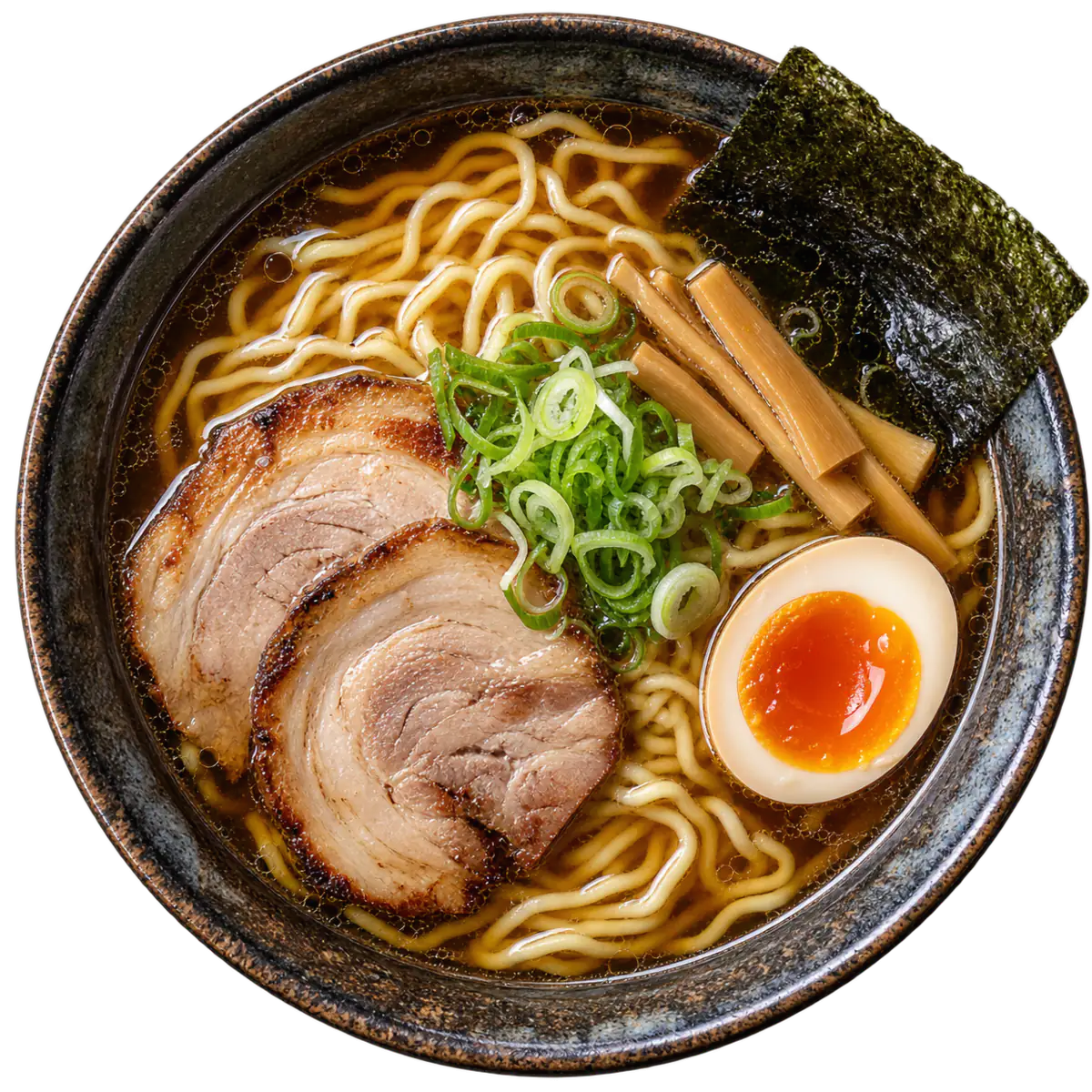
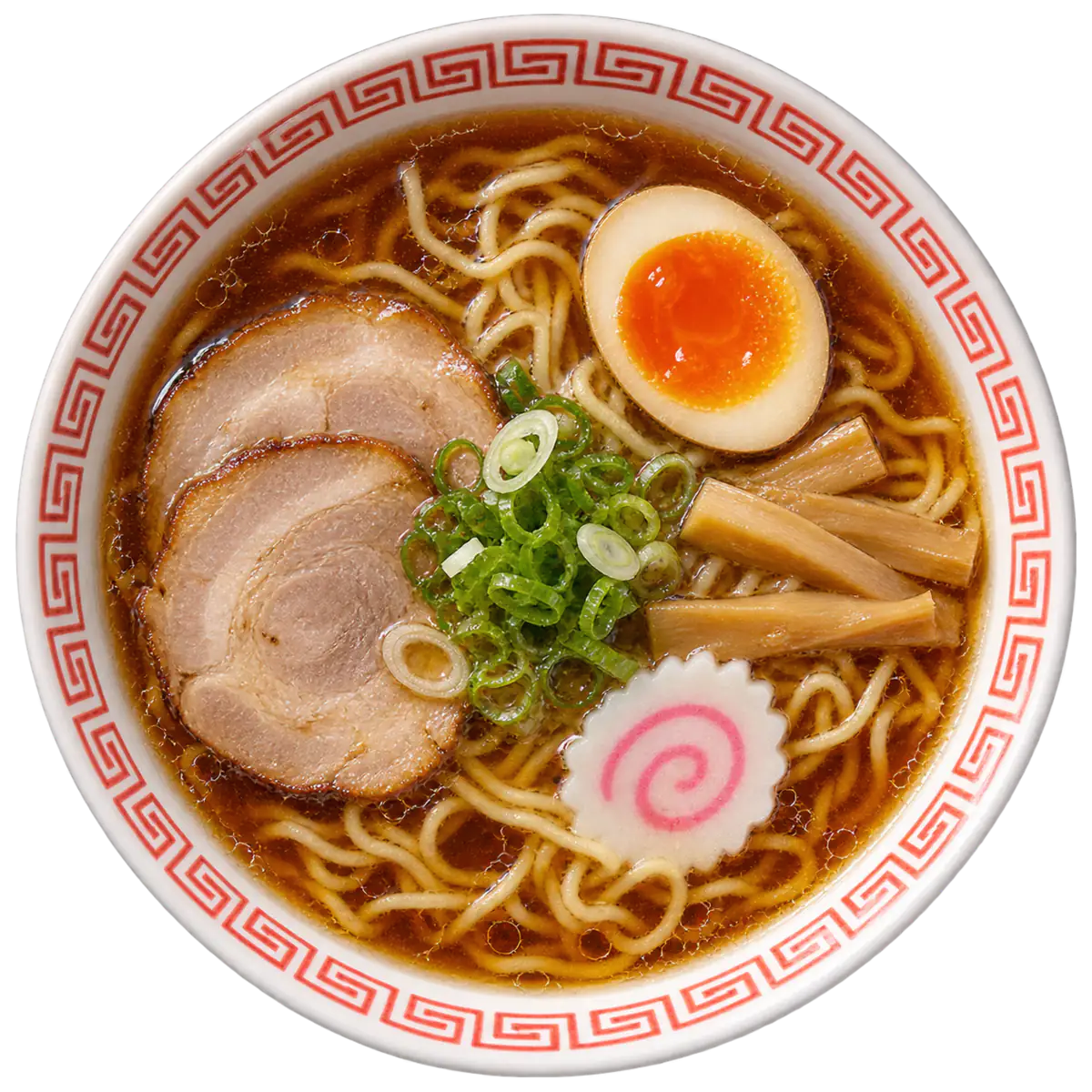
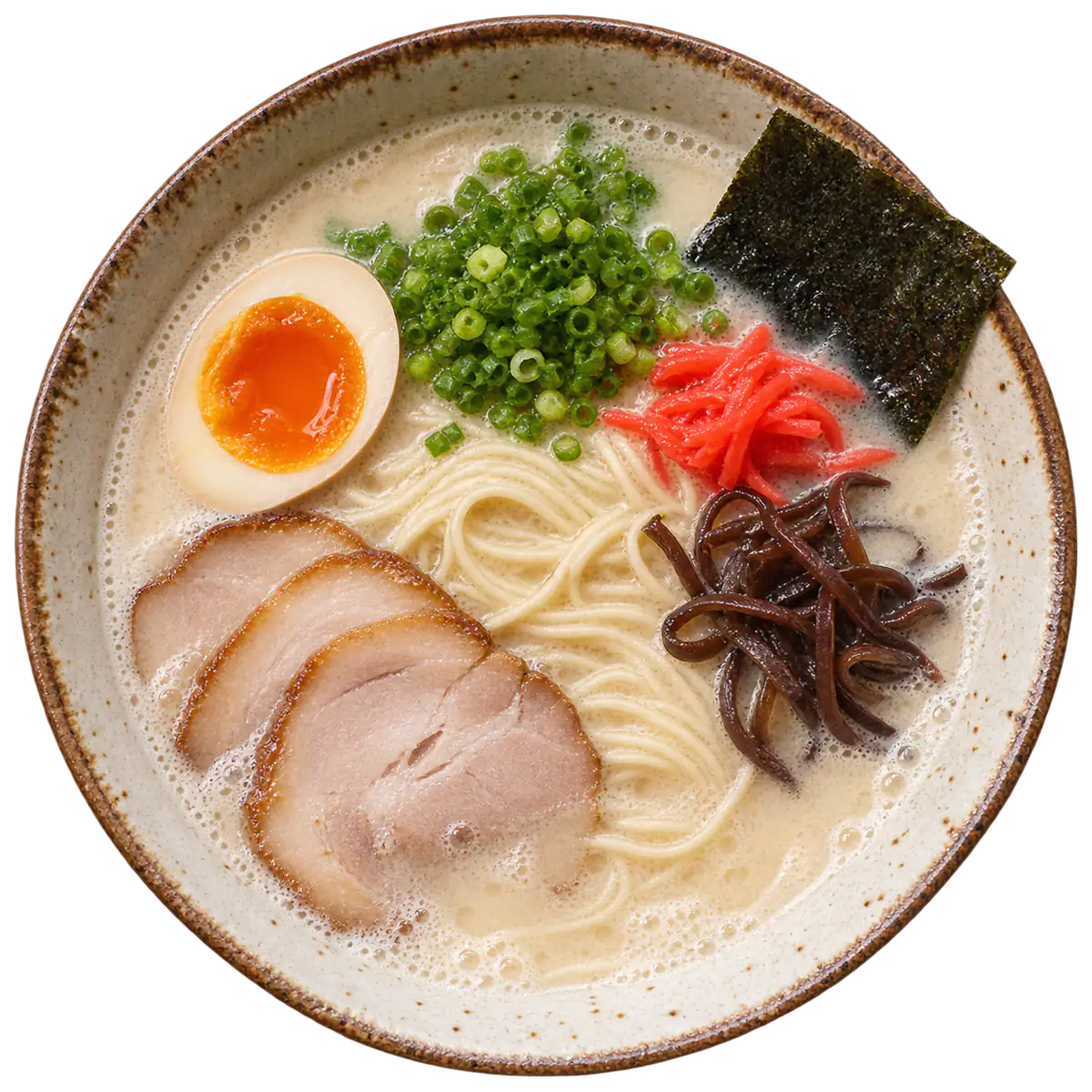
Japanese noodle soup of alkaline wheat noodles (kansui) in a meat- or fish-based broth seasoned with a tare (salt, soy sauce or miso) and topped with items such as chashu, egg, bamboo shoots and scallion.

Ramen (Japanese noodle soup)

Origin and history

Chinese-style noodles in broth reached Japan through its treaty ports in the Meiji era; a Hakodate restaurant advertised 'Nankin soba' in 1884. The first boom began in 1910, when Ozaki Kan'ichi opened Rairaiken in Asakusa, Tokyo, with Chinese cooks from Yokohama, selling cheap soy-seasoned shina soba. After 1945 street stalls carried it across Japan, regional styles followed (Kurume's cloudy pork broth in 1947, Sapporo miso in 1954), and the word ramen became universal after instant ramen launched in 1958.

Make it at home

Makes
4 servings
Total time
6 h
Hands-on
1 h 15 min

Ingredients

Units
  • 1 kg2.2 lb chicken carcasses, backs or wings (tori-gara), rinsed of blood
  • 1 kg2.2 lb pork bones (neck or leg), cracked by the butcher
  • 4 l4.2 qt cold water, plus more to top up
  • 1 onion, halved, skin on
  • 30 g1 oz fresh ginger, sliced, skin on
  • 4 garlic cloves, crushed
  • 2 naga negi (Japanese long onion) or 4 thick scallions, green tops for the stock, white parts kept for garnish
  • 20 g0.7 oz niboshi (dried sardines or anchovies), heads and dark innards pulled off
  • 10 ga 4 in square kombu (dried kelp)
  • 600 g1.3 lb boneless pork shoulder or belly, in one piece, rolled and tied with string, for chashu
  • 180 ml3/4 cup koikuchi (regular Japanese) soy sauce, for the chashu braise and tare
  • 60 ml1/4 cup mirin
  • 60 ml1/4 cup sake
  • 1 tbsp sugar
  • 4 portions (about 520 g)4 portions (about 18 oz) fresh ramen noodles (chūka-men, made with kansui), medium-thin and wavy
  • 80 gabout 1/2 cup menma (seasoned bamboo shoots)
  • 1 sheet nori, cut in quarters
  • 8 slices naruto (fish cake), optional
  • 2 soft-boiled eggs, marinated if you like (ajitama), optional, halved

Method

  1. 1. Put the chicken and pork bones in a large pot, cover with cold water, bring to a boil and boil 5 minutes; drain and rinse the bones and the pot so the grey scum is gone.

  2. 2. Return the bones to the clean pot with the 4 litres (4.2 qt) of cold water and bring slowly to a simmer, skimming off the foam as it rises.

  3. 3. Add the onion, ginger, garlic and negi tops, then keep the stock at a bare simmer, about 90–95 °C (195–205 °F), uncovered, for 4 hours; it must never roll, or it turns cloudy. Top up with hot water if the bones show.

  4. 4. Meanwhile brown the tied pork lightly on all sides in a heavy pot, then add the soy sauce, mirin, sake, sugar and 250 ml (1 cup) of water from the stock pot.

  5. 5. Cover the pork with a drop lid or a disc of baking paper and braise on low heat for about 2 hours, turning it every 30 minutes, until a skewer slides in with no resistance.

  6. 6. Lift the pork out, let it cool, then chill it until firm so it slices thinly. Strain the braising liquid and keep it: this is the shoyu tare.

  7. 7. In the last 45 minutes of the stock, add the niboshi and kombu; take the kombu out after 15 minutes, before the stock boils around it.

  8. 8. Strain the stock through a fine sieve lined with cloth. You should have about 2 litres (8 cups) of clear, pale-gold broth; keep it hot.

  9. 9. Cut the white parts of the negi into fine rings, slice the chilled chashu thinly and warm the menma.

  10. 10. Bring a large pot of unsalted water to a rolling boil and warm the bowls with some of it.

  11. 11. Put 2 to 3 tablespoons of tare in each empty bowl and pour in about 400 ml (1 2/3 cups) of very hot broth; taste one bowl and adjust the tare.

  12. 12. Shake the noodles loose and boil them for the time on the packet, usually 1 to 2 minutes, until just firm.

  13. 13. Drain the noodles hard in a sieve, slide them into the soup and lift them with chopsticks so they lie straight and coated.

  14. 14. Lay chashu slices, menma, negi, nori and, if using, naruto and half an egg on top, and serve at once.

Notes

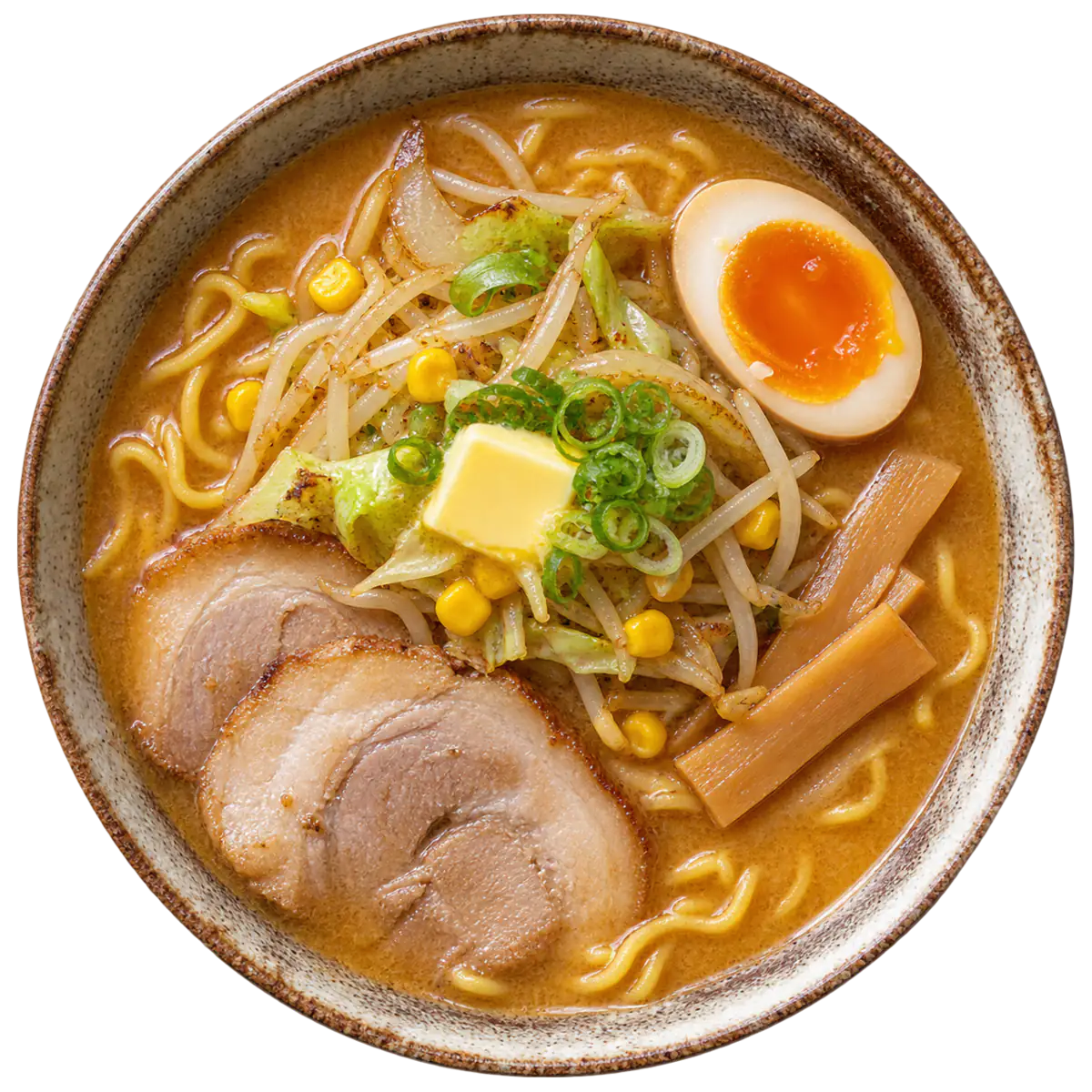
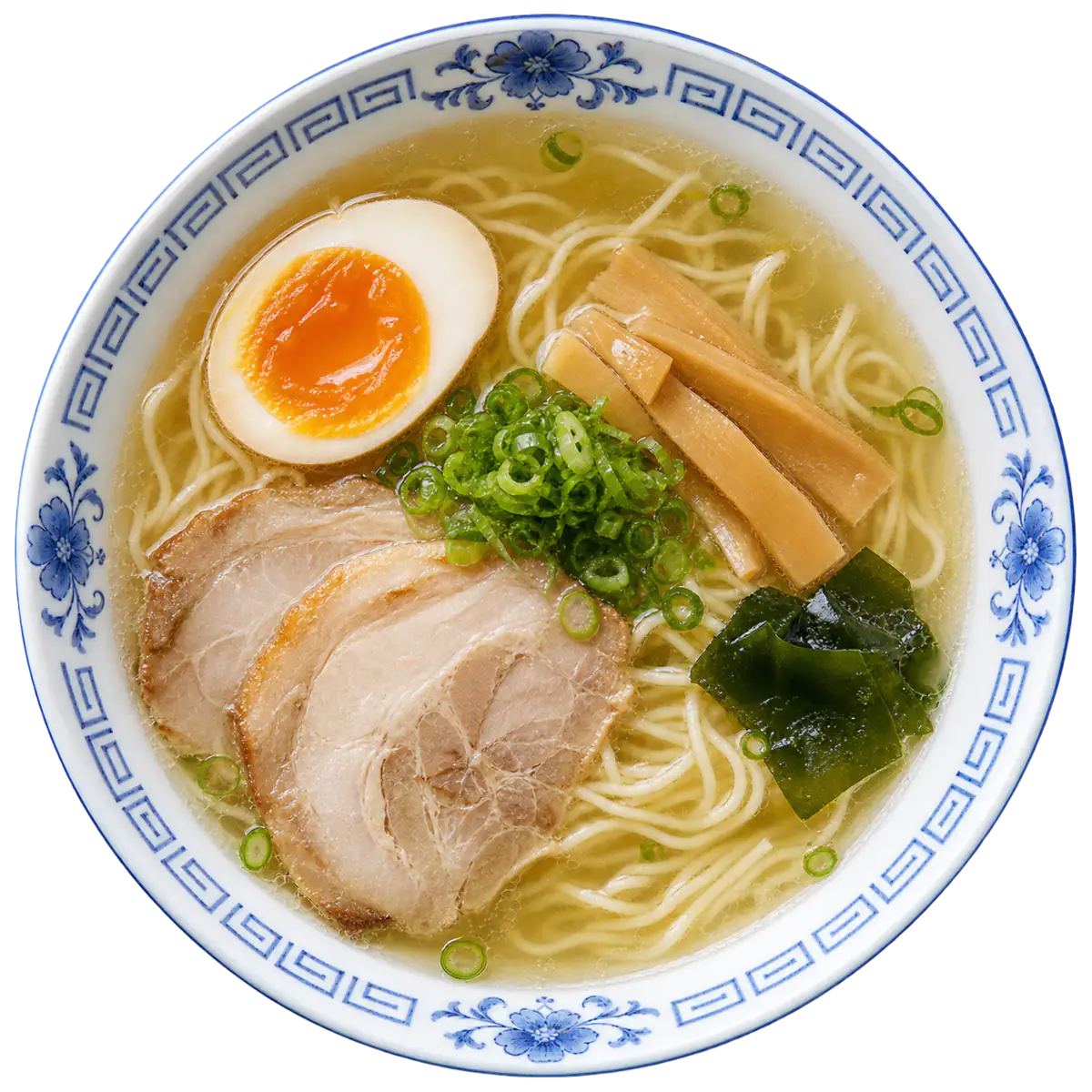
  • Ramen is built from four parts made separately: broth, tare (the concentrated seasoning that goes in the bowl first), noodles and toppings. This is the old Tokyo-style chūka soba, a clear chicken-and-pork broth seasoned with soy; changing the tare or the broth gives the four classic variants on this site: shoyu (soy), shio (salt), miso and tonkotsu (milky pork-bone broth).
  • Regional styles are many: Sapporo is known for miso, Hakodate for shio, Asahikawa and Tokyo for shoyu, and Fukuoka's Hakata and Kurume for tonkotsu.
  • The noodles must be ramen noodles: wheat noodles made with kansui (alkaline mineral water), which gives them their yellow colour and springy bite. Pasta or udon will not behave the same.
  • Make ahead: broth, tare and chashu keep 3 days in the fridge and a month in the freezer. Cook the noodles only at the moment of serving and drain them well so they do not water down the soup.
  • At the table, ground white pepper is the classic condiment for this style.

Adapted from Shin-Yokohama Raumen Museum, history of ramen in Japan, Just One Cookbook (Namiko Hirasawa Chen), Shoyu Ramen from Bizentei, Tokyo, and Ministry of Agriculture, Forestry and Fisheries of Japan, aff magazine ramen features.

Variants

At the festivals

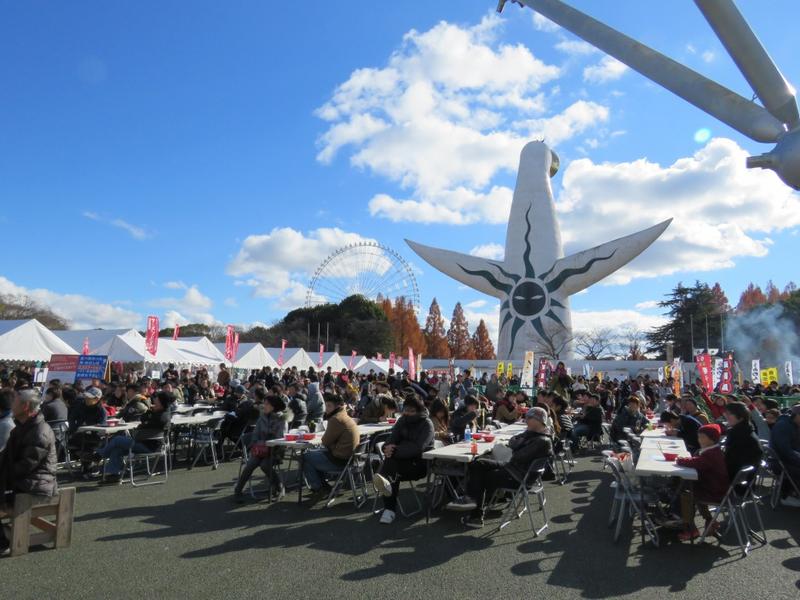
Served at 12 festivals in Japan, United States, Czechia, and Canada.

Coming up

Earlier editions

Show all 25
How to read festival information

We work to keep festival information right, but festivals are run by others and details change. Here is how to read what you see on SoupFestivals.

Confirmed or expected

A confirmed date was announced for that edition. An expected date, such as "usually held around mid-October", is an estimate based on past editions, not an announcement.

Places can be approximate

We show a map pin and directions only when the venue's location is verified. If it is still unconfirmed, we keep the known venue name and town without a pin.

Check before you travel

Dates, prices, menus and venues can change, and festivals can be cancelled. Always confirm with the organizer before you go. If their information differs from ours, theirs is the one to follow.

Help us keep it right

If something looks wrong, tell us and we will look at it. Organizers can claim their festival page to send us updates.

Spotted something wrong? Tell us and we will look at it. You can also message us on Instagram, @soupfestivals