
🇵🇭 Philippines · Lipa, Batangas
LomiBatangas thick noodle soup
A Batangas noodle soup of thick fresh egg noodles (soaked in lye water) in a starch-thickened pork broth with pork slices, liver, meatballs and kikiam (and no vegetables in the Lipa original), served in a bowl at lomi houses.
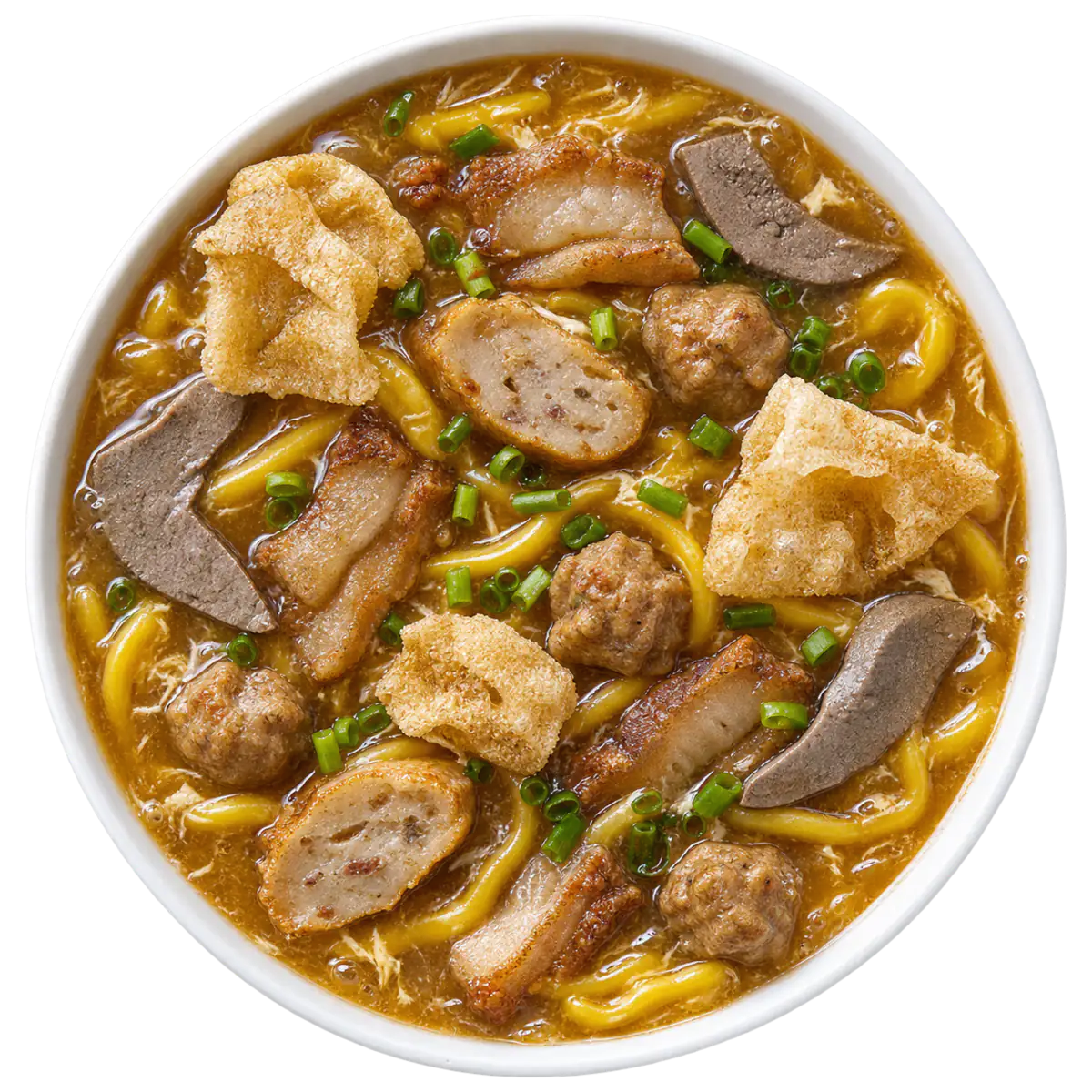
Origin and history
Lomi is traced to Lipa in Batangas, where To Kim Eng, an immigrant from southern China, is credited with creating it. According to the Daily Tribune he first served it to his mahjong friends in 1968 and then at the panciteria he ran with his wife (Lipa Panciteria, opened that year). It spread to other Batangas towns and to Metro Manila. The original came with homemade noodles, meatballs, pork slices, liver and kikiam, and no vegetables.
Make it at home
- Makes
- 4 servings
- Total time
- 1 h 45 min
- Hands-on
- 45 min
Ingredients
- 1 kg2.2 lb pork bones, for the stock; or use 2 L water with a pork bouillon cube
- 2 liters2 quarts water, for the stock
- 150 g5 oz pork belly, cut in thin strips
- 100 g3 1/2 oz pork liver, thinly sliced
- 100 g3 1/2 oz kikiam (quekiam), fried and sliced
- 150 g5 oz ground pork, for meatballs, mixed with 1/2 small minced onion, 1 clove minced garlic, 1 egg, 2 tbsp flour, salt and pepper
- 5 cloves garlic, minced
- 1 onion, chopped
- 2 tbsp cooking oil
- 1 1/2 tbsp fish sauce (patis)
- 1 tbsp soy sauce
- 1/2 tsp ground black pepper
- 500 g1.1 lb fresh thick egg noodles (lomi or miki noodles), the lye-water kind
- 3 tbsp cassava flour (or cornstarch), mixed with 3 tbsp cold water
- 1 egg, beaten
- crushed chicharon, sliced spring onion and a dip of soy sauce, calamansi and chopped chilies, to serve
Method
-
1. Cover the pork bones with water, bring to a boil and skim off the scum. Simmer gently for at least 1 hour, to make about 8 cups (2 liters) of stock. Strain.
-
2. Mix the meatball ingredients, shape small balls and fry them until lightly browned. Fry the kikiam until golden and slice it.
-
3. Brown the pork belly in a hot wok until crisp at the edges. Lift it out, then sear the liver for about 1 minute, just until browned, and set aside.
-
4. In a large pot, sauté the garlic and onion in the oil until the onion is soft. Add the stock, the fish sauce, the soy sauce and the pepper and bring to a boil.
-
5. Add the noodles and cook for about 6 minutes, until they are tender but still chewy.
-
6. Stir the cassava flour and water together and pour it in slowly, stirring, until the soup turns glossy and slightly viscous (a minute or two on low heat).
-
7. Pour in the beaten egg in a thin stream while stirring, then switch off the heat.
-
8. Ladle into bowls and top with pork, liver, kikiam, meatballs, chicharon and spring onion. Serve with the soy-calamansi-chili dip.
Notes
- Lomi is thick and almost stew-like. The thick egg noodles soaked in lye water give the chew, and the starch gives the body; cassava starch is used in some recipes and cornstarch in others, in the same amount.
- Batangas lomi is set apart from other Filipino lomi by having few or no vegetables; the Lipa original has none. Toppings added in newer versions include chicharon, chorizo, ham, fish balls, squid balls, hard-boiled eggs and even fried chicken or pork.
- Fresh lomi noodles are sold in Filipino grocers; miki noodles (used in some recipes) or thick fresh egg noodles are the nearest alternatives.
- Season it at the table: soy sauce, fish sauce, calamansi, crushed chilies or chopped red onion.
- Make ahead: the toppings and stock can be made a day ahead, but add the noodles and starch just before serving, since the soup thickens and the noodles keep absorbing.
Adapted from Panlasang Pinoy Meat Recipes, Lomi Batangas and Yummy Kitchen, Lomi Batangas.
At the festivals
No festival we list has printed it on a menu yet.