
🇨🇳 China · Shanghai
Luosong tangShanghai borscht
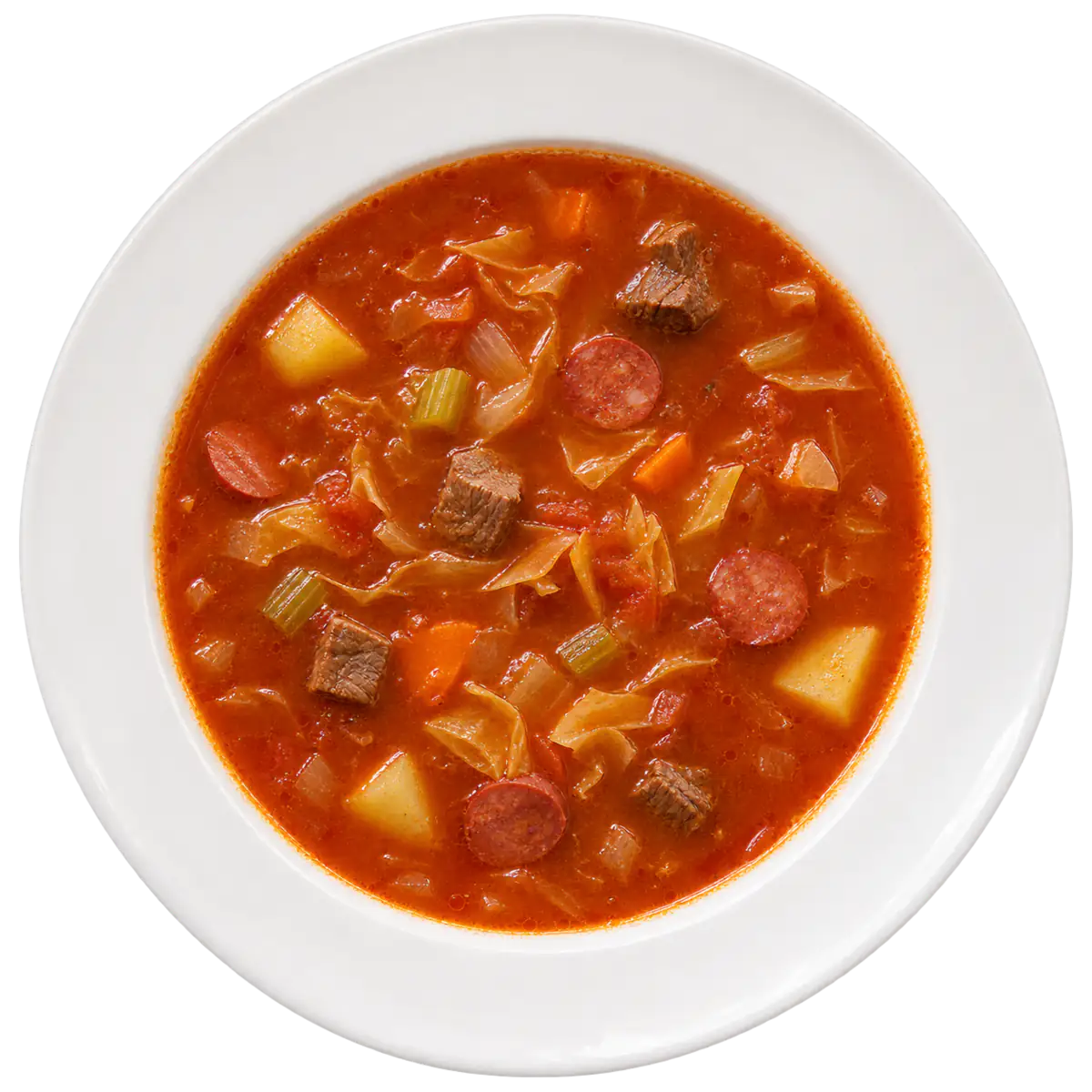
A sweet-and-sour Shanghai soup of cabbage, onion, potato and tomato paste in a beef or meat stock, often with sliced red sausage and thickened with browned flour, served with bread and butter.
Origin and history
Luosong tang is Shanghai's version of borscht. After the 1917 revolution, White Russian refugees (called luosong people in Shanghai) opened more than forty Russian-style restaurants around Avenue Joffre, today's Huaihai Road. The Paper says Shandong cooks who had learned Russian cooking in Vladivostok, Khabarovsk and Harbin brought it to Shanghai and replaced beetroot, which does not grow well in Jiangnan, with tomato sauce. It later became popular as part of an affordable one-dish-one-soup set.
Make it at home
- Makes
- 4 servings
- Total time
- 3 h
- Hands-on
- 40 min
Ingredients
- 250 g9 oz beef brisket or stewing beef, rinsed, cut in small cubes
- 1 L4 cups water, for simmering the beef (the source gives no amount; it reduces over 2 hours)
- 1 splash Shaoxing cooking wine, a few drops
- 1/2 head (about 300 g)1/2 head (10 oz) cabbage, sliced
- 1 large potato, peeled, diced
- 1 carrot, peeled, diced
- 1 onion, sliced
- 2 ripe tomatoes, peeled and diced
- 2 celery stalks, cut small
- 1 (about 100 g)1 (3 1/2 oz) Harbin-style red sausage (hong chang), sliced; a smoked pork sausage if unavailable
- 3 to 4 tbsp tomato paste, to taste (the source says only "to taste"); plus a little ketchup if you like it sweeter
- 1 tbsp butter, oil can replace it
- 50 g6 tbsp plain flour, for the browned-flour thickening
- 1 tsp ground pepper
- salt and a pinch of sugar, to taste
Method
-
1. Put the beef into a pot with the water, bring to a boil on high heat and skim the foam. Add a few drops of wine and simmer on low heat for about 2 hours, until the beef is very tender. Add a little salt near the end.
-
2. Cut the potato, carrot, onion, tomatoes, celery and sausage to about the same small size, and slice the cabbage.
-
3. Melt the butter in a separate pan. Fry the potato and sausage until fragrant, then add the other vegetables and the tomato paste. Season lightly with salt and stir well, cooking the paste in the fat until it loses its raw sourness.
-
4. Tip the hot vegetables into the beef pot and simmer on low heat.
-
5. Dry-fry the flour in a clean pan on low heat, stirring constantly, until it turns lightly yellow. Stir it into the hot soup, adding more if you want it thicker.
-
6. Simmer until the vegetables are soft and the soup is thick and red. Just before serving, add salt, a pinch of sugar and the pepper, and adjust until it is pleasantly sweet-and-sour. Serve with bread and butter.
Notes
- The Shanghai soup differs from borscht by having no beetroot (it does not grow well in the Jiangnan region): tomato paste gives the color and the sour-sweet taste and cabbage supplies the body. Shanghai sources describe beef stock, red sausage and potato as common, and tomato paste fried in oil first to take away the sourness, with sugar added for the sweet-and-sour balance.
- The beef can be cooked the day before; the vegetables go in only for the last stretch so they stay in distinct pieces.
- A modern home cook quoted in a Shanghai feature adds a little spicy Worcestershire-style sauce (la jiang you) to freshen the taste. Ketchup or tomato sauce may replace part of the paste. In the Western method the flour is stirred slowly over low heat until slightly brown; the Chinese method thickens with starch instead.
- In Shanghai's cheap "one dish, one soup" restaurant set, the soup came with bread and butter.
Adapted from Bendibao, Luosong tang recipe (home version with quantities), Cookidoo, Beef Luosong Tang (beef, sausage and tomato proportions), The Paper, feature on Shanghai luosong tang, and The Paper, Shandong cooks and Shanghai's Russian restaurants.
At the festivals
No festival we list has printed it on a menu yet.