
🇬🇷 Greece · Holy Saturday tradition; regional forms in Thessaly, the Peloponnese and Corfu
MagiritsaGreek Easter soup
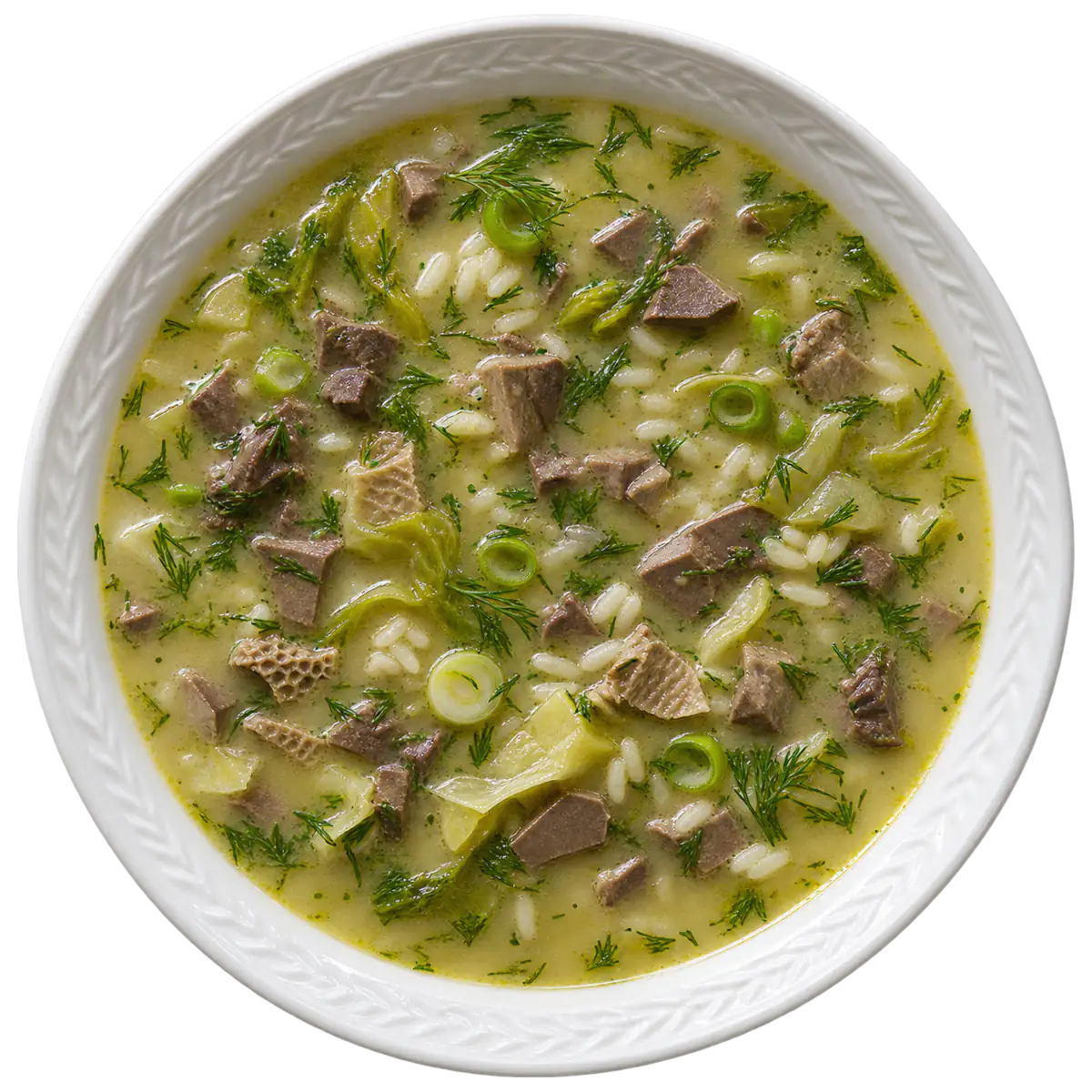
Greek Easter soup of chopped lamb offal (liver, heart, lungs, intestines) with spring onion, lettuce and dill, thickened with an avgolemono finish and eaten after the midnight service on Holy Saturday to break the Lenten fast.
Origin and history
Magiritsa is the soup of Greek Easter, eaten after the midnight Resurrection service on Holy Saturday to break the 40-day Lenten fast. It is made from the offal of the lamb to be roasted on Easter Sunday, with spring onions, lettuce and dill, and finished with avgolemono. Nothing from the animal is wasted.
Make it at home
- Makes
- 8 servings
- Total time
- 2 h
- Hands-on
- 50 min
Ingredients
- 1 kg2.2 lb lamb offal, heart, liver, lungs, kidneys, plus intestines if available; very fresh
- 400 g14 oz lean lamb, optional, from the neck or shoulder, in chunks; for body
- 125 ml1/2 cup Greek extra-virgin olive oil
- 1 large onion, finely chopped
- 2 bunches spring onions, chopped
- 3 heads romaine (cos) lettuce, roughly chopped
- 1/2 cup fresh dill, chopped, plus more to serve
- 100 g1/2 cup short-grain rice, optional
- 2 l2 qt water or lamb stock
- 3 eggs, for the avgolemono
- 80 ml1/3 cup fresh lemon juice, about 2 lemons
- sea salt and ground pepper, to taste
- 1 lemon for rubbing the intestines, with coarse salt
Method
-
1. Wash all the offal in cold water. Turn the intestines inside out, rub them with salt and lemon and rinse thoroughly.
-
2. Boil the offal in plenty of water for 3 to 5 minutes, adding the intestines for the last 5 minutes, then drain and cool.
-
3. Chop the offal and intestines into small pieces and trim excess fat.
-
4. Heat the olive oil in a large pot over medium heat. Cook the onion and spring onions for 5 minutes until translucent, then add the offal (and lamb, if using) and brown for 8 minutes.
-
5. Pour in the hot water or stock (about 2 litres), bring to a boil and simmer for 10 minutes.
-
6. Add the lettuce, pressing it down as it wilts, with half the dill, then cover and simmer for 40 to 50 minutes, until the meat is tender.
-
7. If using rice, stir it in 15 minutes before the end and cook until soft.
-
8. Make the avgolemono: beat the eggs until frothy, then slowly beat in the lemon juice. Beat in 2 ladles of hot broth, a little at a time.
-
9. Take the pot off the heat. Pour in the egg mixture, swirl gently and leave, covered, for 5 minutes.
-
10. Serve warm with the remaining dill and plenty of pepper.
Notes
- Magiritsa is eaten after the midnight service on Holy Saturday, ending the Lenten fast. The offal comes from the lamb that is roasted on Easter Sunday and spoils quickly, and the soup eases the stomach back into eating meat after forty days of abstinence.
- Regional forms: tomato alongside the egg-lemon in parts of the Peloponnese, rice in many homes, a mint-scented and stew-like version in Thessaly, and a stew-like form called tsilikourtha in Corfu. Some make it with only the head or trotters.
- Offal substitutions: if you cannot find lungs and intestines, use heart, liver and kidneys from lamb. A milder 'genteel' version braises a lamb shank, shreds the meat and uses it in place of the offal. Kochilas also makes a stock from the lamb's head to cook the soup in; plain water is used here.
- A modern vegetarian mushroom version with vegetable stock is made for those who do not eat offal.
- Add the avgolemono off the heat and let the soup rest covered. Some cooks beat the whites first, as in the avgolemono page's classic method. Avgolemono chicken soup is the alternative at the Easter table for those who do not like magiritsa.
Adapted from Diane Kochilas, Mageiritsa (Greek Easter soup) and My Greek Dish, Magiritsa (Greek Easter soup).
At the festivals
No festival we list has printed it on a menu yet.