
🇬🇷 Greece · the egg-and-lemon technique is also found in Sephardic cooking
AvgolemonoGreek lemon chicken soup
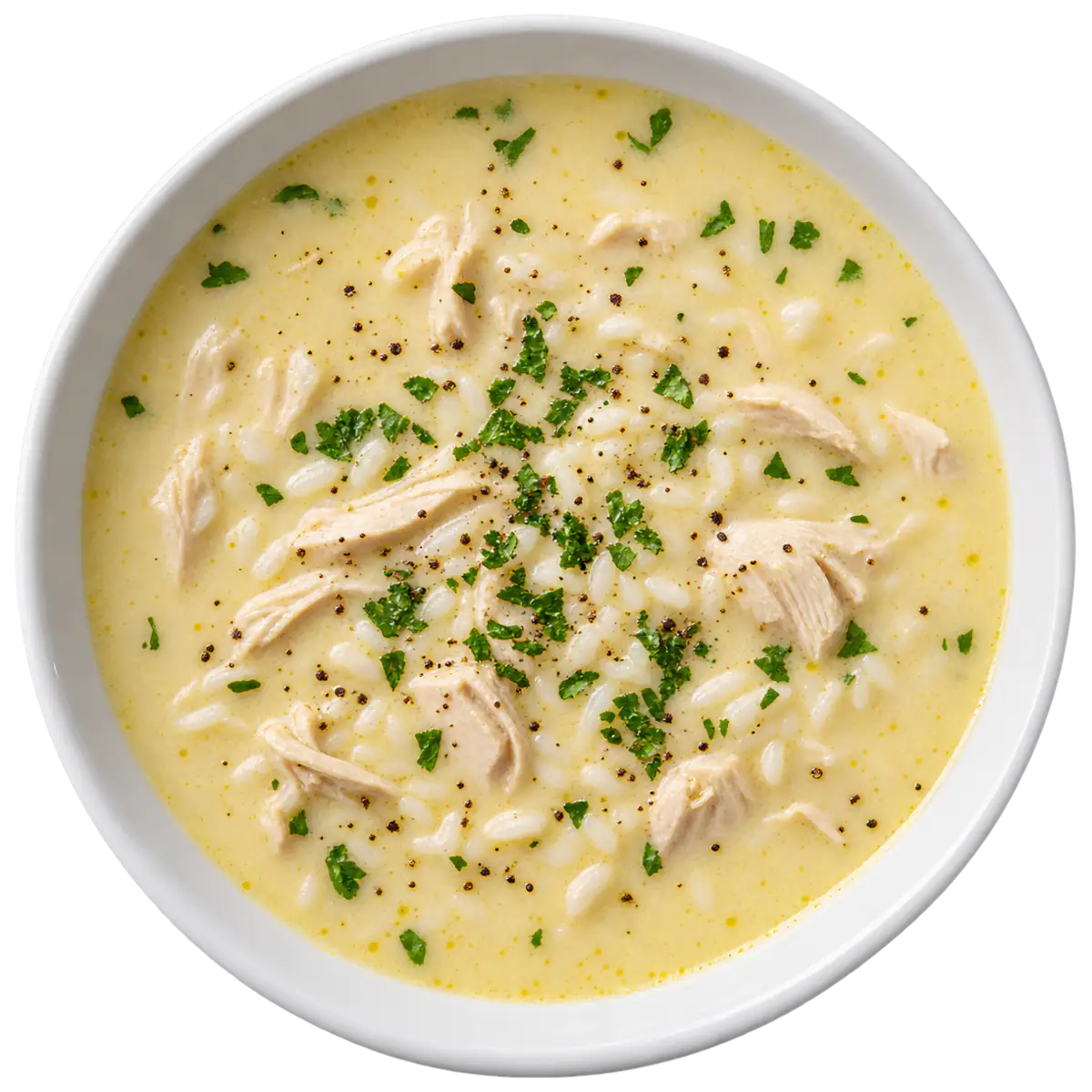
Greek chicken soup of broth with rice or orzo, thickened and soured with a tempered mixture of eggs and lemon juice added off the heat, finished with dill.
Origin and history
Avgolemono soup is a Greek chicken-and-rice (or orzo) soup finished with a sauce of egg and lemon. In Greece the word names a whole family of egg-lemon sauces and soups. Some food writers trace the sauce to the Sephardic agristada, which Jews carried out of Spain after the expulsion and which then took root in Greece. It is served as everyday comfort food and as an Easter soup.
Make it at home
- Makes
- 6 servings
- Total time
- 1 h 30 min
- Hands-on
- 30 min
Ingredients
- 1 (1.5 kg)1 (3 1/3 lb) whole chicken, or 1 kg (2.2 lb) bone-in chicken thighs and drumsticks
- 2.5 l2.5 qt cold water
- 1 onion, peeled, left whole
- 1 carrot, peeled, left whole
- 1 stalk celery, optional
- 150 g3/4 cup short-grain rice or orzo (kritharaki)
- 3 eggs, at room temperature
- 80 ml1/3 cup fresh lemon juice, about 2 lemons, to taste
- 2 tbsp chopped fresh dill, optional
- salt and ground white or black pepper, to taste
Method
-
1. Put the chicken, onion, carrot and celery in a pot with the cold water and a teaspoon of salt, and bring to a boil.
-
2. Skim the foam, lower the heat and simmer, partly covered, for 45 to 60 minutes, until the chicken is tender.
-
3. Lift out the chicken and vegetables. Strain the broth and return about 2 litres (8 cups) to the pot; skim off a little of the fat if it is very oily.
-
4. Bring the broth to a boil, add the rice or orzo and cook for about 15 minutes, until just tender.
-
5. Meanwhile, shred the chicken, discarding skin and bones, and discard the vegetables.
-
6. Take the pot off the heat and let it stop bubbling for a minute.
-
7. Beat the eggs in a bowl until frothy, then slowly beat in the lemon juice.
-
8. Whisking constantly, pour in a ladle of hot broth in a thin stream, then a second ladle, so the eggs warm up gradually.
-
9. Stir the egg mixture back into the pot off the heat and swirl until the soup turns creamy and pale. Do not let it boil again.
-
10. Add the chicken, adjust the salt, pepper and lemon, and serve at once with dill.
Notes
- Avgolemono (avgo, egg; lemoni, lemon) is both this soup and the egg-and-lemon liaison used in a family of Greek soups and dishes, such as magiritsa, psarosoupa and giouvarlakia, so the sauce is the technique to master.
- Tempering is the key: beat the eggs until frothy, add the lemon juice in a thin stream, then whisk in hot broth a ladle at a time before pouring the mixture back into the pot. Keep the pot uncovered and off a hot burner, and do not bring it back to a boil.
- Greek cooks differ on the eggs: some separate them, beat the whites stiff and add the yolks and lemon (the Greek City Times and Diane Kochilas methods), while others beat whole eggs as here. Quantities vary too: from 2 eggs and 2 lemons to 5 eggs for a larger pot.
- The soup thickens as it stands because the rice keeps absorbing; thin with hot water or broth when reheating, and reheat gently.
- Some food writers trace the egg-lemon sauce to the Sephardic agristada, carried from Spain after the expulsion of Jews; on Easter Day avgolemono is often served for people who do not like magiritsa.
Adapted from The Nosher (My Jewish Learning), This Greek chicken soup has a surprising Sephardic history, Greek City Times, Avgolemono traditional soup, Kosher.com, Avgolemono (Greek lemon chicken soup), Diane Kochilas, Classic avgolemono chicken soup, and iefimerida.gr, Chicken soup with rice and avgolemono (Greek).
At the festivals
Served at 1 festival in United States.
Earlier editions
-
February 07, 2026
🇺🇸 Port Washington, New York, United States
SOUPer Bowl XIX
On the menu as Greek Lemon Chicken Soup
By Port Washington Diner