
🇯🇲 Jamaica
Mannish waterJamaican goat soup
A Jamaican soup made from goat head, tripe, feet and offal simmered with green bananas, yam and potatoes, pimento, thyme and Scotch bonnet, often with flour dumplings (spinners).
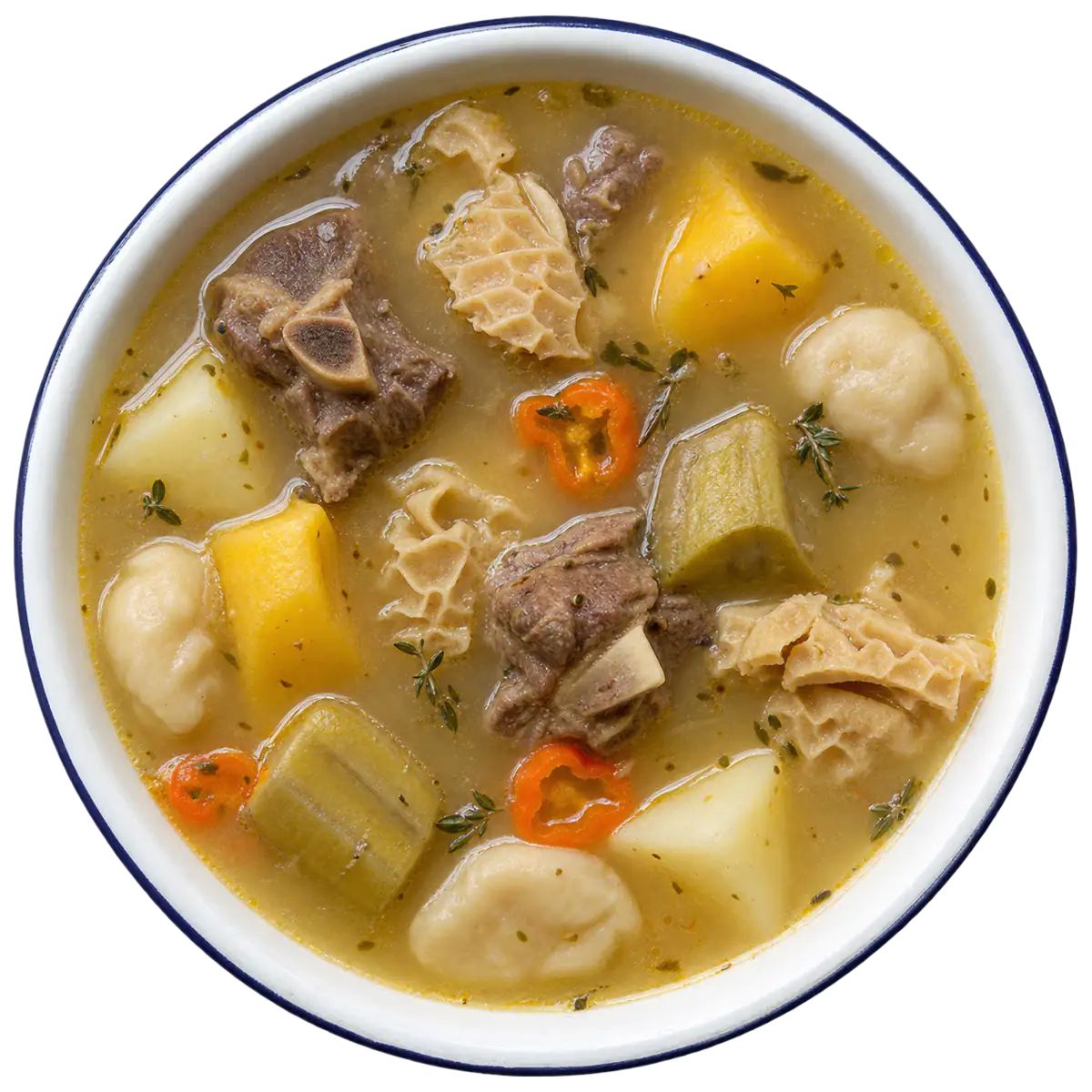
Origin and history
Mannish water is a Jamaican goat soup, also known as goat water and eaten elsewhere in the English-speaking Caribbean, including Antigua, Grenada and St. Kitts and Nevis; on Montserrat it is the national dish. Food writers describe it as a hearty broth served at weddings and special occasions, and it is a fixture of rural Jamaican celebrations. Jamaicans have long considered it a restorative for the groom.
Make it at home
- Makes
- 6 servings
- Total time
- 3 h
- Hands-on
- 40 min
Ingredients
- 1 kg2.2 lb goat meat on the bone, ideally with head pieces, feet, tripe and other offal, chopped small, rinsed well; ask the butcher to prepare the head and feet
- 3 l12 cups water, plus more to top up
- 5 cloves garlic, crushed
- 3 tsp fine salt, adjust at the end
- 8-10 whole pimento (allspice) berries, half crushed
- 3-6 green (unripe) bananas, ends trimmed, skin slit lengthwise; use 3 for a lighter pot
- 225 g1/2 lb yellow yam, peeled, in chunks
- 3 small Irish (white) potatoes, peeled, halved
- 2 chocho (chayote), peeled, cubed; optional
- 4 scallions, bruised
- 6 sprigs fresh thyme
- 1 whole Scotch bonnet pepper, left intact
- 125 g1 cup plain flour, for the spinners (dumplings)
- 1/4 tsp salt, for the spinners
- about 120 ml1/2 cup water, for the spinner dough
- freshly ground black pepper, to taste
Method
-
1. Rinse the goat meat and offal under cold running water until it runs clear.
-
2. Put the meat in a large heavy pot with the water, garlic, 3 tsp salt and the pimento berries. Bring to a boil and skim off any grey foam.
-
3. Lower the heat, partly cover and simmer for 1 1/2 to 2 hours (longer for head and feet), topping up with hot water as needed, until the meat is tender.
-
4. Add the potatoes and chocho and simmer for 10 minutes.
-
5. Add the green bananas and simmer for 10 minutes more.
-
6. Mix the flour, 1/4 tsp salt and enough water to make a firm dough, then roll small pieces between your palms into thin spindle shapes (spinners).
-
7. Add the yam and the spinners and simmer gently for 15-20 minutes, until the yam is soft and the spinners are cooked through.
-
8. Lay the thyme, scallions and the whole Scotch bonnet on top and simmer for 10 minutes more. Do not let the pepper burst, or the soup becomes very hot.
-
9. Season with black pepper and more salt, lift out the pepper, thyme and scallions, and serve hot in deep bowls.
Notes
- Goat head, tripe, feet and offal are the traditional cuts. If you cannot find them, use bone-in goat meat or mutton and expect a lighter broth.
- Mannish water is also called goat water and goat head soup. It is served at weddings and large gatherings in Jamaica, and the morning-after reception (Tun T'anks Sunday) often serves more; it has long been reputed an aphrodisiac for the groom. In rural Jamaica it also turns up at Christmas-season gatherings.
- A pressure cooker is common for the first stage and cuts it to well under an hour; the Gleaner recommends one.
- Green bananas, yam and potato can be varied with taro (coco), carrots or sweet potato; plantain can stand in for the green bananas.
- Some cooks add celery, onion, bell pepper or a little rum, and many leave out the spinners. The spinner proportions here (about 1 cup flour to 1/2 cup water) follow a Jamaican home-cook recipe.
- Keep the Scotch bonnet whole for its fruity aroma rather than fierce heat. Make-ahead: reheat gently; the flavour holds well.
Adapted from The Jamaica Gleaner, cookery column (30 December 2010), Food Republic, What Is Goat Water, and Seasoned Skillet, Mannish Water.
At the festivals
No festival we list has printed it on a menu yet.