
🇮🇹 Italy · Liguria
Genoese minestrone
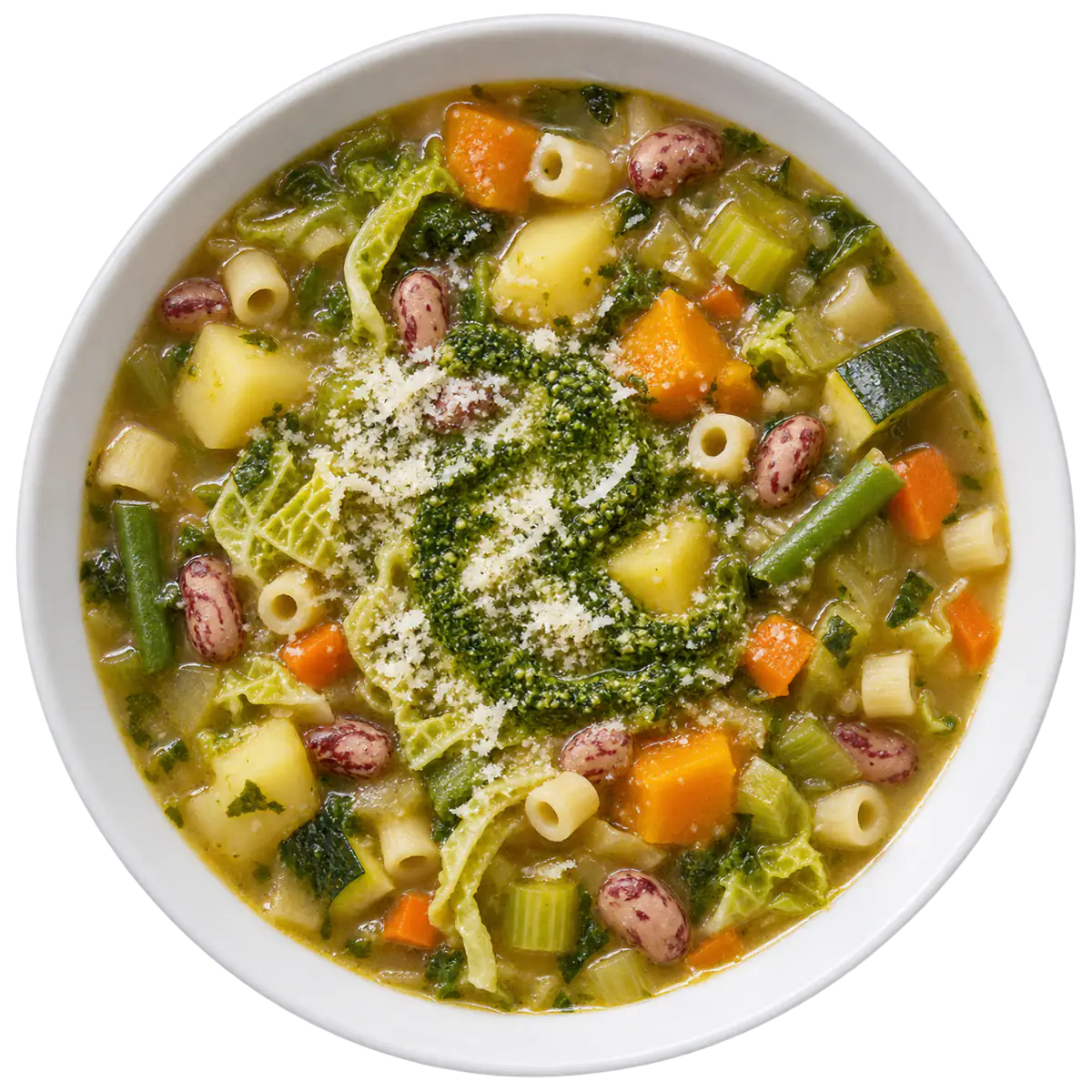
Minestrone of the Ligurian tradition in which a rich mix of vegetables and herbs is finished with basil pesto.
Origin and history
Genoa's minestrone is the regional form finished with pesto. Nineteenth-century Genoese cookbooks, G. B. Ratto's La Cuciniera Genovese and La vera cuciniera genovese that followed it, give a 'minestrone con battuto o pesto' of fresh grixi beans, eggplant, cabbage, tomato, squash and mushrooms, with a pounded garlic-and-basil sauce added as the pasta finishes cooking. The book called the soup a Genoese speciality made in summer, when the garden has everything it needs.
Make it at home
- Makes
- 6 servings
- Total time
- 1 h 45 min
- Hands-on
- 40 min
Ingredients
- 2.5 l10 1/2 cups water
- 1 tbsp coarse salt, for the water
- 400 g14 oz fresh borlotti beans in the pod, or Ligurian grixi, shelled (about 200 g / 1 1/2 cups shelled); or 120 g / 2/3 cup dried borlotti, soaked overnight and half-cooked
- 2 (about 350 g)2 (about 12 oz) potatoes, peeled, diced
- 250 g9 oz savoy cabbage, cut in rough shreds
- 200 g7 oz pumpkin or winter squash, peeled, diced
- 1 small eggplant (aubergine), diced; optional, traditional in summer
- 1 onion, chopped
- 1 celery rib, diced
- 1 carrot, diced
- 2 ripe tomatoes, peeled, seeded, chopped
- 10 g1/3 oz (a small handful) dried porcini mushrooms, soaked 20 minutes in warm water, squeezed, chopped; or 75 g / 2.5 oz fresh mushrooms, sliced
- 3 tbsp extra virgin olive oil, preferably Ligurian
- 2 (about 300 g)2 (about 10 oz) zucchini, diced
- 150 g5 oz green beans (in Genoese, ballin), broken in 2 or 3 pieces
- 150 g5 oz short soup pasta: ditali, bricchetti, or spaghetti or trenette broken in short lengths, or the same weight of rice
- 40 g2 packed cups leaves fresh basil, small-leaved Genoese if possible, for the pesto; leaves only, washed and dried
- 2 garlic cloves, for the pesto
- 1 pinch coarse sea salt, for the pesto
- 30 g1/3 cup Parmigiano Reggiano, grated, for the pesto
- 15 g2 1/2 tbsp Pecorino (Fiore Sardo), grated, for the pesto
- 80 ml1/3 cup extra virgin olive oil, for the pesto
- grated Parmigiano Reggiano, to serve
Method
-
1. Bring the water to the boil in a large pot and add the coarse salt.
-
2. Add the beans (fresh, or dried ones that you have already half-cooked), the potatoes, cabbage, pumpkin, eggplant if using, onion, celery and carrot.
-
3. Add the tomatoes, the chopped mushrooms and 3 tbsp olive oil. There is no soffritto: everything goes into the boiling water raw.
-
4. Return to a gentle simmer, half-cover and cook for 40 minutes, stirring now and then.
-
5. Add the zucchini and green beans and simmer for 25 to 30 minutes more, until the potatoes and pumpkin start to fall apart and thicken the broth.
-
6. Meanwhile make the pesto: pound the garlic with the coarse salt in a mortar until creamy, then add the basil a little at a time and grind it with a circular motion of the pestle until no whole leaves remain.
-
7. Work the two cheeses into the basil, then trickle in the olive oil, stirring, to get a loose green sauce.
-
8. Add the pasta to the soup and cook until just tender, stirring so it does not stick; add a little boiling water if the soup gets too thick.
-
9. Take the pot off the heat, let it stop bubbling, then stir in the pesto (or put a spoonful in each bowl and ladle the soup over it).
-
10. Rest for 5 minutes and serve with grated Parmigiano, hot in winter, lukewarm or at room temperature in summer.
Notes
- How it differs from the parent: the everyday minestrone starts with a soffritto and is finished with cheese; the Genoese one puts all the vegetables raw into salted boiling water with a little oil, often includes mushrooms, and is finished with garlic-and-basil pesto stirred in at the end.
- Pesto for minestrone: many Ligurian cooks leave out the pine nuts and make it with a little more garlic so it melts into the soup. The 19th-century Genoese books made this 'battuto' of garlic, basil and grated cheese (Dutch cheese and Parmigiano) loosened with oil, pounded with a few mushrooms, and said that without basil one could use marjoram and parsley, but never leave out the garlic and mushrooms.
- Beans: Ligurian cooks use local fresh beans, grixi (speckled) and the green beans called ballin. Fresh borlotti are the usual substitute; cannellini also work.
- Season: it is above all a summer soup, made when all the vegetables are in the garden. In other seasons use what there is, dried beans instead of fresh, and tomato paste instead of fresh tomatoes.
- Pasta: short pasta, broken spaghetti or trenette, or rice. The pasta can be left out.
- Make ahead: the vegetable base keeps for 2 days and is better the next day. Add the pasta and pesto only when reheating, since pesto loses its colour and scent when it boils.
Adapted from La vera cuciniera genovese facile ed economica (after G. B. Ratto's La Cuciniera Genovese), recipes 32 and 115 and The Pasta Project, Minestrone with pesto genovese.
At the festivals
Served at 3 festivals in Italy.
Earlier editions
- August 11, 2026
-
October 05, 2025
🇮🇹 Pieve Ligure, Italy
Festa del Minestrone di Monte Santa Croce
On the menu as minestrone alla genovese
- August 11, 2025 – August 13, 2025
-
July 16, 2022
🇮🇹 Montebruno, Italy
Sagra del Minestrone alla Genovese di Montebruno
On the menu as Minestrone alla Genovese con Pesto e “Bricchetti”